November 13, 2011 - Mississauga - Executive Centre
Tracy Simpson Reports:
Frank and I decided to check in on Infinity
and her mate at the Mississauga Executive Centre today. When we arrived, one
adult was in the air flying lazy circles around the nest building and the other
was out of our sight. We watched the airbourne bird make two flights around MEC
1, then two more above the roof of MEC 2, a quick run around MEC 3 and then
finally landing on MEC 4. The bird had made a full recon flight of all four
buildings and it was quite a beautiful, lengthy flight in rather strong winds. It
turns out that the adult was Infinity showing clearly that there are no lasting
effects from her impact with the tower just 5 days ago. We drove around and
found the male on MEC 2 facing the nest box and looking like the king of the
world. Infinity then took off and flew over to her nest box and roosted on the
top for a good half an hour. After a short nap, she took off and joined the
male on MEC 2 who wasn’t going anywhere, especially with the outrageous crop he
was showing!! Infinity stayed for a few minutes then headed back to the nest
building, this time roosting on the corner of the ledge to the right of the
box. The male took off and joined her there where they spent the rest of the
afternoon. I can’t remember the last time I have seen a wild pair so happy and
contented. It left Frank and I feeling like at that moment that all was well
with the world. It was an “aww” moment!!
Posted on November 14, 2011 12:10 am
November 13, 2011 - Etobicoke - William Osler
Tracy Simpson Reports:
On our way back to the CPF Raptor Centre last night, Frank and I popped in to see if Hurricane and O’Connor were home at the hospital. When we initially pulled up, we couldn’t see a bird anywhere. Scanning O’Connor’s hydro tower, we located her sitting near the back section which is usually Hurricane’s spot. Moments later she flew off to the nest ledge and grabbed something that she had stashed there; an enormous pigeon!! She took off and flew around ( with no trouble carrying that huge package ) to the north side “H” with Hurricane, who came out of the nest tray, in hot pursuit. We repositioned ourselves to the north side and found O’Connor gorging on this huge pigeon while Hurricane sat on the opposite side of the “H” sign begging like a juvenile for a taste. He tried everything to get a bite; whine like a child, cutsie head flipping and finally patient waiting like a good boy. O’Connor would not be moved by any of these actions and continued to eat her meal with vigor. Hurricane took off and landed on the northeast corner of the building where he could still see her and allowed her to finish her meal in peace seeing as there was no way he was getting any. Once done, there was some displaying, ee-chupping and fly bys before the two of them took off out of our sights. I cannot stress enough how big and humungatoid a bird O’Connor really is. Sitting next to Hurricane, the pair are obviously very different in size. Its like looking at a cow and a kitten playing together!! Yes, I called her a cow!! Look at the pictures and see why!! All joking aside, O’Connor is a formidable female and its no wonder that she commands the site at William Osler. She has incredible breadth to her chest and a visibly powerful torso. She is truly a member of the warrior class of falcons.
Posted on November 13, 2011 11:21 am
November 12, 2011 - Mississauga - Executive Centre
Tracy Simpson Reports:
The last four days at the Mississauga Executive Centre has the makings of a really good blockbuster movie; an accident, a daring rescue, the impossible recovery, the triumphant return, the other woman, the standoff and the happy ending.
The Accident: We recieved a call at our head office in Toronto on Wednesday Nov. 9th that an adult peregrine falcon had been recovered at the base of one of the towers following a high speed impact with a window. The bird was found lying face down on the ground by the MEC security team. They immediately recognized the falcon as being one of their resident adults and although they didn’t witness the impact itself, they knew that this bird was in serious trouble.
The Daring Rescue: The amazing folks at the MEC security responded immediately to assist the now unconscious and tremoring bird. They placed her in a box in the security office of MEC 1 and called the CPF office for help. Marion took the call and dispatched Bruce Massey to the scene and informed me as I was on my way back through the area. She then called the Toronto Wildlife Centre to let them know we were on our way with a case of head trauma. When Bruce arrived on site, he opened the box to make a quick assessment of the bird. Initially, it looked as though she was no longer alive. Her eyes were closed and her breathing undetectable. He moved to touch her and she responded with an attempt to lift her head and move her tail. Her attempt to stand failed. Bruce transferred her to his vehicle and headed straight for Toronto Wildlife.
The Impossible Recovery: Upon arriving at the Centre, the bird was immediately taken into assessment for examination. Once out of the box, she could barely maintain consciousness and was incapable of holding her head up. Her band numbers confirmed that this bird was the resident female at the MEC site named Infinity. The vet tech on staff that examined her placed her in an oxygen chamber and gave her an anti-inflammatory. There was very little optimism expressed that she would survive to recover, her condition appearing too grave. They would give her the night and re-assess in the morning. The staff at TWC walked in Thursday morning to a most unexpected surprise; Infinity was awake and alert!! She was assessed for any broken bones or other trauma but there was none!! She was placed in an aviary and given some time to settle in; her recovery considered to be quite incredible and quick for a bird completely incapable of standing less than 24 hours earlier. Marion at the CPF head office kept in close contact with the TWC as to her condition and potential for release. By Friday Nov. 11, the TWC called our office to inform us that she was ready to go and she was behaving as if she was quite eager to be off. The release was set for Saturday; news that we were overjoyed to hear.
The Triumphant Return: Frank and I left early this morning to head down to TWC to pick up Infinity for release. We were amazed at her speedy recovery and were looking forward to sending her home. We drove out to the MEC site in silence, both of us really excited to do this. When we arrived, we pulled into MEC 2 to check the site out first. I had been here on Thursday to look for possible reasons why this accident might have occurred. I was concerned that a territorial battle with another female might have caused her to crash, but there was no female on site during my visit. That was not to be the case today.
The Other Woman: From MEC 2, Frank and I could clearly see the resident male sitting one series of windows to the left of the nest box and to his right, there was another adult female sunning herself. The male didn’t seem disturbed by her presence but I can’t blame him, she was huge!! She made two recon flights around MEC 1 at low altitudes and high speeds and was definately reacting to her own reflection in the mirrored glass windows of the building. After two round-a-bouts, this unbanded interloper then did the most unacceptable thing; she flew over and perched on the roof of Infinity’s nest box!! There she called to the resident male in hopes of drawing him in but he stayed put. He vocalized several times but not with a courting or alarm call; it was more like juvenile food begging. I immediately called Mark and we discussed our options. Three things were undeniable; Infinity needed to be released, there was another female in her territory and no matter where we released her Infinity was going to make a bee-line directly home. We decided on a release site northwest of the nest building. I left Frank at MEC for the inevitable arrival of Infinity so that he was in position to assist. When I arrived at the release site, I put the box on top of a picnic table and opened the door. Infinity didn’t even step forward before launching herself straight into the wind and directly towards her nest site. She was on site in less than 3 minutes.
The Standoff by Frank: We called Mark Nash to advise him of the situation and seek his advice about
where to release Infinity. We were going to release her but where? To
release right at MEC seemed like we were setting her up to be attacked
immediately without time to collect herself. Where then? Mark
and Tracy discussed possible sites, each with their benefits
and drawbacks, while I waited in the car,contemplating the very same things. We
all figured that she would immediately head back to MEC no matter where she was
released. Leaving MEC and going a
great distance away would have meant no one was on site to observe if
Infinity came back, witness if a territorial battle took place and affect a rescue
should one be necessary. After much discussion, the plan was
to take Infinity several kilometres off site and release her in a park
nearby fully expecting her to return to MEC ASAP. We thought the distance would
give her time to adjust to her regained freedom. Tracy set out for the
location while I waited at MEC with carrier and rescue towel in hand and binoculars and
camera at the ready. Both the adult
male and the “intruder” left my view towards Square One Mall. Tracy called at that
moment and said she was moments from releasing Infinity. Tracy and I knew that
with both falcons away from the site that it was perfect time. Tracy called back to tell me Infinity
flew immediately on her release with speed and purpose in the direction of MEC.
I began scanning the sky for her arrival, hoping there wouldn’t be a territorial
battle. Inifinity arrived in under 3 minutes and headed straight into HER
nestbox. She had reclaimed her territory and loudly announced her return. The
male came in flying fast with the “intruder” female close behind. She made a
pass of the nest building and then landed right on the landing platform of the
nestbox. I thought OHHH MY!! there is going to be trouble! To my surprise only a
stare down took place,with the “intruder” female flying off the box without an
audible sound. Soon all 3 falcons were in the air over the building. The male
decided to get out of the way and let the ladies settle things. He sat quietly
on the ledge over from the nestbox. Infinity landed at the nestbox again and the
“intruder” went the other direction. Crisis seemingly over Infinity decided to
fly around the corner of the building and sit on the Symcor sign. Soon the
“intruder” returned screaming at Infinity. I knew when she went out there she
would be forced into action. Infinity took off and from above her the “intruder”
attacked,going into a stoop. Infinity took evasive action and no contact was
made with her. Infinity chased the “intruder” out of sight towards the mall.
Minutes that seemed like hours later,one bird returned and flew to the nestbox.
Tracy arrived
back at this point and began taking photos. We were both reasonably certain the
returning falcon was Infinity,but that was clinched when Tracy began jumping up
and down with excitement and joy that she had taken a photo which showed the
Peregrine in the box had a band on,which meant it was definetly Infinity. Over
the next several hours Infinity moved around very little,guarding HER nestbox.
She called out a few times when the “intruder” made rather distant flybys.
Eventually she was comfortable enough to fall fast asleep,assured in herself
that she had chased off the intruder.
The Happy Ending: We left the site as the sun was starting to go down feeling safe in the knowledge that Infinity was back as resident female at MEC. She was tucked in next to her nest box with her head under her wing in a deep sleep. All the while, her dashing male sat on the northern corner watching over her and thinking about spring. Frank and I will be back on site tomorrow to ensure that all is well with the happy couple and that the ”other woman” has not returned.
X-Spam-Flag:
NO
X-Authenticated-User: frank.peregrine-foundation.ca
X-Envelope-From:
frank@peregrine-foundation.ca
Return-Path:
<frank@peregrine-foundation.ca>
Received: from MarionPC
(bas1-aurora91-3096731710.dsl.bell.ca [184.148.96.62]) (authenticated bits=0) by
mail12c0.megamailservers.com (8.13.6/8.13.1) with ESMTP id pAD1D0dJ025340 for
<tracy@peregrine-foundation.ca>; Sat, 12 Nov 2011 20:13:01
-0500
Reply-To: <frank@peregrine-foundation.ca>
From: “Frank Butson”
<frank@peregrine-foundation.ca>
To: “‘Tracy Simpson’”
<tracy@peregrine-foundation.ca>
Subject: MEC Nov 12 My Side Of The
Story
Date: Sat, 12 Nov 2011 20:13:03 -0500
Organization: The Canadian
Peregrine-foundation
Message-ID:
<E4C8635BE2D84CD8BBED15CD7F60DB84@MarionPC>
MIME-Version:
1.0
Content-Type: multipart/alternative;
boundary=”—-=_NextPart_000_0000_01CCA177.7CE5B1F0″
X-Mailer: Microsoft
Office Outlook 11
Thread-Index:
AcyhoWSPjPhsy1McRQOXuQxhZKjb2w==
X-MimeOLE: Produced By Microsoft MimeOLE
V6.0.6002.18463
X-CSC: 0
X-CHA: v=1.1
cv=adpOzT/A82O/faaWAaVTkhFV/QOJVwwWarMiZCPzWJg= c=1 sm=1 a=bkDxES6zK2MA:10
a=C/2kT4nsqFM0ix4DTOS0Hg==:17 a=k1jxLAq9UjKrDboRkBMA:9 a=3uvQStMmoM8jJGJ0Vc8A:7
a=CjuIK1q_8ugA:10 a=SSmOFEACAAAA:8 a=ZmNKG7EC15CRlYkQS74A:9
a=WxsJxi7ISF1IB1bDQYQA:7 a=gKO2Hq4RSVkA:10 a=hTZeC7Yk6K0A:10
a=C/2kT4nsqFM0ix4DTOS0Hg==:117
resizeFrame();
Posted on November 12, 2011 11:18 pm
November 12, 2011 - International, National and Local News
Frank Butson Reports:
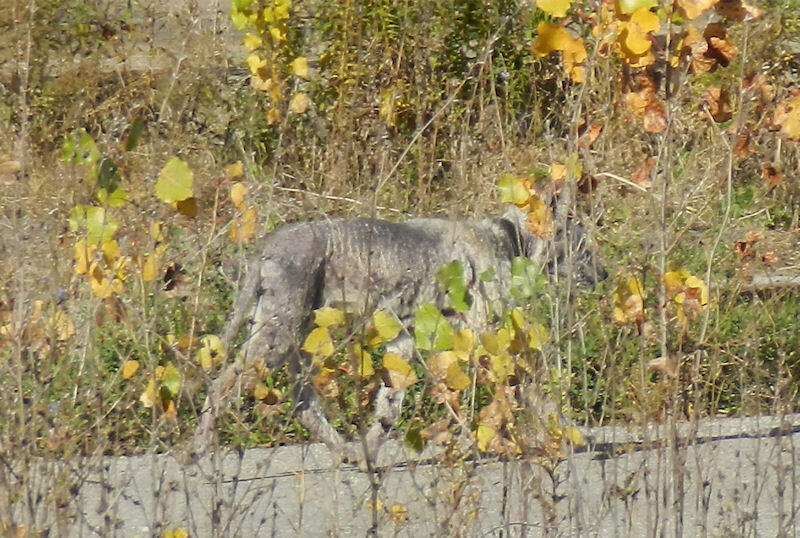
While Tracy and I were out birding last weekend,we saw a Coyote that was radio collared. (the type followed with the antena contraption listening for blips) We were confused by it at first,especially given the poor condition of the animal. It had virtually no hair left and was so skinny you could see every one of its ribs. Mange is going through Toronto right now,which while a crying shame,is natures own population control. We noted the time…230pm,along Unwin Street. Not a Peregrine report,but we got permission to post. Keep a close rein on your dogs so they dont come in contact with ill Coyotes or Foxes.
The tracking device was put there by the Ministry of Natural Resources to track Coyote movement. I was surprised to learn that Coyotes ranged so far. One was tracked in Toronto one day and 3 or 4 days later it was in Peterborough! Its easy to see why mange becomes widespread during an outbreak.
Posted on November 12, 2011 5:58 am
November 11, 2011 - Etobicoke - Sun Life Centre
Kathy Reports:
It’s a cloudy, cold and gloomy day today but both our falcons are on site sitting side by side on the nest ledge. Earlier Angel was busy escorting a Red Tail out of the territory and made a big production out of it, yelling her head off as if the sky was falling!
On Monday I saw a juvenile falcon sitting on one the glass towers and Angel was dive bombing him…but not with an intent to hurt him I noticed as she stopped short of actually making contact with him. It reminded me of the time when Milton was visiting and she did the same thing, not trying to hurt him ..just trying to impress upon him that he shouldn’t be in her territory. She was,this time like then, also chatting to him which I thought was interesting.
After about 5 minutes of harassment, the young juvenile lifted off and flew west and she didn’t even bother giving him an escort out. I wish I had had my binoculars at the time as I’m wondering if it was one of the boys coming back for a visit or perhaps a wandering juvenile that just stopped in for a rest before continuing on his journey.
Posted on November 11, 2011 2:44 pm
November 11, 2011 - Windsor - Ambassador Bridge
Frank Butson Reports:
While poking around the internet,I found this article posted at e! Science News. So all will see it,it is being posted on each of our nestsite pages. This is too important to miss.
The original article can be seen here: http://esciencenews.com/articles/2011/04/18/new.pollutants.detected.peregrine.falcon.eggs
Here is what it says:
New pollutants detected in peregrine falcon eggs
Flame retardants are chemical compounds added to fabrics and plastics to keep them from burning easily, but these can be toxic. Now a team of researchers from Spain and Canada has detected some of these emerging pollutants for the first time in peregrine falcon (Falco peregrinus) eggs in both countries. “The presence of ‘dechlorane plus’ and other related, chlorinated compounds used as flame retardants have been detected for the first time in the European biota (flora and fauna of the region)”, explains Ethel Eljarrat, co-author of the study and scientist at the Institute of Environmental Assessment and Water Studies (IDAEA-CSIC, Spain).
The researchers have found these substances in peregrine falcon (Falco peregrinus) eggs in both Spain and Canada. The flame retardants are often added to textiles, electronic circuits and other products to inhibit or resist the spread of fire, but can be transferred to the environment.
In nature these compounds are “bioaccumulating and bioconcentrating” all along the food chain, as evidenced by the research published in the Environmental Science & Technology journal. The international research team for this study was led by Begoña Jiménez of the Institute of Organic Chemistry (CSIC, Spain), and Environment Canada researchers, Kim Fernie and Mehran Alaee.
Having received the relevant permits, eggs that had failed to hatch from various active falcon nests in Canada and Spain, were collected. The collection involved 13 eggs from Spain (five in Guadalajara – a territory representative of an inland habitat of the Iberian Peninsula - and eight in Bilbao - representing a coastal environment), and 12 eggs from Canada (Great Lakes Region and Eastern provinces).
The levels of some of the measured contaminants have been found to be somewhat higher in Bilbao than in Guadalajara, and the authors believe this may be due partially to the difference in the falcons’ diet: more aquatic in the former and more terrestrial in the latter. In fact, if fish is highly contaminated, peregrines would accumulate more of the harmful substances. While peregrine falcons do not eat fish, they prey upon other birds, some of which may eat fish.
Selecting the peregrine falcon was no accident. This species was endangered in many areas of the northern hemisphere due to the use of organochlorinated pesticides, particularly DDT, though when this was prohibited in the 1970s the populations recovered. Furthermore, falcons are at the top end of the food chain and accumulate substances carried by their prey.
Highest levels in the Canadian samples
The results reveal that the concentrations of ‘dechlorane plus’ and some of the other chlorinated halogens were “significantly higher” in the Canadian falcons’ eggs than in those of Spain. The reason for this could be that the industry that has manufactured these compounds for decades (although they are now also produced in China) is located in New York State close to the area where samples were collected. In addition, the use of these compounds has generally been higher in North America than Europe.
The researcher acknowledges that the effects that these flame retardants may have on the falcons’ eggs or on their development are still unknown, “but their detection is a first step”. These are emerging pollutants, which comprise both those which have appeared more recently and those that have been used for a long time but are just lately the subject of environmental interest.
Other flame retardants, including some brominated flame retardants, have already been confirmed as toxic endocrine disruptors, and their use has been prohibited in some of the commercial mixes in Europe and America. Furthermore, they are candidates for inclusion on a list of Persistent Organic Pollutants to be eliminated, a list compiled by the Stockholm Convention which includes other pollutants such as DDT or dioxins.
This study forms part of the doctoral thesis submitted this month by the researcher Paula Guerra from IDAEA on “The analysis of emerging halogenated flame retardants and their impact on the environment and on humans”. All of the eggs were analyzed by her during her exchange studies at Environment Canada.
A research group at IDAEA led by Damià Barceló has also confirmed the presence of these compounds in sediment and fish in the rivers of the Ebro basin (Spain). Source:FECYT-Spanish Foundation for Science and Technology
Posted on November 11, 2011 6:06 am
November 11, 2011 - Toronto - Sheraton Centre
Frank Butson Reports:
While poking around the internet,I found this article posted at e! Science News. So all will see it,it is being posted on each of our nestsite pages. This is too important to miss.
The original article can be seen here: http://esciencenews.com/articles/2011/04/18/new.pollutants.detected.peregrine.falcon.eggs
Here is what it says:
New pollutants detected in peregrine falcon eggs
Flame retardants are chemical compounds added to fabrics and plastics to keep them from burning easily, but these can be toxic. Now a team of researchers from Spain and Canada has detected some of these emerging pollutants for the first time in peregrine falcon (Falco peregrinus) eggs in both countries. “The presence of ‘dechlorane plus’ and other related, chlorinated compounds used as flame retardants have been detected for the first time in the European biota (flora and fauna of the region)”, explains Ethel Eljarrat, co-author of the study and scientist at the Institute of Environmental Assessment and Water Studies (IDAEA-CSIC, Spain).
The researchers have found these substances in peregrine falcon (Falco peregrinus) eggs in both Spain and Canada. The flame retardants are often added to textiles, electronic circuits and other products to inhibit or resist the spread of fire, but can be transferred to the environment.
In nature these compounds are “bioaccumulating and bioconcentrating” all along the food chain, as evidenced by the research published in the Environmental Science & Technology journal. The international research team for this study was led by Begoña Jiménez of the Institute of Organic Chemistry (CSIC, Spain), and Environment Canada researchers, Kim Fernie and Mehran Alaee.
Having received the relevant permits, eggs that had failed to hatch from various active falcon nests in Canada and Spain, were collected. The collection involved 13 eggs from Spain (five in Guadalajara – a territory representative of an inland habitat of the Iberian Peninsula - and eight in Bilbao - representing a coastal environment), and 12 eggs from Canada (Great Lakes Region and Eastern provinces).
The levels of some of the measured contaminants have been found to be somewhat higher in Bilbao than in Guadalajara, and the authors believe this may be due partially to the difference in the falcons’ diet: more aquatic in the former and more terrestrial in the latter. In fact, if fish is highly contaminated, peregrines would accumulate more of the harmful substances. While peregrine falcons do not eat fish, they prey upon other birds, some of which may eat fish.
Selecting the peregrine falcon was no accident. This species was endangered in many areas of the northern hemisphere due to the use of organochlorinated pesticides, particularly DDT, though when this was prohibited in the 1970s the populations recovered. Furthermore, falcons are at the top end of the food chain and accumulate substances carried by their prey.
Highest levels in the Canadian samples
The results reveal that the concentrations of ‘dechlorane plus’ and some of the other chlorinated halogens were “significantly higher” in the Canadian falcons’ eggs than in those of Spain. The reason for this could be that the industry that has manufactured these compounds for decades (although they are now also produced in China) is located in New York State close to the area where samples were collected. In addition, the use of these compounds has generally been higher in North America than Europe.
The researcher acknowledges that the effects that these flame retardants may have on the falcons’ eggs or on their development are still unknown, “but their detection is a first step”. These are emerging pollutants, which comprise both those which have appeared more recently and those that have been used for a long time but are just lately the subject of environmental interest.
Other flame retardants, including some brominated flame retardants, have already been confirmed as toxic endocrine disruptors, and their use has been prohibited in some of the commercial mixes in Europe and America. Furthermore, they are candidates for inclusion on a list of Persistent Organic Pollutants to be eliminated, a list compiled by the Stockholm Convention which includes other pollutants such as DDT or dioxins.
This study forms part of the doctoral thesis submitted this month by the researcher Paula Guerra from IDAEA on “The analysis of emerging halogenated flame retardants and their impact on the environment and on humans”. All of the eggs were analyzed by her during her exchange studies at Environment Canada.
A research group at IDAEA led by Damià Barceló has also confirmed the presence of these compounds in sediment and fish in the rivers of the Ebro basin (Spain). Source:FECYT-Spanish Foundation for Science and Technology
Posted on November 11, 2011 6:06 am
November 11, 2011 - Toronto - Mount Sinai Hospital
Frank Butson Reports:
While poking around the internet,I found this article posted at e! Science News. So all will see it,it is being posted on each of our nestsite pages. This is too important to miss.
The original article can be seen here: http://esciencenews.com/articles/2011/04/18/new.pollutants.detected.peregrine.falcon.eggs
Here is what it says:
New pollutants detected in peregrine falcon eggs
Flame retardants are chemical compounds added to fabrics and plastics to keep them from burning easily, but these can be toxic. Now a team of researchers from Spain and Canada has detected some of these emerging pollutants for the first time in peregrine falcon (Falco peregrinus) eggs in both countries. “The presence of ‘dechlorane plus’ and other related, chlorinated compounds used as flame retardants have been detected for the first time in the European biota (flora and fauna of the region)”, explains Ethel Eljarrat, co-author of the study and scientist at the Institute of Environmental Assessment and Water Studies (IDAEA-CSIC, Spain).
The researchers have found these substances in peregrine falcon (Falco peregrinus) eggs in both Spain and Canada. The flame retardants are often added to textiles, electronic circuits and other products to inhibit or resist the spread of fire, but can be transferred to the environment.
In nature these compounds are “bioaccumulating and bioconcentrating” all along the food chain, as evidenced by the research published in the Environmental Science & Technology journal. The international research team for this study was led by Begoña Jiménez of the Institute of Organic Chemistry (CSIC, Spain), and Environment Canada researchers, Kim Fernie and Mehran Alaee.
Having received the relevant permits, eggs that had failed to hatch from various active falcon nests in Canada and Spain, were collected. The collection involved 13 eggs from Spain (five in Guadalajara – a territory representative of an inland habitat of the Iberian Peninsula - and eight in Bilbao - representing a coastal environment), and 12 eggs from Canada (Great Lakes Region and Eastern provinces).
The levels of some of the measured contaminants have been found to be somewhat higher in Bilbao than in Guadalajara, and the authors believe this may be due partially to the difference in the falcons’ diet: more aquatic in the former and more terrestrial in the latter. In fact, if fish is highly contaminated, peregrines would accumulate more of the harmful substances. While peregrine falcons do not eat fish, they prey upon other birds, some of which may eat fish.
Selecting the peregrine falcon was no accident. This species was endangered in many areas of the northern hemisphere due to the use of organochlorinated pesticides, particularly DDT, though when this was prohibited in the 1970s the populations recovered. Furthermore, falcons are at the top end of the food chain and accumulate substances carried by their prey.
Highest levels in the Canadian samples
The results reveal that the concentrations of ‘dechlorane plus’ and some of the other chlorinated halogens were “significantly higher” in the Canadian falcons’ eggs than in those of Spain. The reason for this could be that the industry that has manufactured these compounds for decades (although they are now also produced in China) is located in New York State close to the area where samples were collected. In addition, the use of these compounds has generally been higher in North America than Europe.
The researcher acknowledges that the effects that these flame retardants may have on the falcons’ eggs or on their development are still unknown, “but their detection is a first step”. These are emerging pollutants, which comprise both those which have appeared more recently and those that have been used for a long time but are just lately the subject of environmental interest.
Other flame retardants, including some brominated flame retardants, have already been confirmed as toxic endocrine disruptors, and their use has been prohibited in some of the commercial mixes in Europe and America. Furthermore, they are candidates for inclusion on a list of Persistent Organic Pollutants to be eliminated, a list compiled by the Stockholm Convention which includes other pollutants such as DDT or dioxins.
This study forms part of the doctoral thesis submitted this month by the researcher Paula Guerra from IDAEA on “The analysis of emerging halogenated flame retardants and their impact on the environment and on humans”. All of the eggs were analyzed by her during her exchange studies at Environment Canada.
A research group at IDAEA led by Damià Barceló has also confirmed the presence of these compounds in sediment and fish in the rivers of the Ebro basin (Spain). Source:FECYT-Spanish Foundation for Science and Technology
Posted on November 11, 2011 6:05 am
November 11, 2011 - Toronto - King Street
Frank Butson Reports:
While poking around the internet,I found this article posted at e! Science News. So all will see it,it is being posted on each of our nestsite pages. This is too important to miss.
The original article can be seen here: http://esciencenews.com/articles/2011/04/18/new.pollutants.detected.peregrine.falcon.eggs
Here is what it says:
New pollutants detected in peregrine falcon eggs
Flame retardants are chemical compounds added to fabrics and plastics to keep them from burning easily, but these can be toxic. Now a team of researchers from Spain and Canada has detected some of these emerging pollutants for the first time in peregrine falcon (Falco peregrinus) eggs in both countries. “The presence of ‘dechlorane plus’ and other related, chlorinated compounds used as flame retardants have been detected for the first time in the European biota (flora and fauna of the region)”, explains Ethel Eljarrat, co-author of the study and scientist at the Institute of Environmental Assessment and Water Studies (IDAEA-CSIC, Spain).
The researchers have found these substances in peregrine falcon (Falco peregrinus) eggs in both Spain and Canada. The flame retardants are often added to textiles, electronic circuits and other products to inhibit or resist the spread of fire, but can be transferred to the environment.
In nature these compounds are “bioaccumulating and bioconcentrating” all along the food chain, as evidenced by the research published in the Environmental Science & Technology journal. The international research team for this study was led by Begoña Jiménez of the Institute of Organic Chemistry (CSIC, Spain), and Environment Canada researchers, Kim Fernie and Mehran Alaee.
Having received the relevant permits, eggs that had failed to hatch from various active falcon nests in Canada and Spain, were collected. The collection involved 13 eggs from Spain (five in Guadalajara – a territory representative of an inland habitat of the Iberian Peninsula - and eight in Bilbao - representing a coastal environment), and 12 eggs from Canada (Great Lakes Region and Eastern provinces).
The levels of some of the measured contaminants have been found to be somewhat higher in Bilbao than in Guadalajara, and the authors believe this may be due partially to the difference in the falcons’ diet: more aquatic in the former and more terrestrial in the latter. In fact, if fish is highly contaminated, peregrines would accumulate more of the harmful substances. While peregrine falcons do not eat fish, they prey upon other birds, some of which may eat fish.
Selecting the peregrine falcon was no accident. This species was endangered in many areas of the northern hemisphere due to the use of organochlorinated pesticides, particularly DDT, though when this was prohibited in the 1970s the populations recovered. Furthermore, falcons are at the top end of the food chain and accumulate substances carried by their prey.
Highest levels in the Canadian samples
The results reveal that the concentrations of ‘dechlorane plus’ and some of the other chlorinated halogens were “significantly higher” in the Canadian falcons’ eggs than in those of Spain. The reason for this could be that the industry that has manufactured these compounds for decades (although they are now also produced in China) is located in New York State close to the area where samples were collected. In addition, the use of these compounds has generally been higher in North America than Europe.
The researcher acknowledges that the effects that these flame retardants may have on the falcons’ eggs or on their development are still unknown, “but their detection is a first step”. These are emerging pollutants, which comprise both those which have appeared more recently and those that have been used for a long time but are just lately the subject of environmental interest.
Other flame retardants, including some brominated flame retardants, have already been confirmed as toxic endocrine disruptors, and their use has been prohibited in some of the commercial mixes in Europe and America. Furthermore, they are candidates for inclusion on a list of Persistent Organic Pollutants to be eliminated, a list compiled by the Stockholm Convention which includes other pollutants such as DDT or dioxins.
This study forms part of the doctoral thesis submitted this month by the researcher Paula Guerra from IDAEA on “The analysis of emerging halogenated flame retardants and their impact on the environment and on humans”. All of the eggs were analyzed by her during her exchange studies at Environment Canada.
A research group at IDAEA led by Damià Barceló has also confirmed the presence of these compounds in sediment and fish in the rivers of the Ebro basin (Spain). Source:FECYT-Spanish Foundation for Science and Technology
Posted on November 11, 2011 6:05 am
November 11, 2011 - Toronto - Four Seasons
Frank Butson Reports:
While poking around the internet,I found this article posted at e! Science News. So all will see it,it is being posted on each of our nestsite pages. This is too important to miss.
The original article can be seen here: http://esciencenews.com/articles/2011/04/18/new.pollutants.detected.peregrine.falcon.eggs
Here is what it says:
New pollutants detected in peregrine falcon eggs
Flame retardants are chemical compounds added to fabrics and plastics to keep them from burning easily, but these can be toxic. Now a team of researchers from Spain and Canada has detected some of these emerging pollutants for the first time in peregrine falcon (Falco peregrinus) eggs in both countries. “The presence of ‘dechlorane plus’ and other related, chlorinated compounds used as flame retardants have been detected for the first time in the European biota (flora and fauna of the region)”, explains Ethel Eljarrat, co-author of the study and scientist at the Institute of Environmental Assessment and Water Studies (IDAEA-CSIC, Spain).
The researchers have found these substances in peregrine falcon (Falco peregrinus) eggs in both Spain and Canada. The flame retardants are often added to textiles, electronic circuits and other products to inhibit or resist the spread of fire, but can be transferred to the environment.
In nature these compounds are “bioaccumulating and bioconcentrating” all along the food chain, as evidenced by the research published in the Environmental Science & Technology journal. The international research team for this study was led by Begoña Jiménez of the Institute of Organic Chemistry (CSIC, Spain), and Environment Canada researchers, Kim Fernie and Mehran Alaee.
Having received the relevant permits, eggs that had failed to hatch from various active falcon nests in Canada and Spain, were collected. The collection involved 13 eggs from Spain (five in Guadalajara – a territory representative of an inland habitat of the Iberian Peninsula - and eight in Bilbao - representing a coastal environment), and 12 eggs from Canada (Great Lakes Region and Eastern provinces).
The levels of some of the measured contaminants have been found to be somewhat higher in Bilbao than in Guadalajara, and the authors believe this may be due partially to the difference in the falcons’ diet: more aquatic in the former and more terrestrial in the latter. In fact, if fish is highly contaminated, peregrines would accumulate more of the harmful substances. While peregrine falcons do not eat fish, they prey upon other birds, some of which may eat fish.
Selecting the peregrine falcon was no accident. This species was endangered in many areas of the northern hemisphere due to the use of organochlorinated pesticides, particularly DDT, though when this was prohibited in the 1970s the populations recovered. Furthermore, falcons are at the top end of the food chain and accumulate substances carried by their prey.
Highest levels in the Canadian samples
The results reveal that the concentrations of ‘dechlorane plus’ and some of the other chlorinated halogens were “significantly higher” in the Canadian falcons’ eggs than in those of Spain. The reason for this could be that the industry that has manufactured these compounds for decades (although they are now also produced in China) is located in New York State close to the area where samples were collected. In addition, the use of these compounds has generally been higher in North America than Europe.
The researcher acknowledges that the effects that these flame retardants may have on the falcons’ eggs or on their development are still unknown, “but their detection is a first step”. These are emerging pollutants, which comprise both those which have appeared more recently and those that have been used for a long time but are just lately the subject of environmental interest.
Other flame retardants, including some brominated flame retardants, have already been confirmed as toxic endocrine disruptors, and their use has been prohibited in some of the commercial mixes in Europe and America. Furthermore, they are candidates for inclusion on a list of Persistent Organic Pollutants to be eliminated, a list compiled by the Stockholm Convention which includes other pollutants such as DDT or dioxins.
This study forms part of the doctoral thesis submitted this month by the researcher Paula Guerra from IDAEA on “The analysis of emerging halogenated flame retardants and their impact on the environment and on humans”. All of the eggs were analyzed by her during her exchange studies at Environment Canada.
A research group at IDAEA led by Damià Barceló has also confirmed the presence of these compounds in sediment and fish in the rivers of the Ebro basin (Spain). Source:FECYT-Spanish Foundation for Science and Technology
Posted on November 11, 2011 6:04 am