December 11, 2011 - International, National and Local News
Frank Butson Reports:
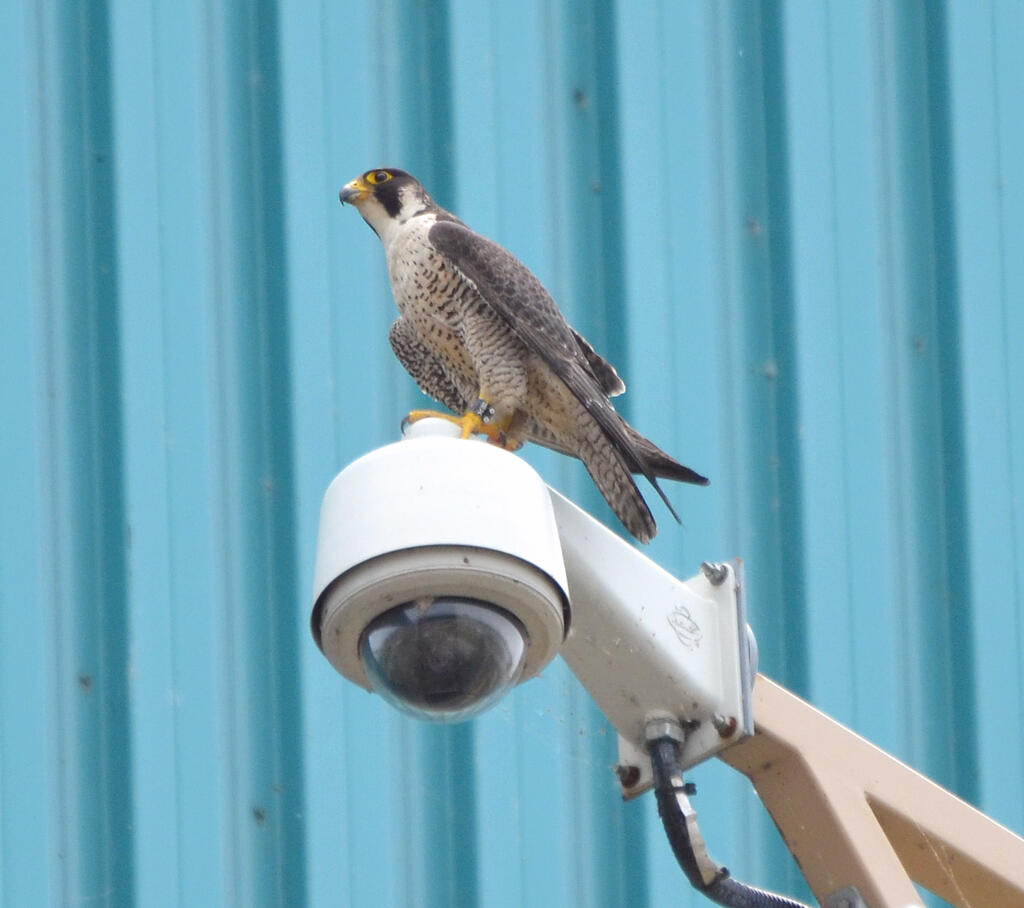
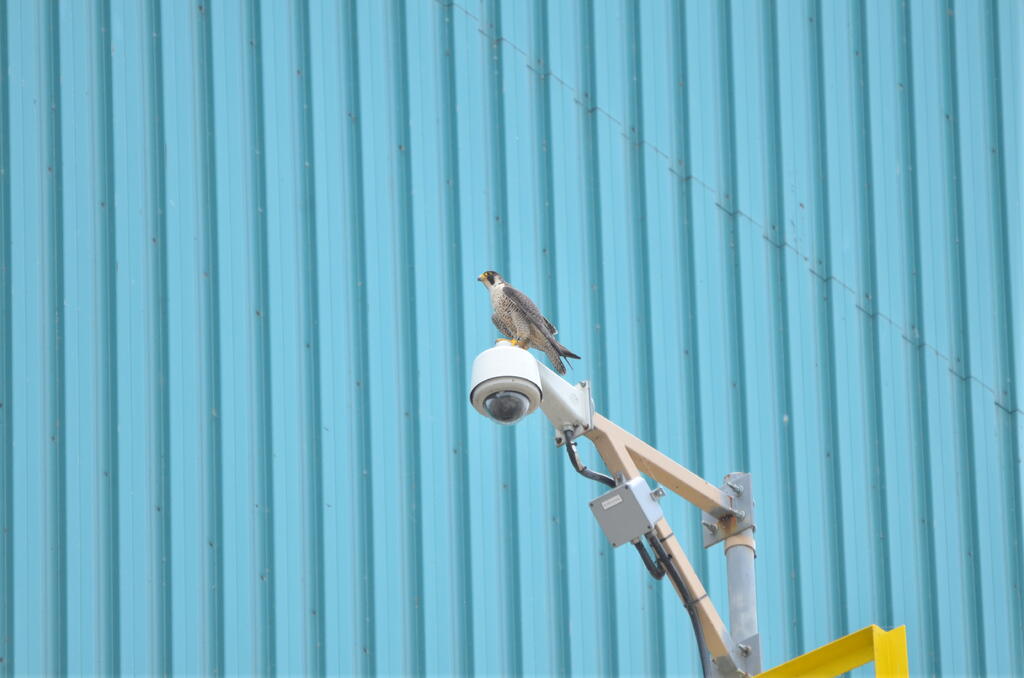
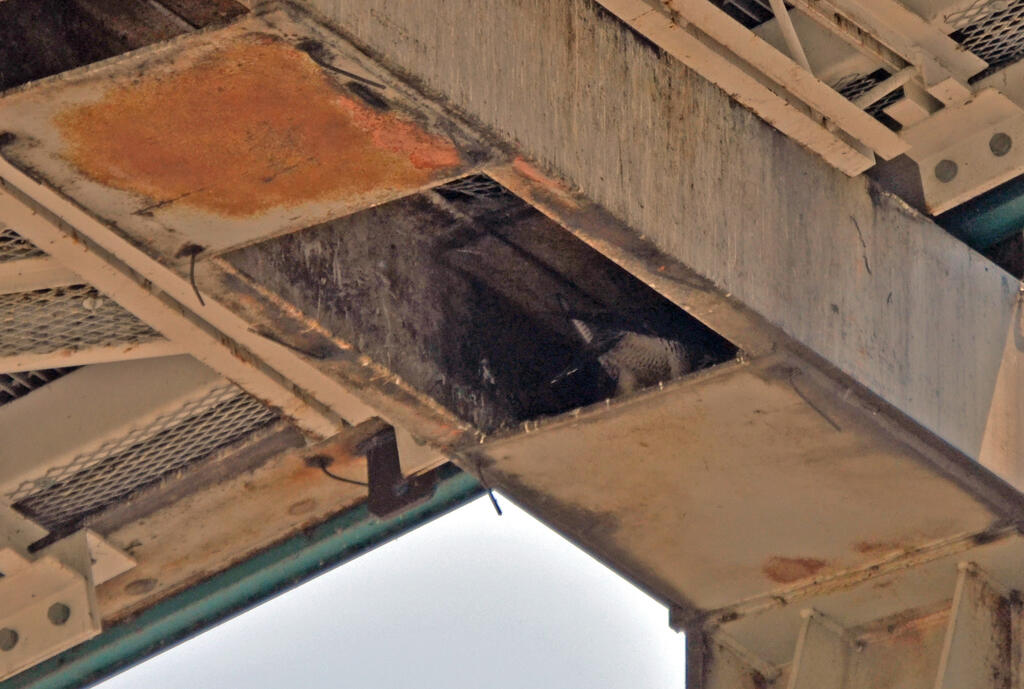
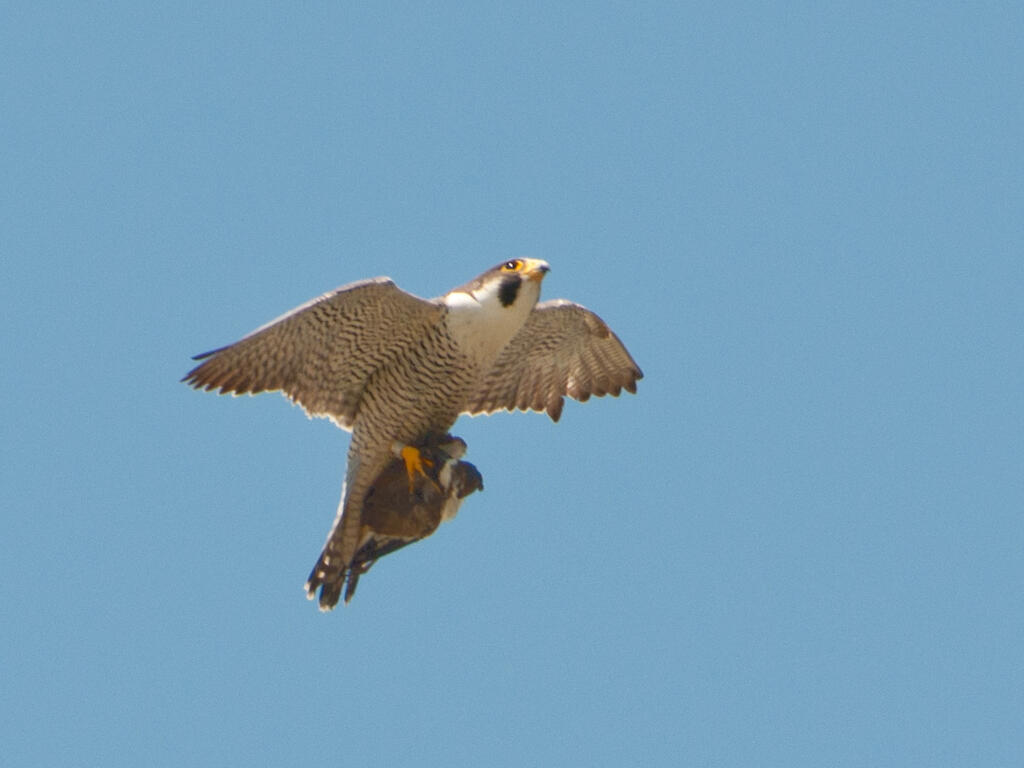
Back in Novemeber Bart Van Bockstaele saw a juvenile Peregrine Falcon perched briefly on the red bridge towards the end of “the Spit” It was on November 23rd. While band numbers/letters couldnt be recognized,a black over red band can be seen,making this a US bird. The Peregrine is from this past seasons young. With Bart’s gracious permission we have a few of his photos of the sighting here. Thanks Bart!


Posted on December 11, 2011 7:57 am
December 04, 2011 - International, National and Local News
Frank Butson Reports:
This past fall,the raptor watch I started several years ago had a record count. My buddy Walter carried it on in my abscence this season and did a wonderful job. From mid-August until end November 6626 birds of prey were counted flying in,over and around Rosetta McClain Gardens in Toronto,atop the western end of the Scarborough Bluffs.
The final tally included:
Turkey Vulture - 1866
Osprey - 125
Bald Eagle - 67
Northern Harrier - 212
Sharp-shinned Hawk - 1781
Cooper’s Hawk - 96
Northern Goshawk - 20
Red-shouldered Hawk - 29
Broad-winged Hawk - 757
Red-tailed Hawk - 858
Rough-legged Hawk - 9
Golden Eagle - 5
American Kestrel - 624
Merlin - 130
Peregrine Falcon - 47
Total - 6626
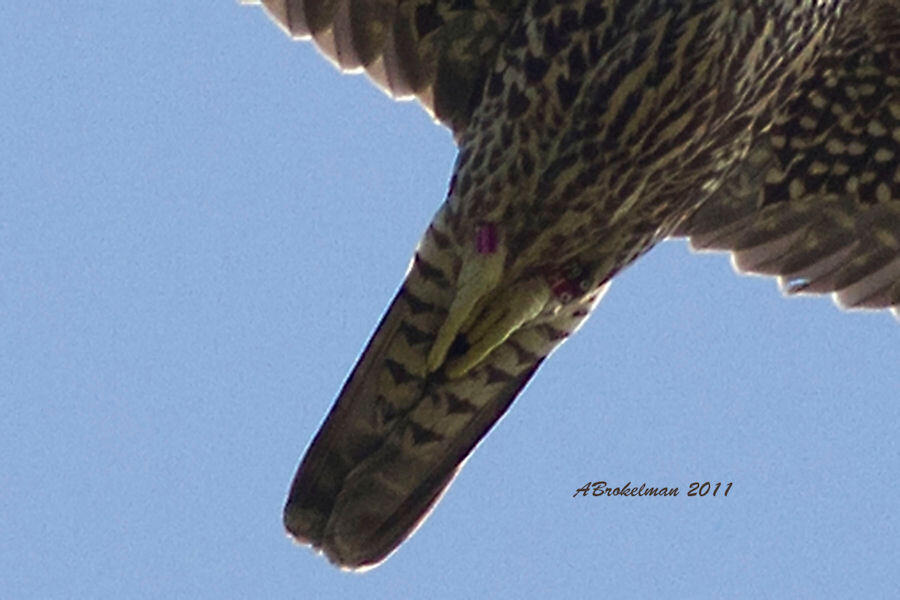
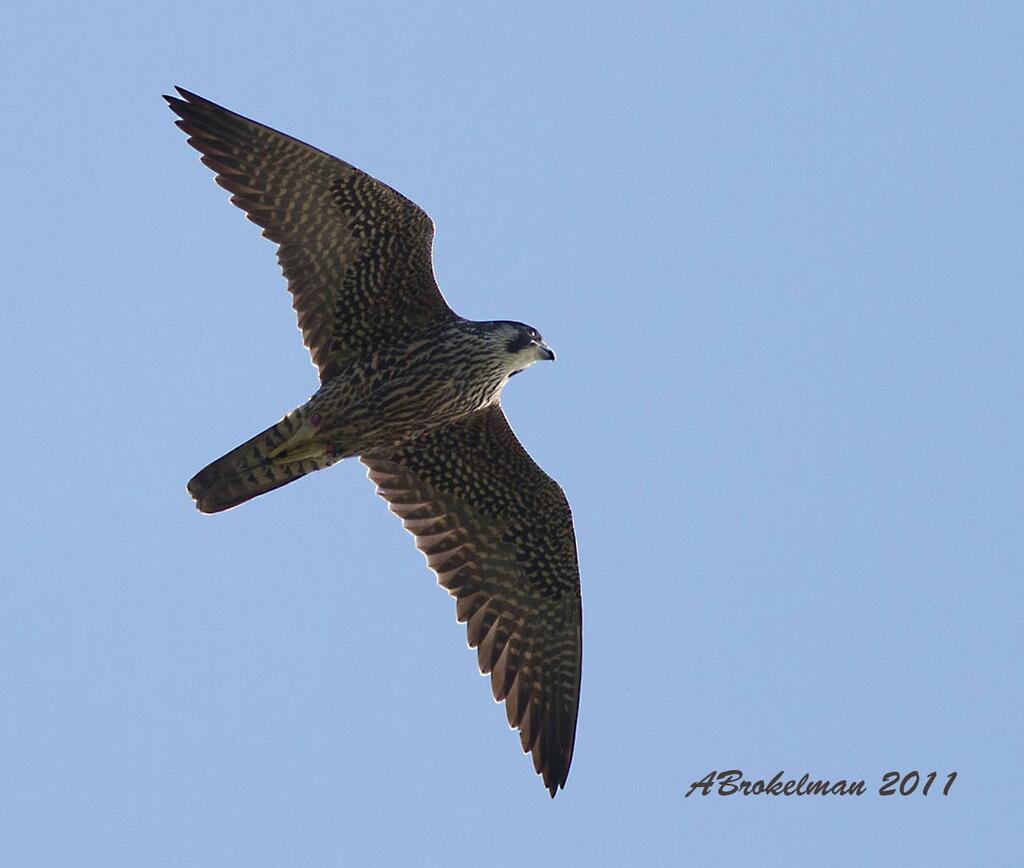
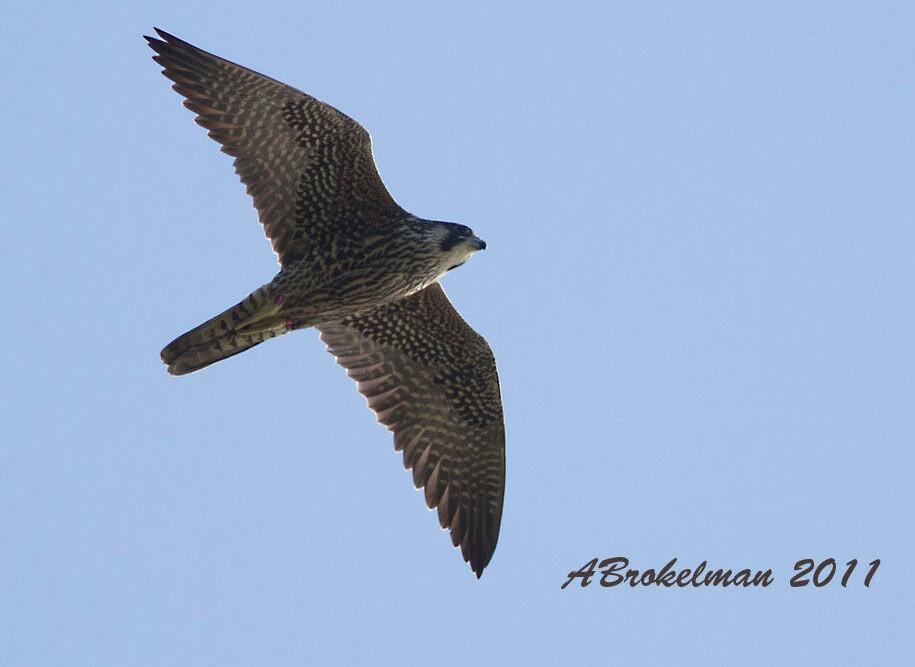
The number of Peregrine Falcons was down considerably from last seasons high of 85(the count has run since 2004). This could be owing to many factors,but is definetly something to be aware of in the ongoing monitoring of the Peregrine Falcon’s recovery. This past season,failed nests and unhatched eggs were a widespread issue,not only in southern Ontario,but in other areas of North America. Back in October one of the watches dedicated followers,friend and CPF volunteer Ann Brokelman took some fantastic photos of a young Peregrine Falcon which passed our site. So good that we could read its band numbers. It was a juvenile bird from 2011. The first 2 years of a falcon’s life it lives up to its name,which means wanderer. Peregrine Falcons fly all over until they are sexually mature and then will search for a mate and territory. The young Peregrine which Ann photographed was from Ohio. Its band numbers were black over red 79 over H and a purple US Fish and Wildlife band. With that information CPF was able to obtain her ID. Cententiel as she was named by plant staff,was hatched in East Cleveland Ohio USA,at the Lakeshore Power Plant nest. This sighting and photos have been passed on to Ohio DNR and to the folks at the power plant. We are assured they will be very pleased to hear of Centeniel being reported alive and well.
Both of these reports highlight 2 of the important functions of The Canadian Peregrine Foundation,banding and monitoring. At a time when there are so many environmental threats,additional ones from habitat changes and new chemical threats,these are critical.
Thanks to Ann for the continued use of her photos.
Posted on December 4, 2011 11:55 am
November 24, 2011 - Nanticoke OPG
Tracy Simpson Reports:
This week I have been delivering Project School Visit to students throughout the Haldimand area and have been having a fabulous time. Yesterday, I was joined at Walpole North Elementary by Jacob Clements from OPG Nanticoke, the sponsor for the school, where we enjoyed the morning sharing the story of the Peregrine falcon with almost 100 students. Afterwards, Jacob took me down to the plant for a check in with the territorial female residing there. It was just this past June that the CPF and OMNR were at the site banding the three young hatchlings; the first hatch in the plant’s history. At the time, there was no territoial male to speak of and according to our on-site eyes, Ulrich Waterman, there had been a fierce battle between two males that most likely left Marla with no male at all. My goal was to check in and see if anything had changed for the resident female as available males migrating through may have stopped and stayed.
After checking in with security, Jacob and I toured the grounds of the plant looking for signs of peregrines. As we were coming around to the lake side, I caught sight of a male and female peregrine moving west towards the stacks and then, out of nowhere, another female peregrine came at them in hot pursuit. The male circled one of the stacks and landed on the light while the two females were having it out. One female landed on the lower elevation of the plant after launching a stoop attack on the other female. The female on the roof turned out to be Marla, the red tape over her UPFW band apparent in the pictures I was able to take. The other female took off from our view leaving the resident female to sit, very agitated and alarm calling, on the plant roof. Moments later, Marla took off again in pursuit of what we now knew was a challenging adult female in her territory. The pursuit took them around the plant and out of our view for a few moments until Marla returned and made her way up to the light on the stack opposite her new male. As we came around the west side of the plant, the interloper took off from a low position and flew a very low and very powered flight around the plant and off towards the lake. As Jacob drove me back to my vehicle, both Marla and her male were kiting above the stacks together and then headed off to the north.
While I was unable to identify either the new male or the rogue today, it is exciting to see that Marla now has a mate. As the OPG Nanticoke plant is not a facility that is open to visitors, the CPF, Ulrich Waterman from BC International and Jacob Clements from OPG are going to continue to be your eyes and ears on your local pair of peregrines. We will post all of the news and pictures on our website so that you can stay in touch with Ms. Marla and her new mate. A huge thank you to Ontario Power Generation Nanticoke for sponsoring the Haldimand area schools this week and a special thank you to Jacob Clements for attending the presentation and taking time with me at the plant for a check in. Your support of the peregrines at the plant and our education program is so greatly appreciated!!
Posted on November 24, 2011 9:45 am
November 12, 2011 - International, National and Local News
Frank Butson Reports:
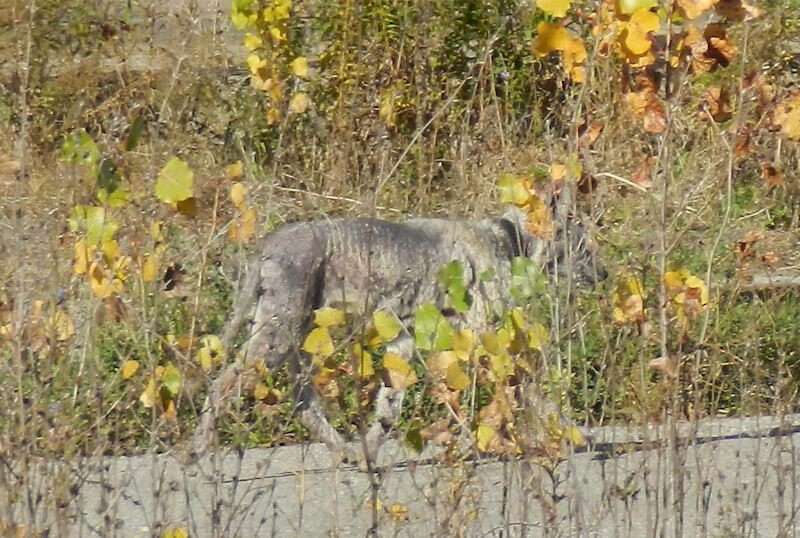
While Tracy and I were out birding last weekend,we saw a Coyote that was radio collared. (the type followed with the antena contraption listening for blips) We were confused by it at first,especially given the poor condition of the animal. It had virtually no hair left and was so skinny you could see every one of its ribs. Mange is going through Toronto right now,which while a crying shame,is natures own population control. We noted the time…230pm,along Unwin Street. Not a Peregrine report,but we got permission to post. Keep a close rein on your dogs so they dont come in contact with ill Coyotes or Foxes.
The tracking device was put there by the Ministry of Natural Resources to track Coyote movement. I was surprised to learn that Coyotes ranged so far. One was tracked in Toronto one day and 3 or 4 days later it was in Peterborough! Its easy to see why mange becomes widespread during an outbreak.
Posted on November 12, 2011 5:58 am
November 11, 2011 - International, National and Local News
Frank Butson Reports:
While poking around the internet,I found this article posted at e! Science News. So all will see it,it is being posted on each of our nestsite pages. This is too important to miss.
The original article can be seen here: http://esciencenews.com/articles/2011/04/18/new.pollutants.detected.peregrine.falcon.eggs
Here is what it says:
New pollutants detected in peregrine falcon eggs
Flame retardants are chemical compounds added to fabrics and plastics to keep them from burning easily, but these can be toxic. Now a team of researchers from Spain and Canada has detected some of these emerging pollutants for the first time in peregrine falcon (Falco peregrinus) eggs in both countries. “The presence of ‘dechlorane plus’ and other related, chlorinated compounds used as flame retardants have been detected for the first time in the European biota (flora and fauna of the region)”, explains Ethel Eljarrat, co-author of the study and scientist at the Institute of Environmental Assessment and Water Studies (IDAEA-CSIC, Spain).
The researchers have found these substances in peregrine falcon (Falco peregrinus) eggs in both Spain and Canada. The flame retardants are often added to textiles, electronic circuits and other products to inhibit or resist the spread of fire, but can be transferred to the environment.
In nature these compounds are “bioaccumulating and bioconcentrating” all along the food chain, as evidenced by the research published in the Environmental Science & Technology journal. The international research team for this study was led by Begoña Jiménez of the Institute of Organic Chemistry (CSIC, Spain), and Environment Canada researchers, Kim Fernie and Mehran Alaee.
Having received the relevant permits, eggs that had failed to hatch from various active falcon nests in Canada and Spain, were collected. The collection involved 13 eggs from Spain (five in Guadalajara – a territory representative of an inland habitat of the Iberian Peninsula - and eight in Bilbao - representing a coastal environment), and 12 eggs from Canada (Great Lakes Region and Eastern provinces).
The levels of some of the measured contaminants have been found to be somewhat higher in Bilbao than in Guadalajara, and the authors believe this may be due partially to the difference in the falcons’ diet: more aquatic in the former and more terrestrial in the latter. In fact, if fish is highly contaminated, peregrines would accumulate more of the harmful substances. While peregrine falcons do not eat fish, they prey upon other birds, some of which may eat fish.
Selecting the peregrine falcon was no accident. This species was endangered in many areas of the northern hemisphere due to the use of organochlorinated pesticides, particularly DDT, though when this was prohibited in the 1970s the populations recovered. Furthermore, falcons are at the top end of the food chain and accumulate substances carried by their prey.
Highest levels in the Canadian samples
The results reveal that the concentrations of ‘dechlorane plus’ and some of the other chlorinated halogens were “significantly higher” in the Canadian falcons’ eggs than in those of Spain. The reason for this could be that the industry that has manufactured these compounds for decades (although they are now also produced in China) is located in New York State close to the area where samples were collected. In addition, the use of these compounds has generally been higher in North America than Europe.
The researcher acknowledges that the effects that these flame retardants may have on the falcons’ eggs or on their development are still unknown, “but their detection is a first step”. These are emerging pollutants, which comprise both those which have appeared more recently and those that have been used for a long time but are just lately the subject of environmental interest.
Other flame retardants, including some brominated flame retardants, have already been confirmed as toxic endocrine disruptors, and their use has been prohibited in some of the commercial mixes in Europe and America. Furthermore, they are candidates for inclusion on a list of Persistent Organic Pollutants to be eliminated, a list compiled by the Stockholm Convention which includes other pollutants such as DDT or dioxins.
This study forms part of the doctoral thesis submitted this month by the researcher Paula Guerra from IDAEA on “The analysis of emerging halogenated flame retardants and their impact on the environment and on humans”. All of the eggs were analyzed by her during her exchange studies at Environment Canada.
A research group at IDAEA led by Damià Barceló has also confirmed the presence of these compounds in sediment and fish in the rivers of the Ebro basin (Spain). Source:FECYT-Spanish Foundation for Science and Technology
Posted on November 11, 2011 5:54 am
August 30, 2011 - International, National and Local News
Kathy Reports:
Thanks to a fellow falcon friend over at BCAW for alerting me to this article!
Three peregrine falcons have been confirmed at Xstrata Copper Kidd Creek Mine. As per the article this is the first documented case of a breeding pair in Timmins district since the population in Ontario began to recover.
Article and photos here:
http://www.thedailypress.ca/ArticleDisplay.aspx?e=3277712
Posted on August 30, 2011 9:12 am
June 09, 2011 - Nanticoke OPG
Mark Nash Reports:
Thursday June 9th
We have some good news to report from the Nanticoke Ontario Power Generation plant! After spending a great day with plant staff doing presentations for environmental week, we are very happy to report that their earlier reports of peregrine nesting activity has been confirmed.
Both Tracy and I had a great morning with approx. 70 OPG plant staff and four members of our feathered educational team. A huge thank you to Ulrich for bringing in his two eagles that joined us for the morning presentation. A very good morning indeed!
The afternoon was spent with plant staff investigating their earlier reports of peregrine activity and we have some further good news to report.
OPG Nanticoke has their first pair nesting peregrine falcons! We were able to both confirm the identity of the resident female peregrine as being a 2009 Etobicoke produced bird named Ms. Marla, banded with a Black 15 over Black X. We were also able to confirm that she has new recently hatched young! The now so good news has yet to be confirmed.
Earlier reports from the OPG plant staff is that there has been ongoing territorial disputes going on with another adult male, the staff have witnessed aerial between the two males earlier on in the week.
A resident male was not observed at all during our visit, and other observations recorded during our visit would suggest that there may not be a resident male attending.
We watched the Ms. Marla fly in to the net ledge with food and feed her offspring with no signs of a resident male. We also observed a Turkey vulture flying overhead during this dame time period, and at no time did we see a resident male defending or present anywhere.
On two separate occasions during our one plus hour observation period, the resident female Ms. Marla called out looking for her mate, but once again, no male ever responded or attended.
Speculation that the resident male may have been injured in the earlier aerial battles with the other male peregrine and may have succumb to injuries sustained in a battle and has been killed.
It is very odd to see the resident female with new hatchlings having to leave the nest to get her own food, as the resident male is usually supplying her with food directly to the nest ledge at this stage of family rearing with new born hatchlings in the nest. While the pair usually have a number of food cache spots where the male stashes fresh food that they can both draw from, and occasionally the resident female will leave new hatchlings to draw from these stashes herself, it is the male that usually delivers food directly to her, to the nest ledge to feed the chicks.
Further to this, Marla called out and loudly vacuolized on several occasions during our visit to attract the attention of her mate, but no response was ever heard, and no male was ever seen.
The fact that the Turkey vulture was allowed to come this close to the nest ledge un challenged by the adult male (especially with new hatchlings on the nest ledge), might also suggest the absence of a resident male. While it is entirely possible that the resident male may have simply been out hunting or taking a break on another part of the plant out of eye sight of the nest and his mate, the entire situation remains very suspicions indeed.
Further observations are needed to get a better handle on the situation before any hard conclusions can be made.
On a more positive note, the nest ledge is a great spot that is hidden under a huge conveyor belt structure with only a single accesses in and out to a completely closed-in portion of the superstructure frame underneath the conveyor superstructure , and it provides ideal protection both from the elements and any avian predators that might be in the neighbourhood.
The abundance of available food sources in the area also offer more than enough food and all in all, this is a fantastic location and nest site for the peregrines.
Stay tuned……..
Posted on June 11, 2011 1:17 am
June 07, 2011 - Brampton - Courthouse
Mark Nash Reports:
A huge thank you to Winston for allowing us to post his great photos and observation report of Milton and Truss. Wish I was there!!!
Winston writes:
Hi Mark,
Good to hear that you are aware of the Brampton peregrines and that you are taking steps to communicate their presence.
I would love to help with photos or banding should the opportunity arise. I work close to the courthouse and could even help out on my lunch hours.
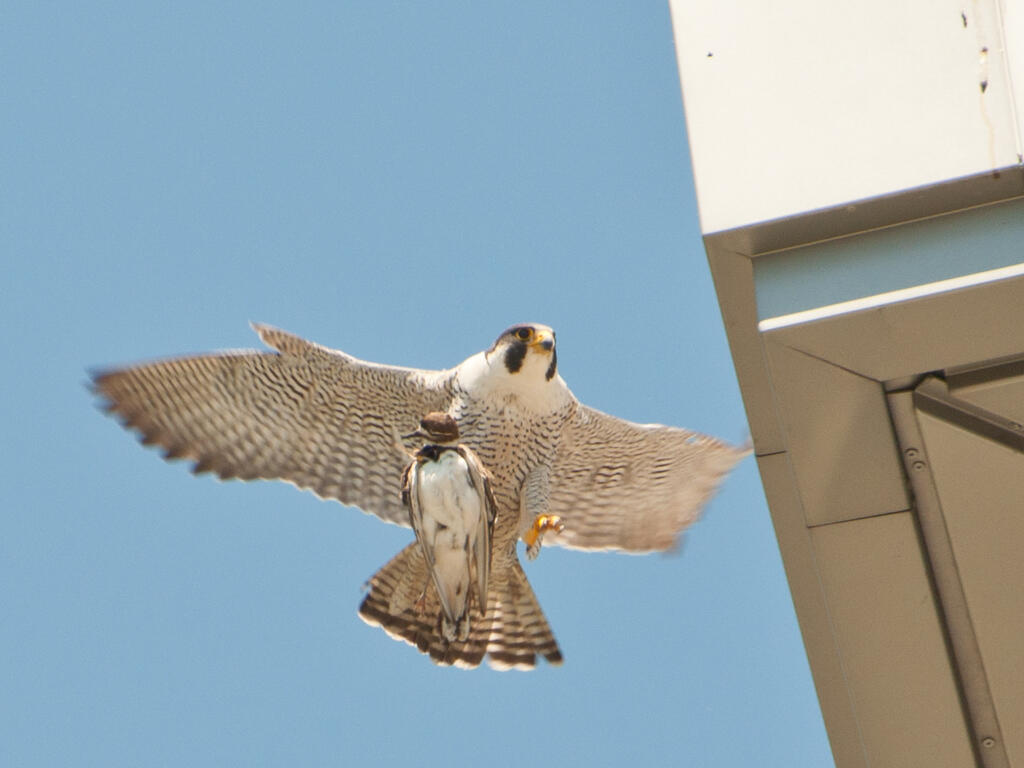
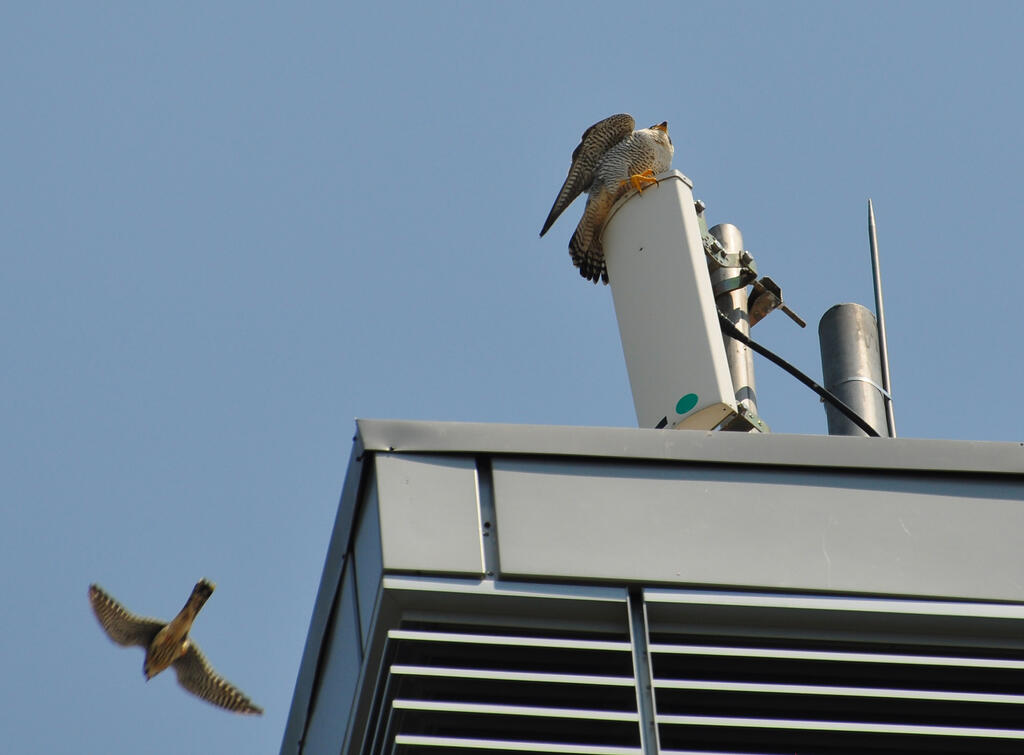
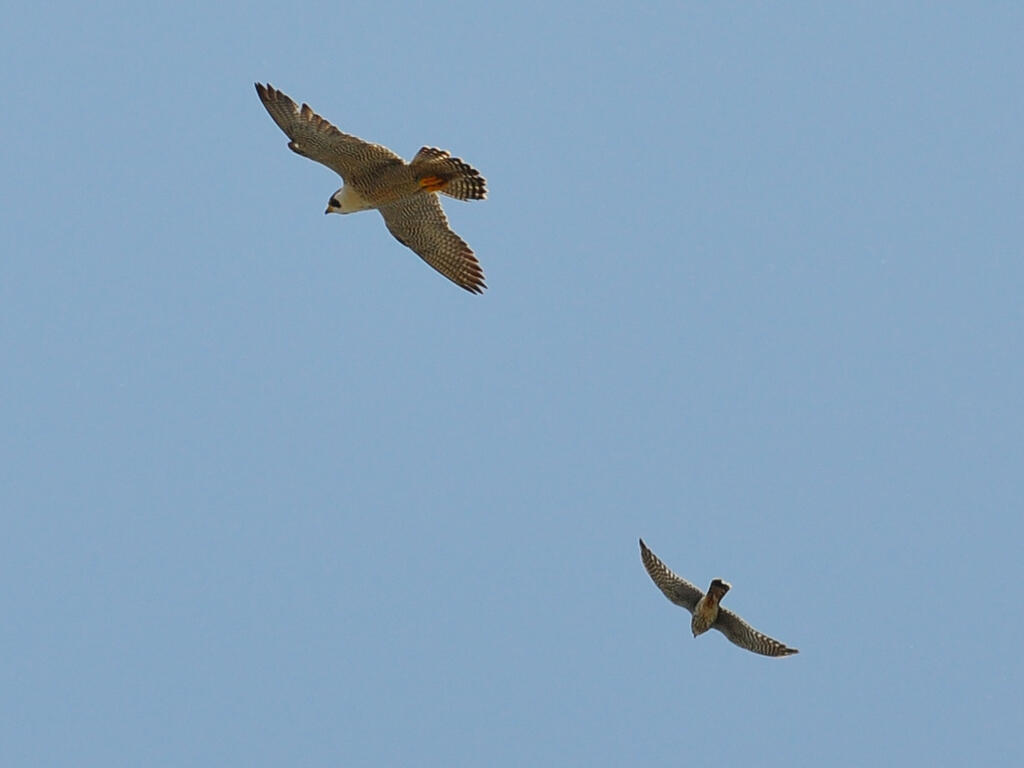
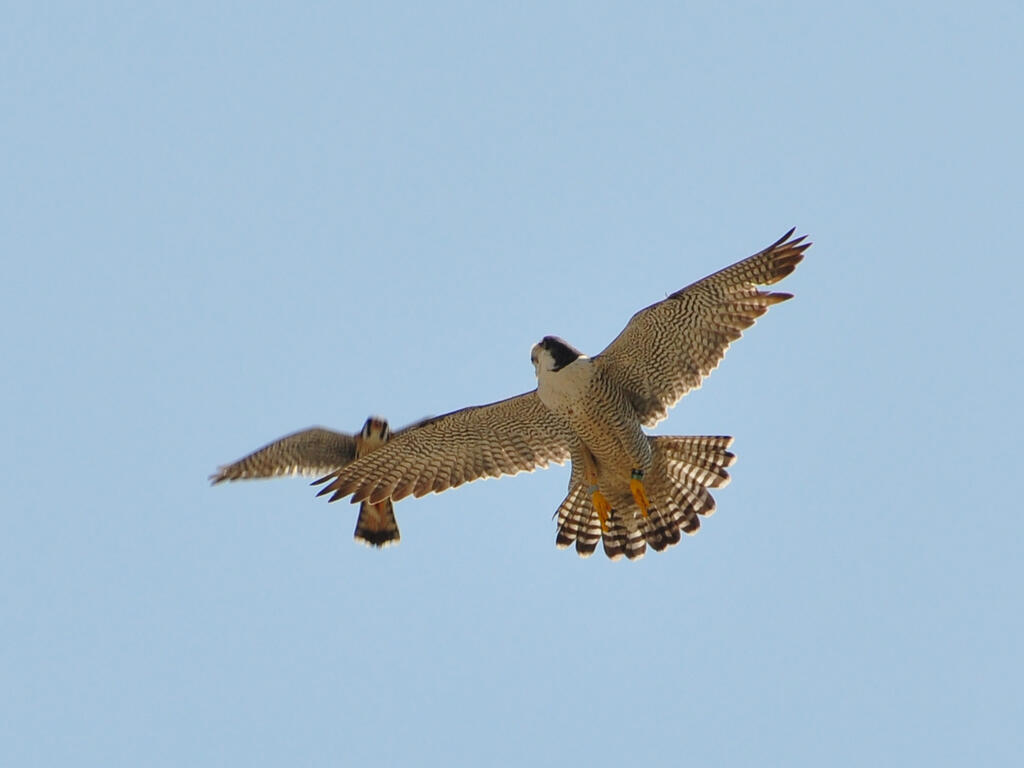
I am submitting some pictures from the last two days that I give permission to use. The ones of the Killdeer are from yesterday, the kill was dropped off at the Northwest corner, then the adult quickly flew off and today a not so friendly American Kestrel forced one of the peregrines from its perch and actually south down Hurontario towards the 407.
Good luck, and keep up the good work!
Winston
Posted on June 8, 2011 3:51 am
June 08, 2011 - Brampton - Courthouse
CPF Postmaster Reports:
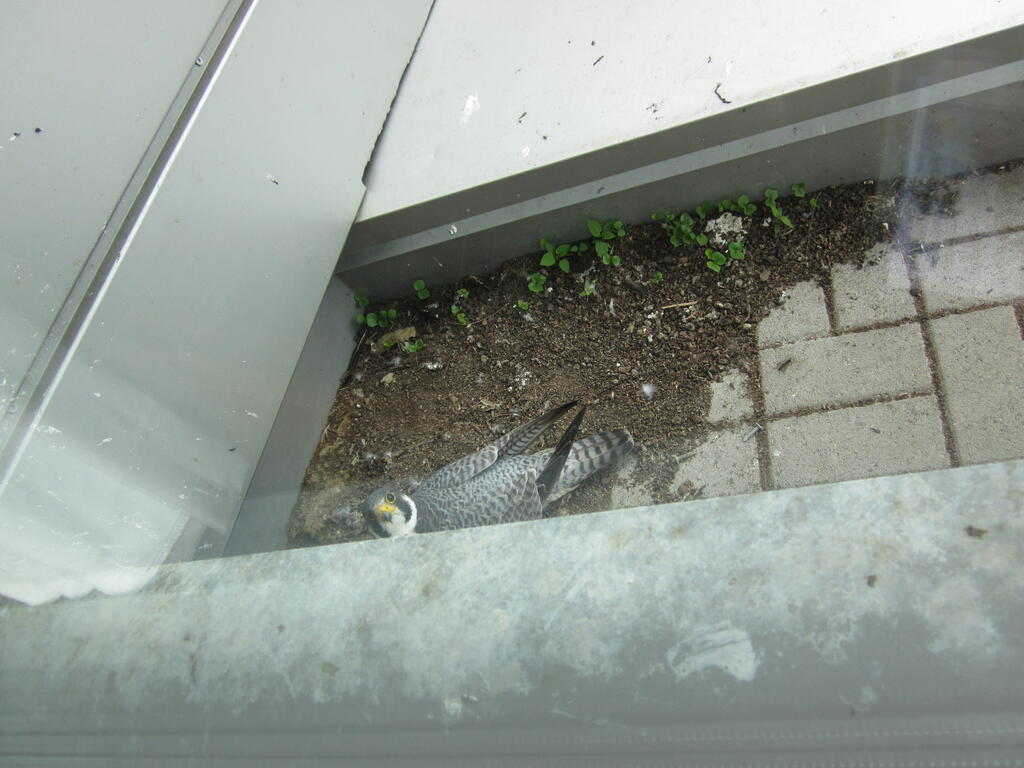
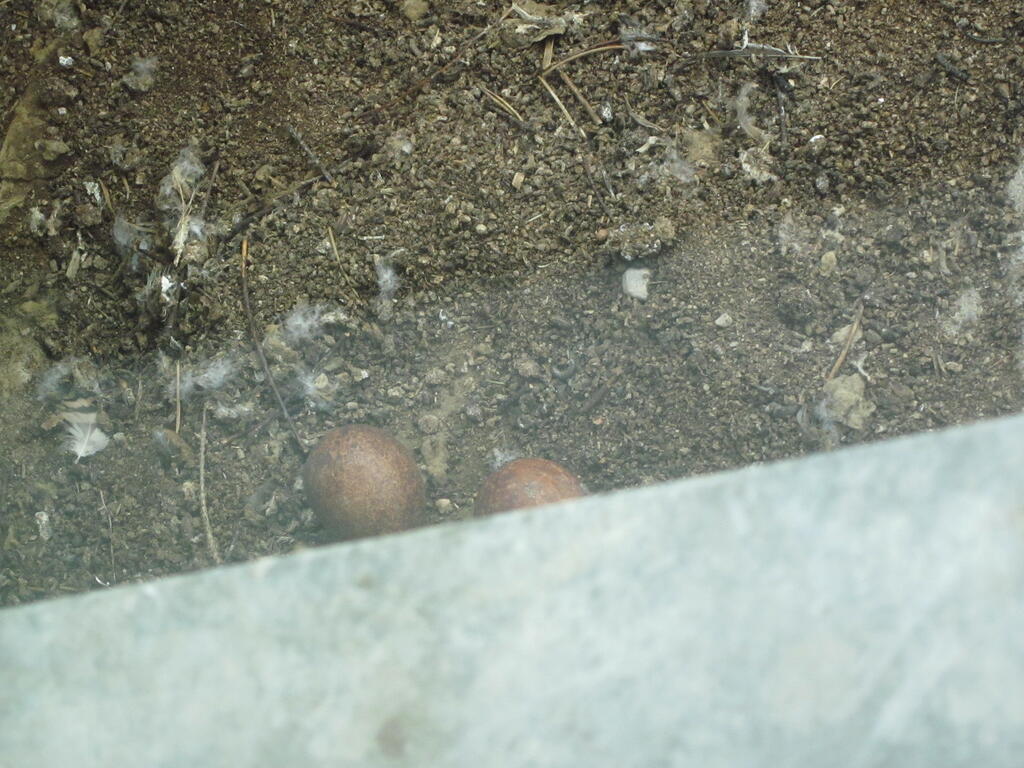
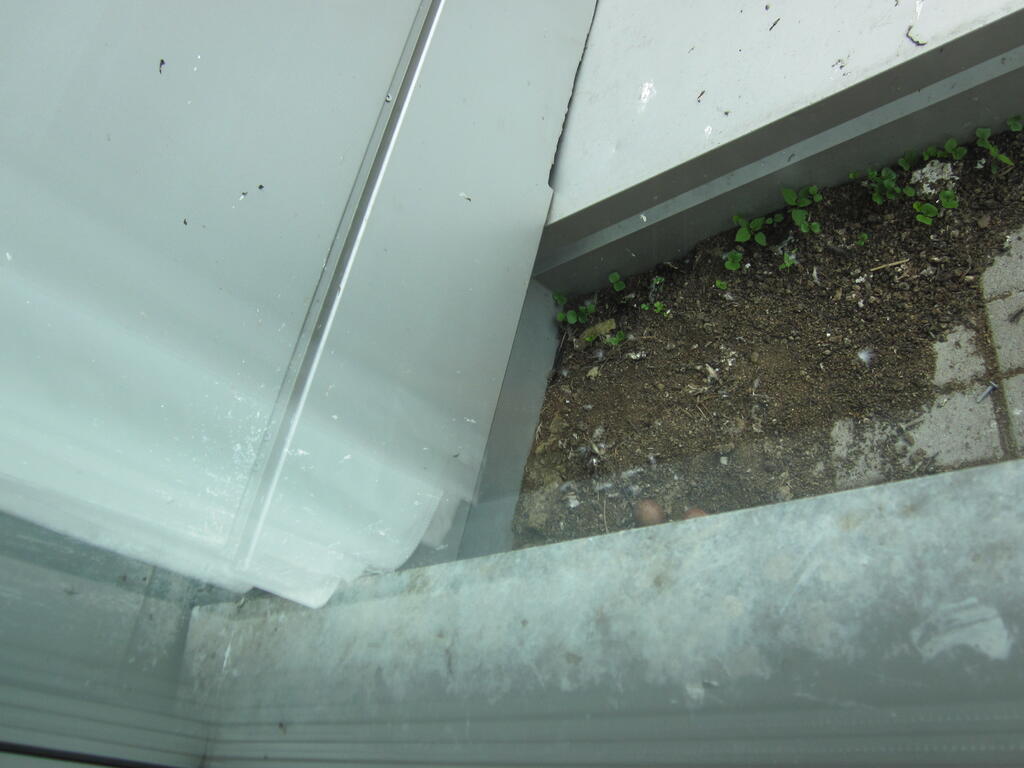
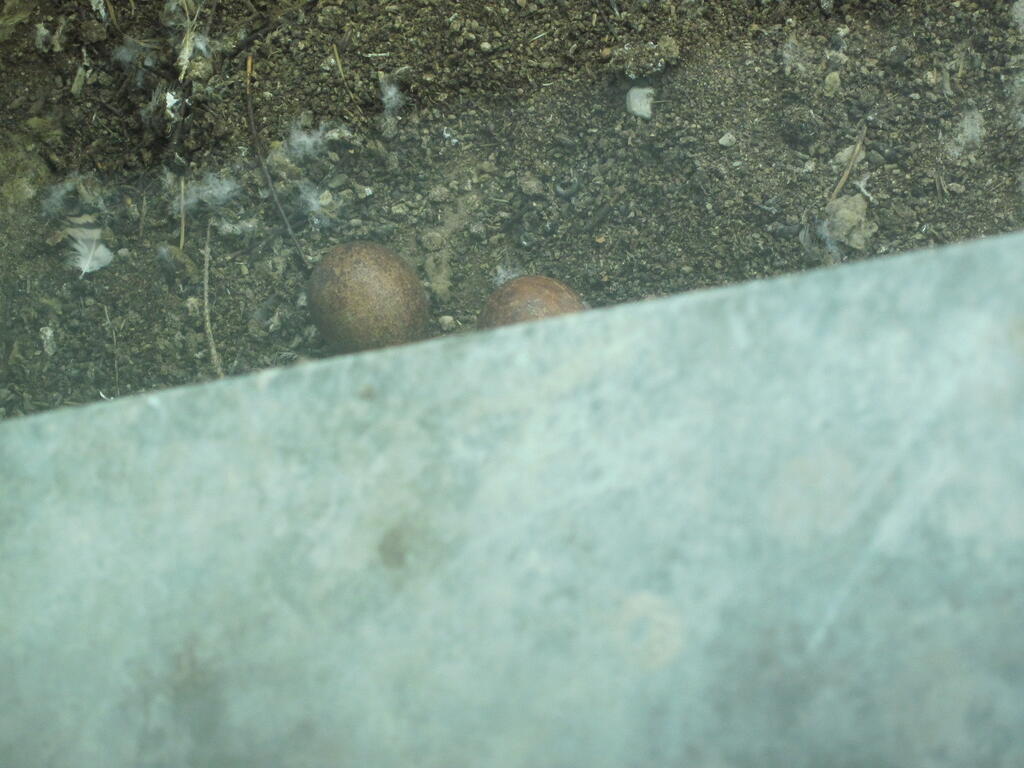
We have finally been given permission to post the photos e-mailed to us from the folks at the Brampton courthouse where Milton and Truss are currently incubating at least two eggs.
A big thank you to the property manager for all of their support and photos.
Stay tuned, more news to follow………
Posted on June 8, 2011 3:02 am
June 05, 2011 - International, National and Local News
CPF Postmaster Reports:
Date: Sun, 5 Jun 2011
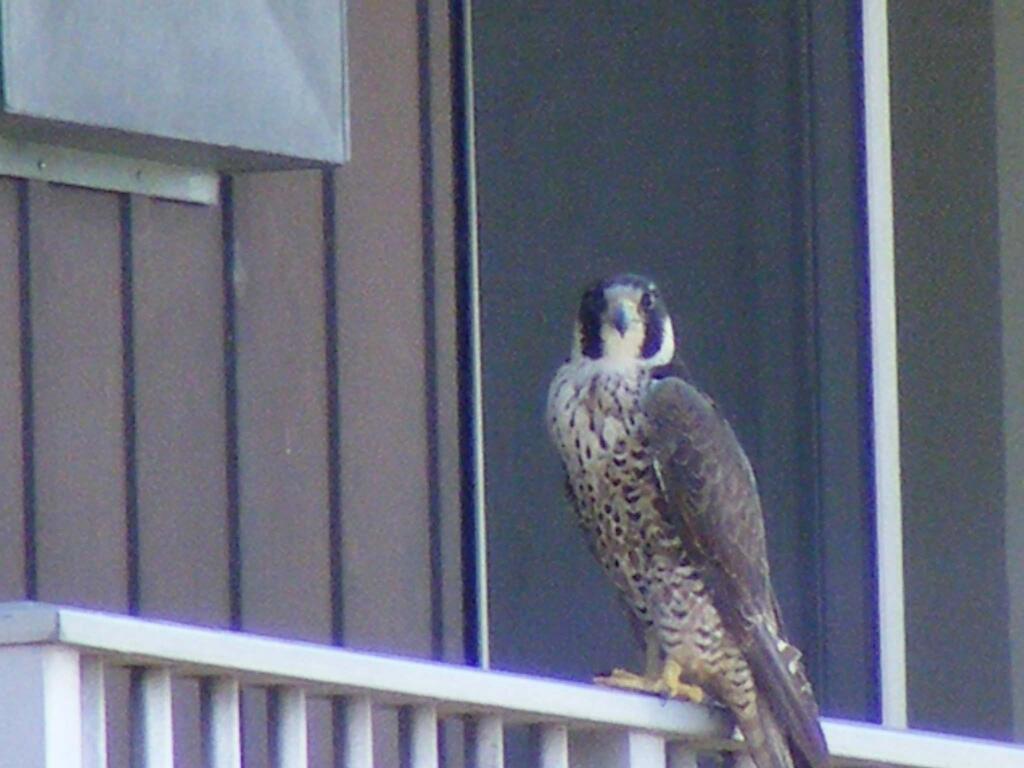
Today is Sunday June 5, it is 3:04 pm and there is a peregrine falcon sitting on the balcony 12th floor railing.. It has been sitting there all day just looking around. Very beautiful bird. My daughter is on the 11th floor on another building and she is taking pictures of it.
We are in Leamington, Ontario, Canada. Down by Windsor where one of the other sightings recently was.
Anita
Posted on June 8, 2011 2:54 am