June 05, 2009 - Etobicoke - Sun Life Centre
Bruce Massey Reports:
Sorry about the belated Reporting.
* Arrived 0645 Hrs. One Young Flapping a lot as I pulled up to Eagle Road.
* Female really, really doesn’t like Gulls, Kathy & I watched her hit a gull Twice and the second time she actually dangled the gull for about 2-3 seconds.
* Stopped AM Observation @ 0900 Hrs. to attend Mississauga Banding.
PM Observations:
* Back to Etobicoke @ 1230 Hrs. and Business as usual with 3 feedings till 2045 Hrs. when I broke off Observations.
Posted on June 7, 2009 9:23 pm
June 07, 2009 - Burlington - Lift Bridge
Sue McCreadie Reports:
Over the past few days, there hasn’t been too much activity to report. Cirrus has been doing drive by feedings. She just drops off the prey and the kids are feeding themselves. It won’t be long now. Take a look at the new feathers. Not little white fluff balls anymore. You can see in this photo that “Maple” is definitely a few days behind her big sisters.
Posted on June 7, 2009 9:21 pm
June 03, 2009 - Burlington - Lift Bridge
Sue McCreadie Reports:
JUNE 3, 2009
A – FEEDING BEFORE BANDING
B – THE ACTION STARTS
C & D – SIR AND CIRRUS CARRY ON DURING BANDING
E – IT’S ALMOST OVER
F – HEY MOM WANT TO SEE MY NEW JEWELRY
G – AFTER A VERY LONG DAY SOME DINNER
Posted on June 7, 2009 8:59 pm
June 07, 2009 - Toronto - King Street
Linda Woods Reports:
Most of the day, the King St. four are out of sight of the camera. The evening finds them more active. This evening, the older siblings were at the far end of the ledge, while Speck kept to himself near the working camera.
Posted on June 7, 2009 8:05 pm
June 07, 2009 - Toronto - Sheraton Centre
Linda Woods Reports:
Multiple visits to the Sheraton Centre Hotel and all four are still enjoying the view. Lots of flapping by Stormin and Sandy- Links, but they both have down on them. Slight chance of a first flight tomorrow. Forecast is for heavy rain in the afternoon. I think it might be best if they stayed at home, till the weather is clear.
Posted on June 7, 2009 7:58 pm
June 07, 2009 - Etobicoke - Sun Life Centre
Baylie Kastner Reports:
First flight of male on Etobicoke nest was at approximately 8.30 am. I was called by Bruce and headed out with my camera and took photo of the bird perched atop a wooden owl on the condo at 2 Aberfoyle. After a short time the bird took flight headed south between the office towers and eventually ended up in a tree in the backyard on Lothian Street.
Posted on June 7, 2009 2:54 pm
June 07, 2009 - Toronto - King Street
Linda Woods Reports:
Viewing the King St. group of peregrines is somewhat difficult. They either must be very camera shy, or they have added on a spare room. Very seldom do I capture their images from the Web Cam. They must be directly under the camera and out of view.
Posted on June 7, 2009 12:13 pm
June 07, 2009 - Toronto - Sheraton Centre
Linda Woods Reports:
All four chicks accounted for when I visited the nest camera at the Sheraton. this morning. I think Liberty is our lone bird this year. Many times visiting the site, I see him alone, either in the nest tray, or further down the ledge away from the others. Osler on the other hand, is always near the nest tray or on the lip of the ledge. Sandy- Links and Stormin are just cute.
Posted on June 7, 2009 12:10 pm
June 05, 2009 - Mississauga - Executive Centre
Mark Nash Reports:
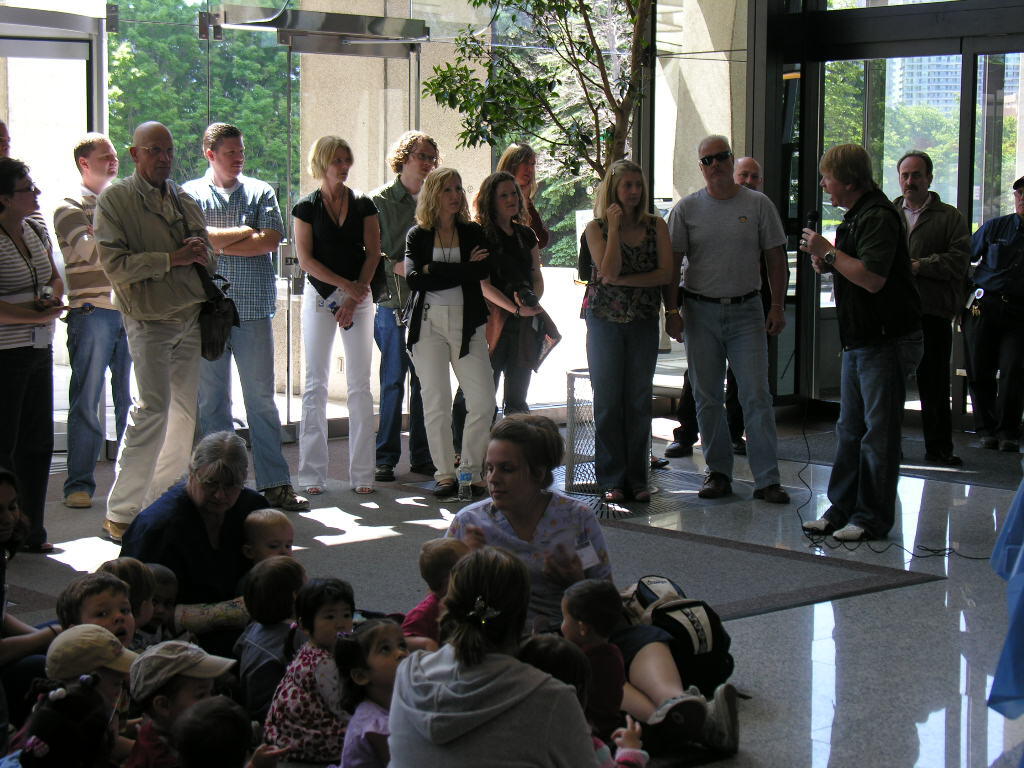
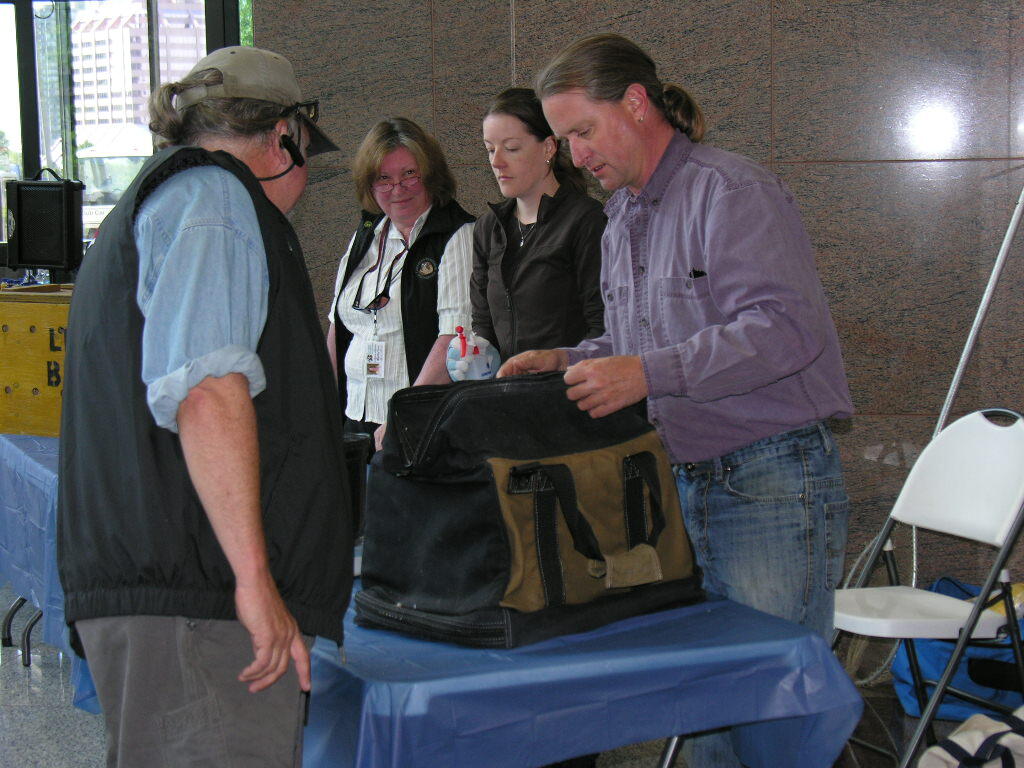
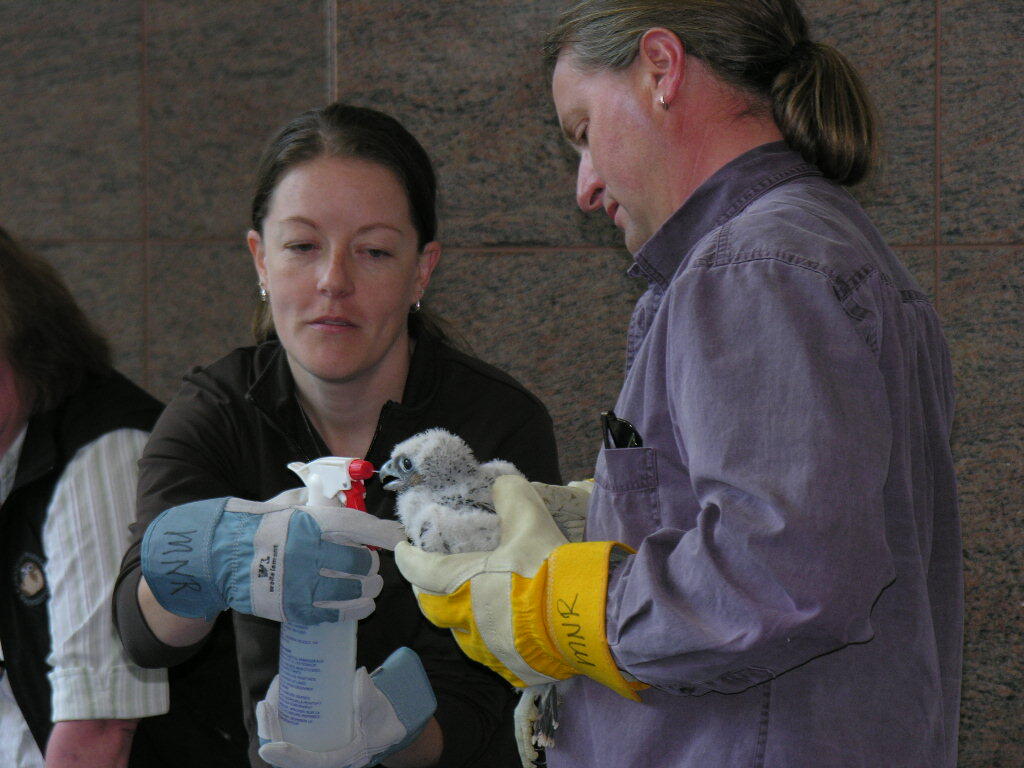
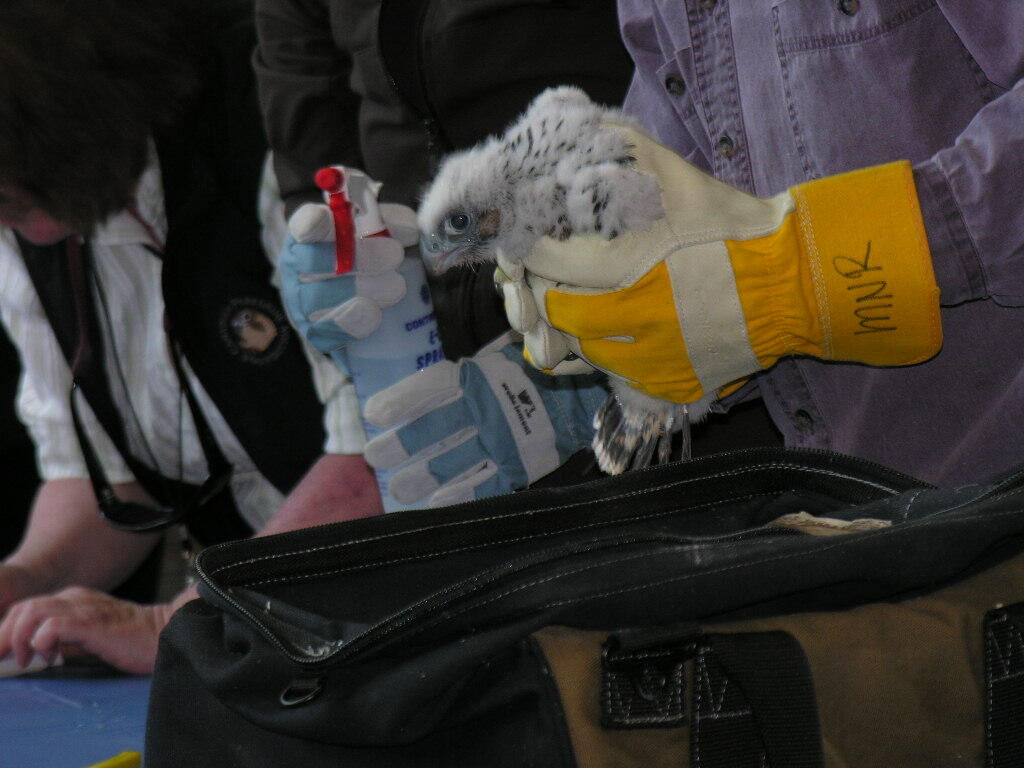
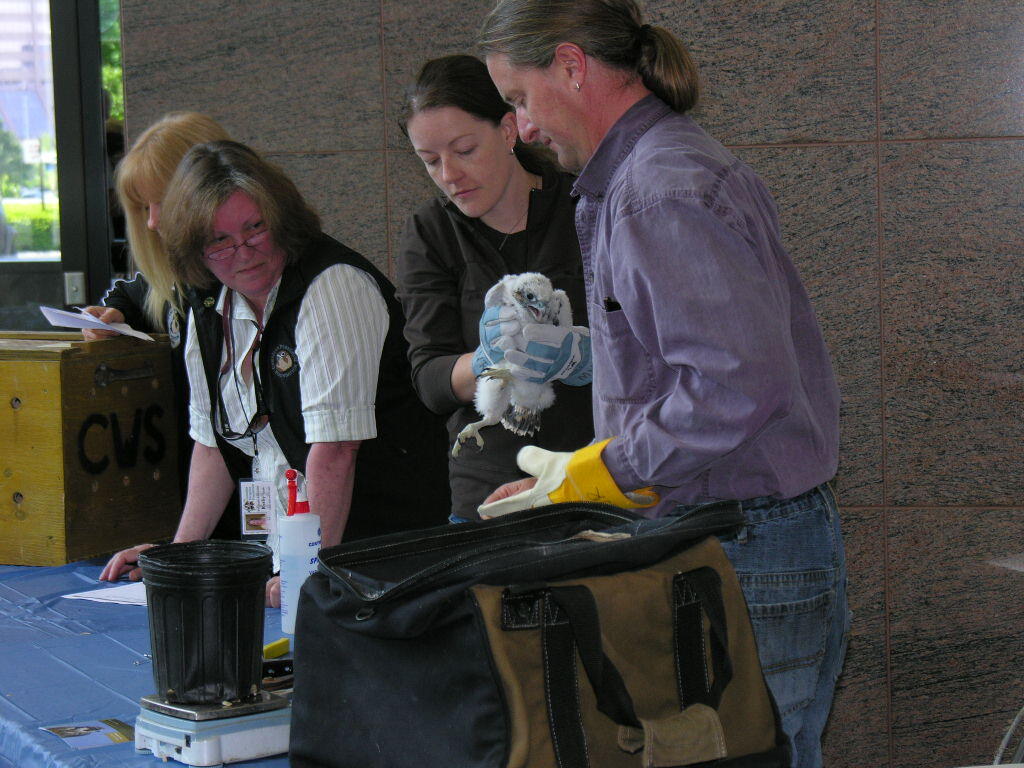
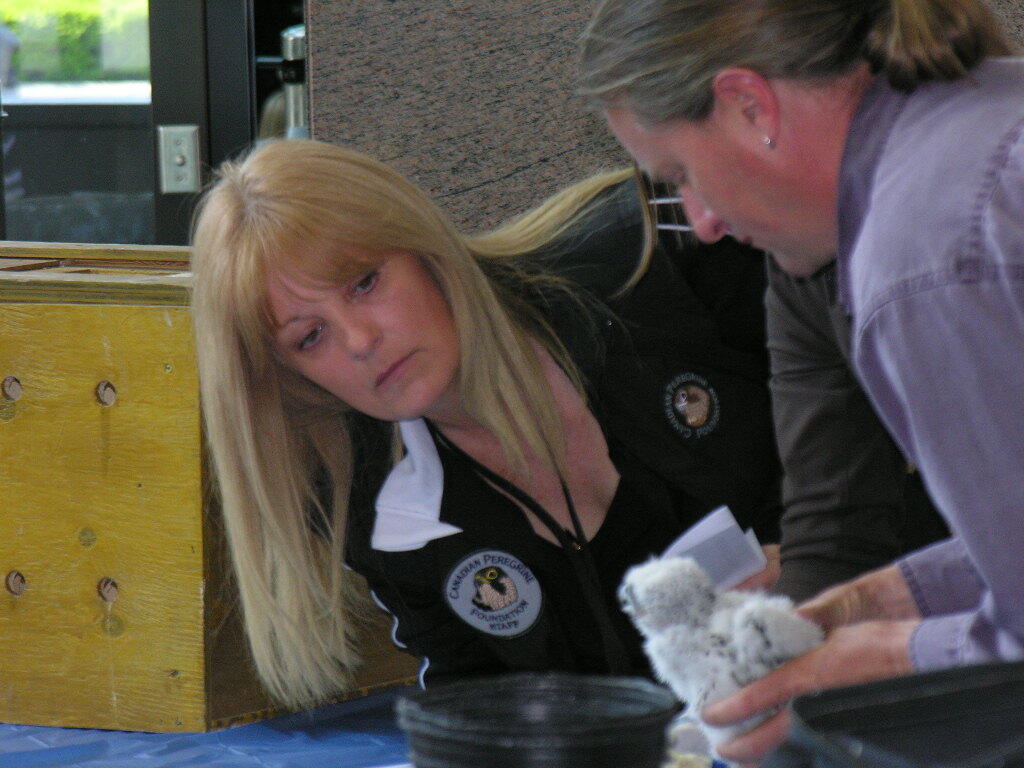
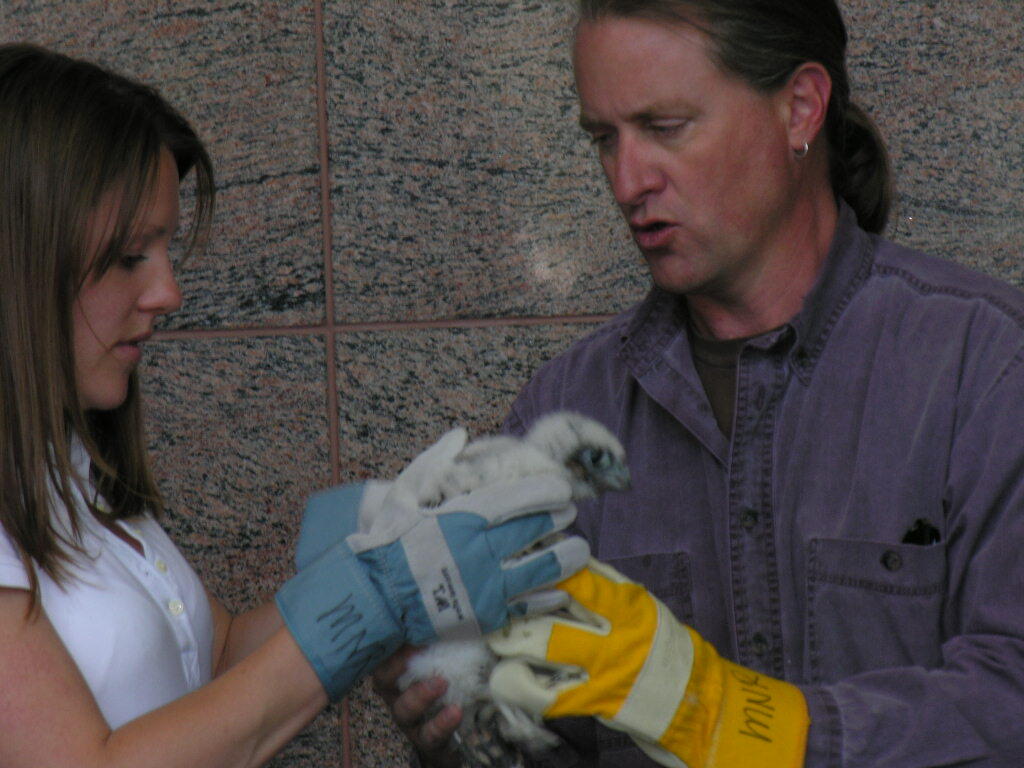
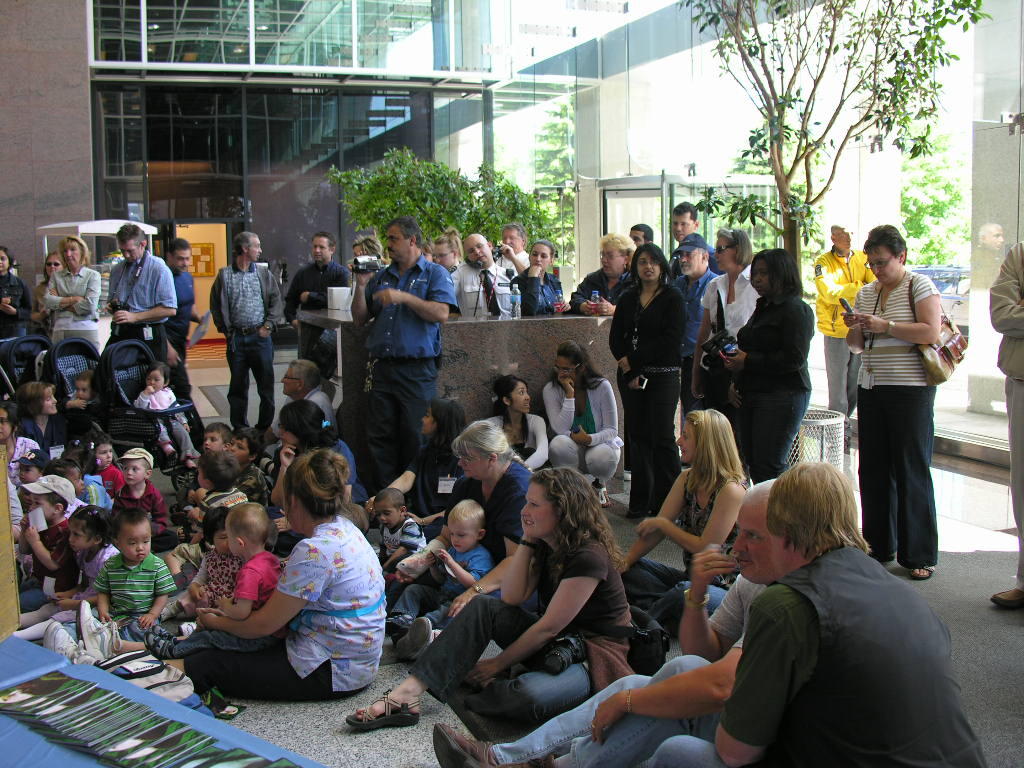
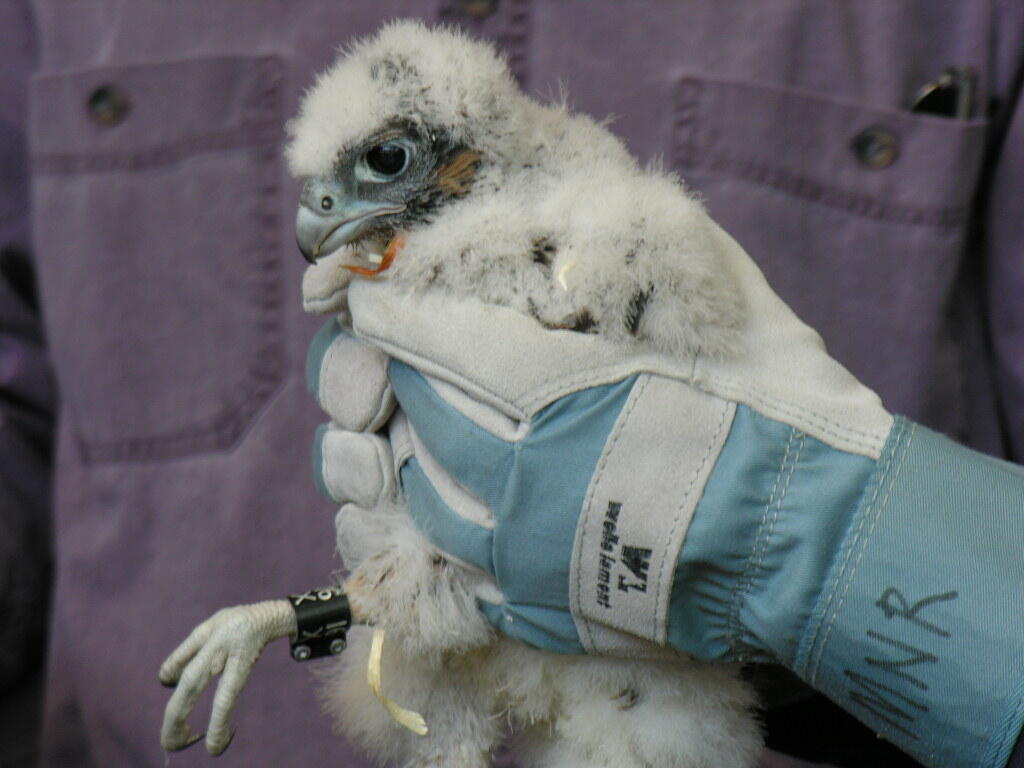
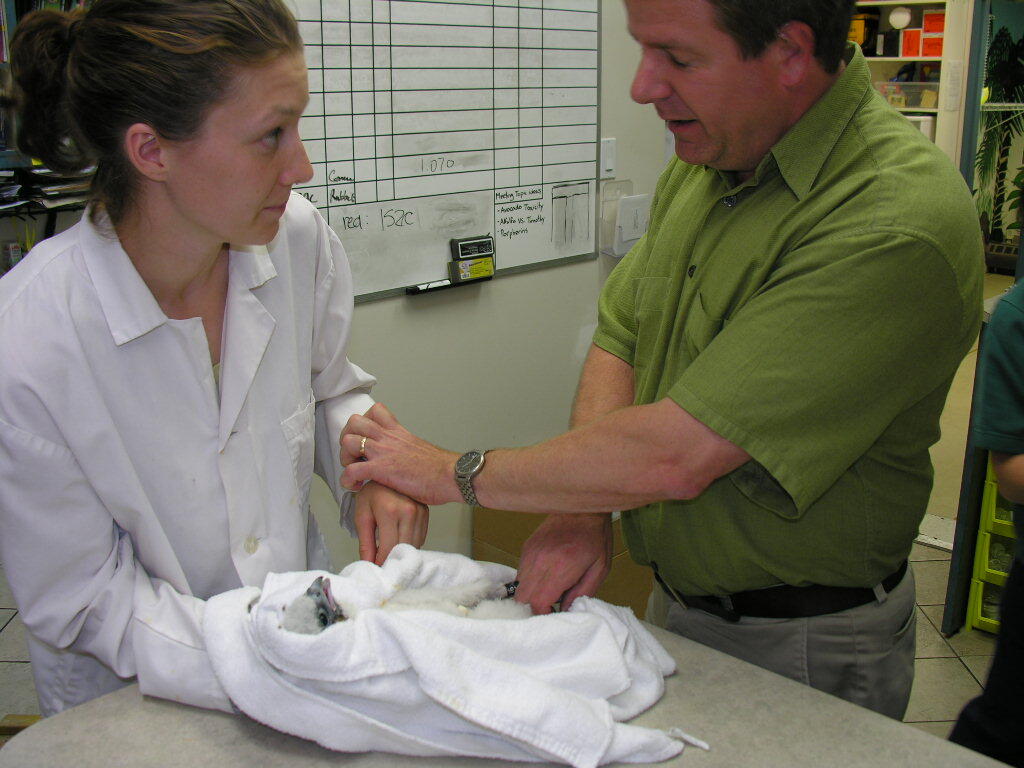
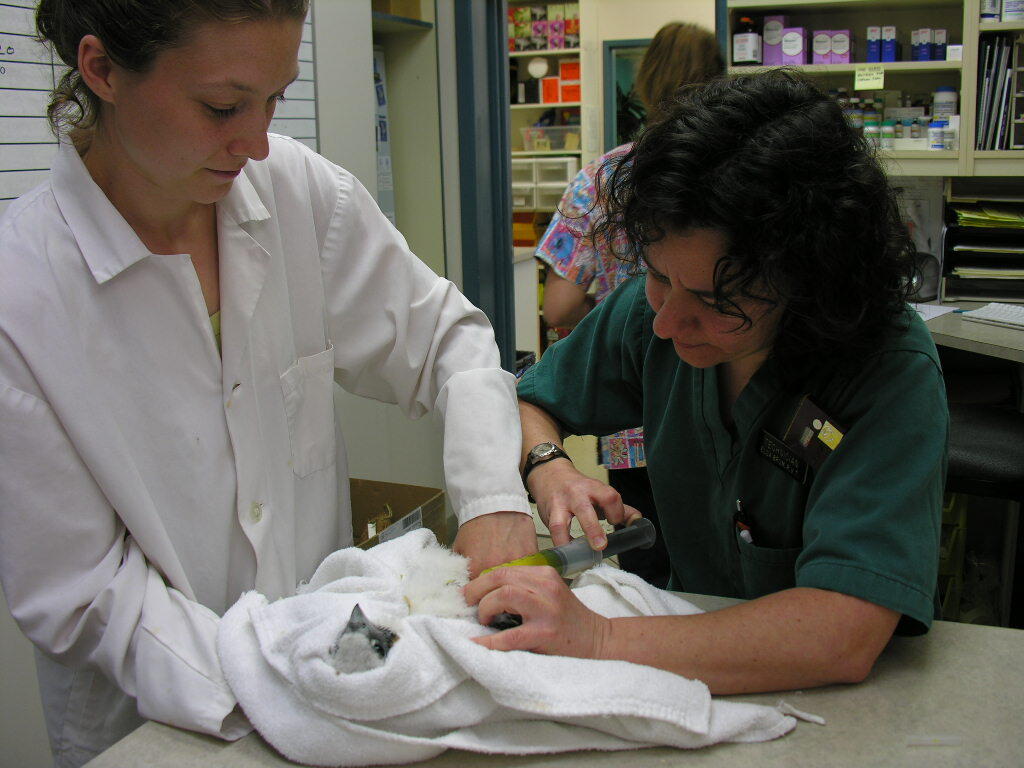
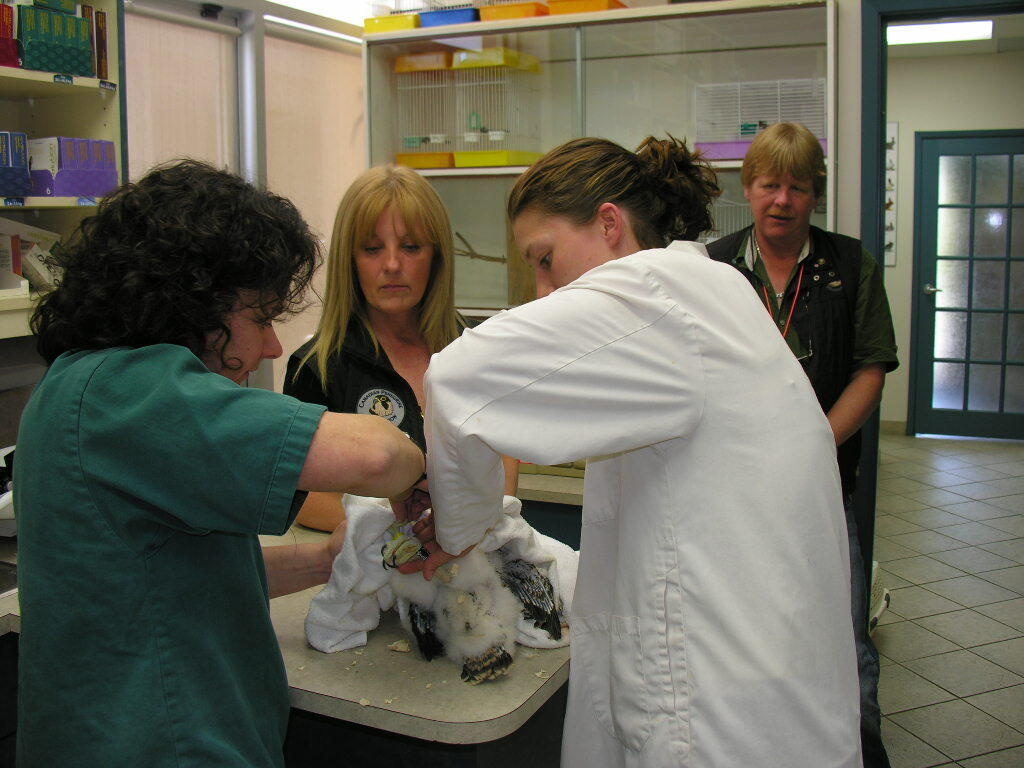
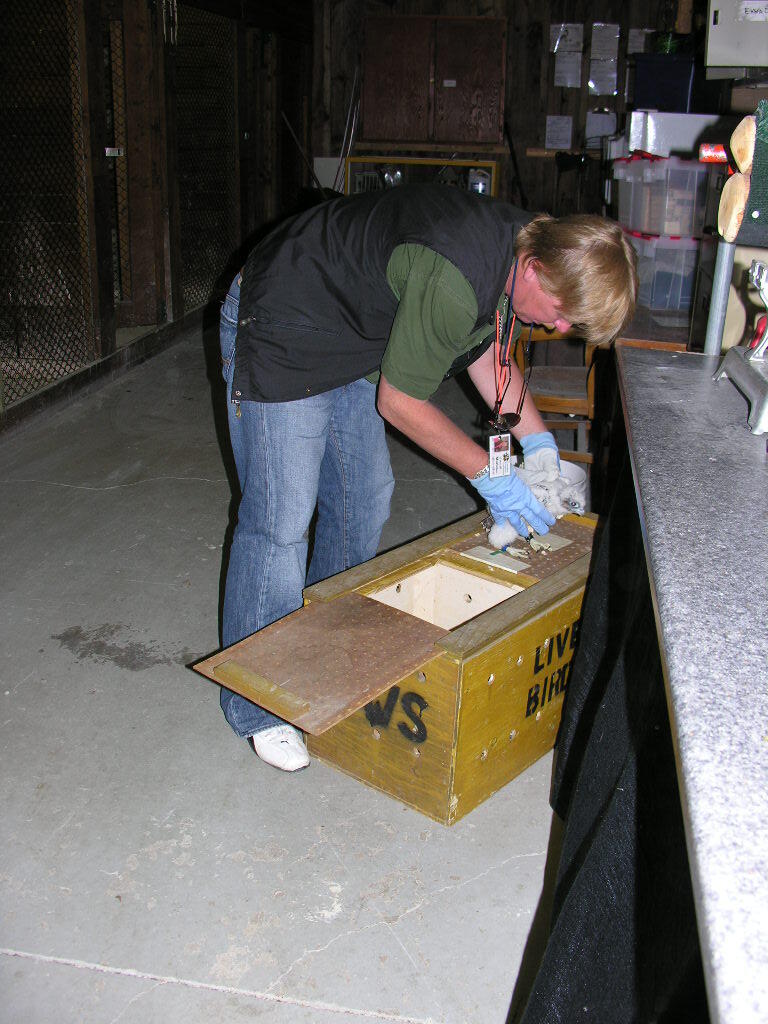
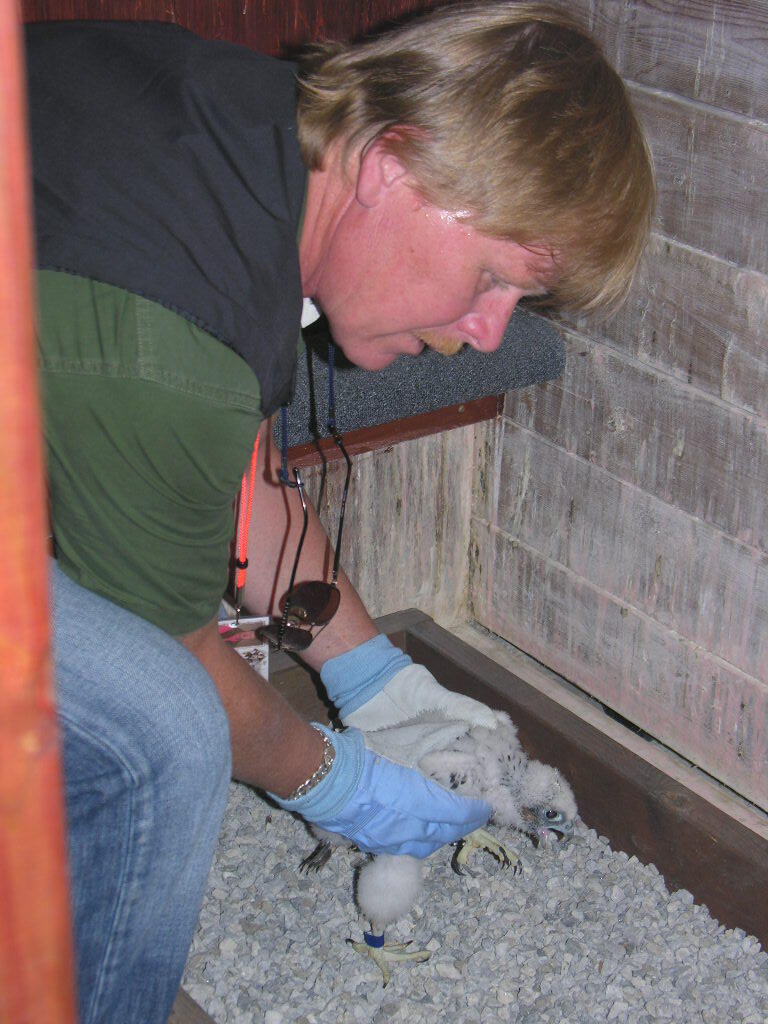
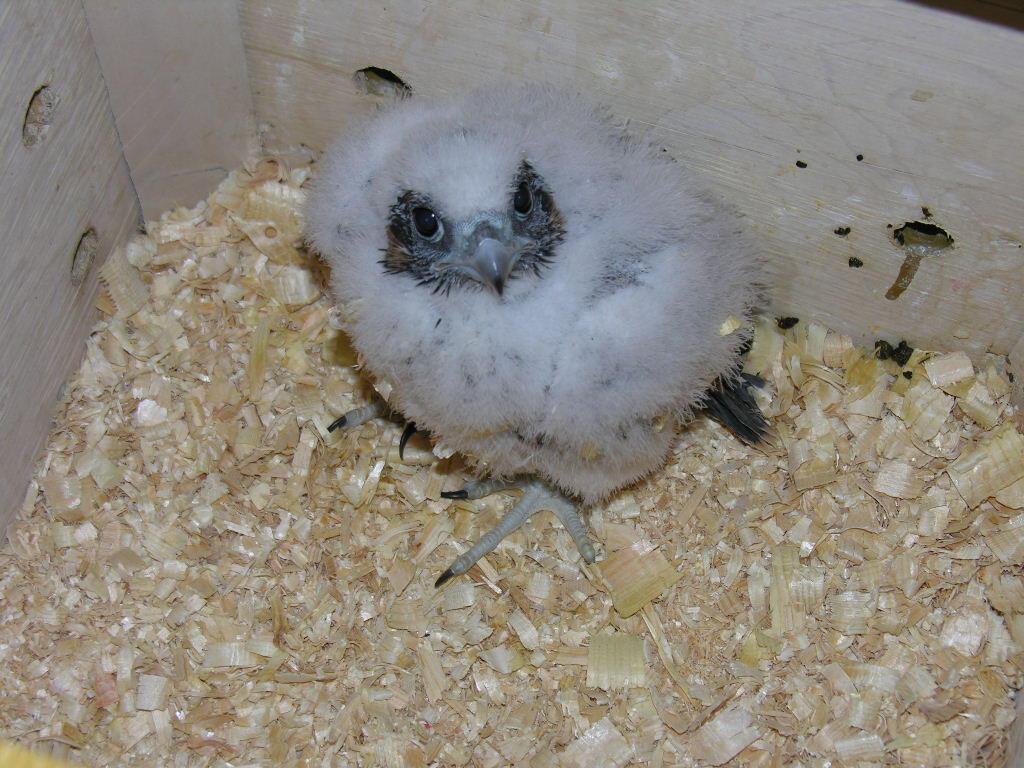
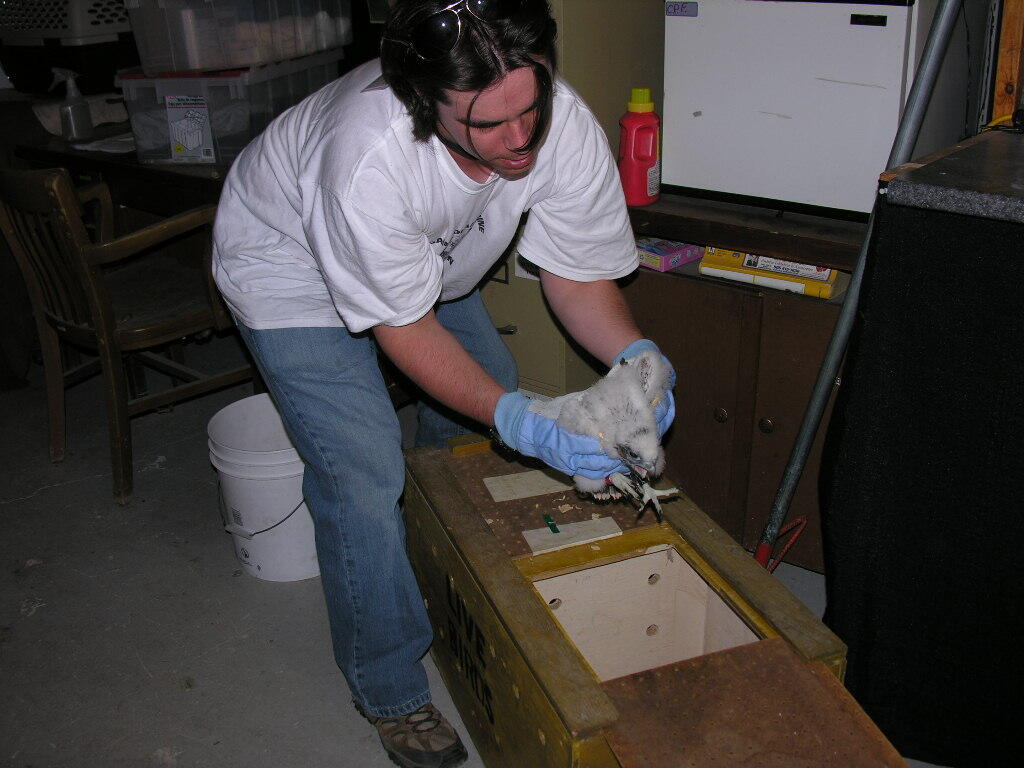
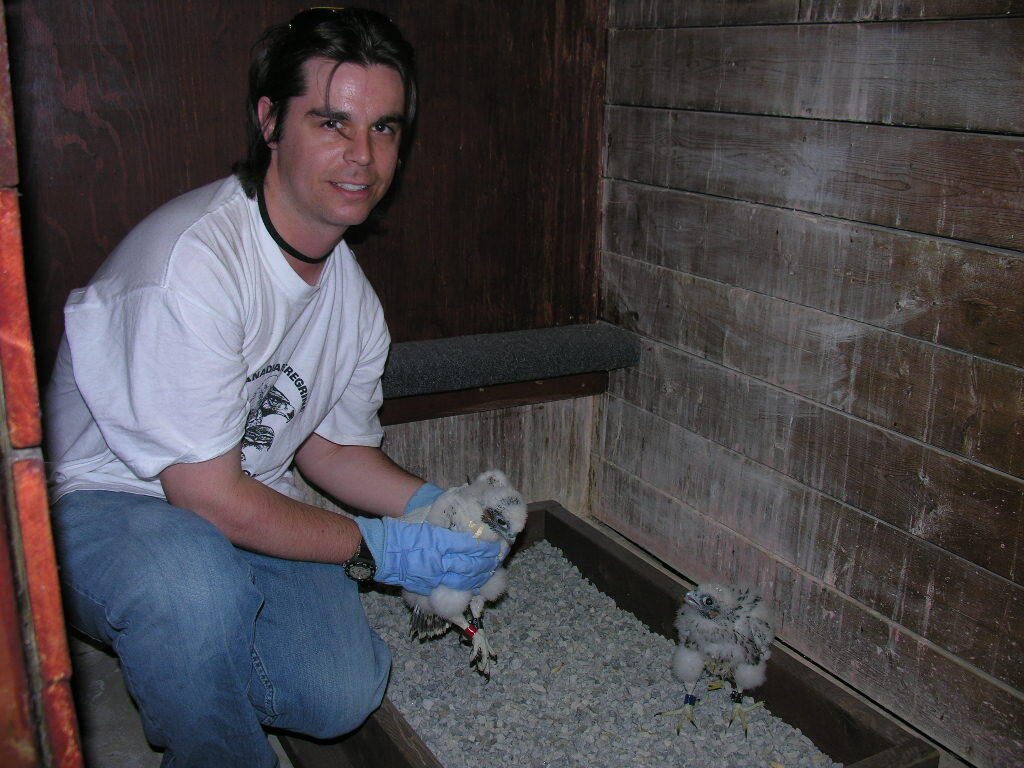
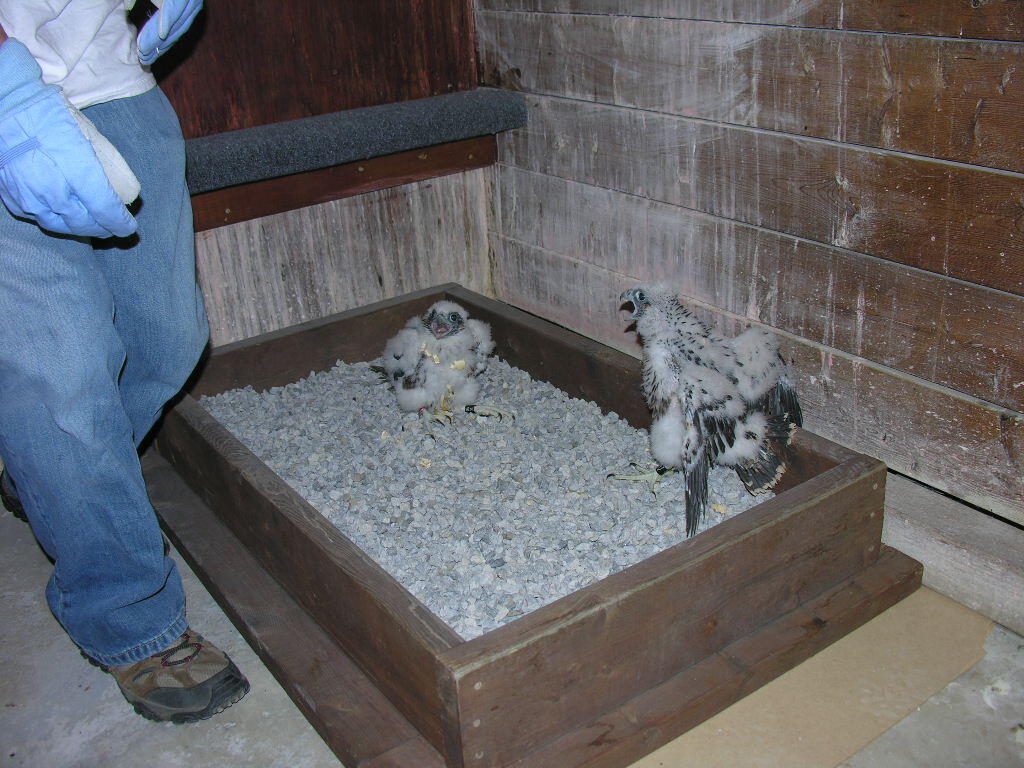
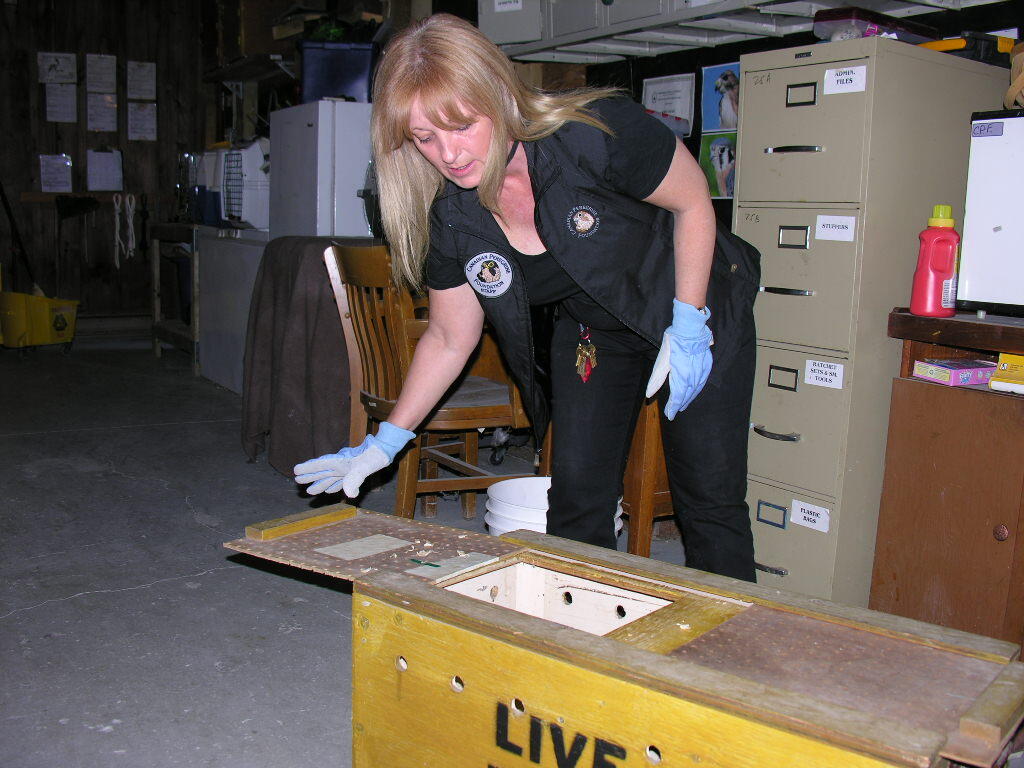
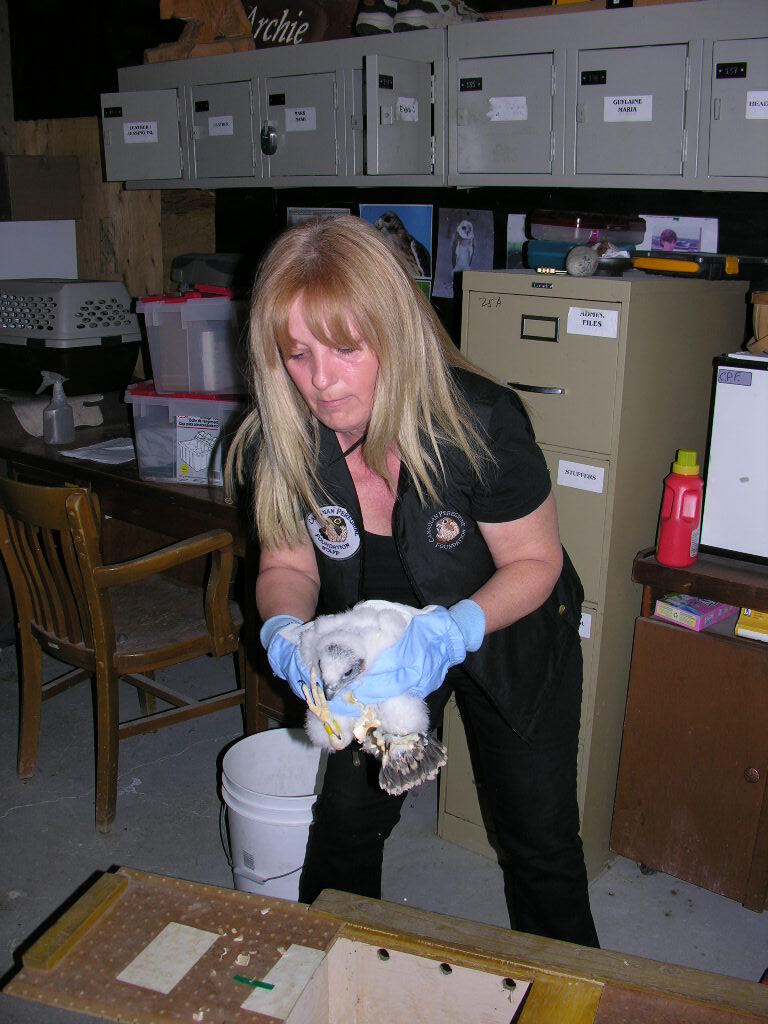
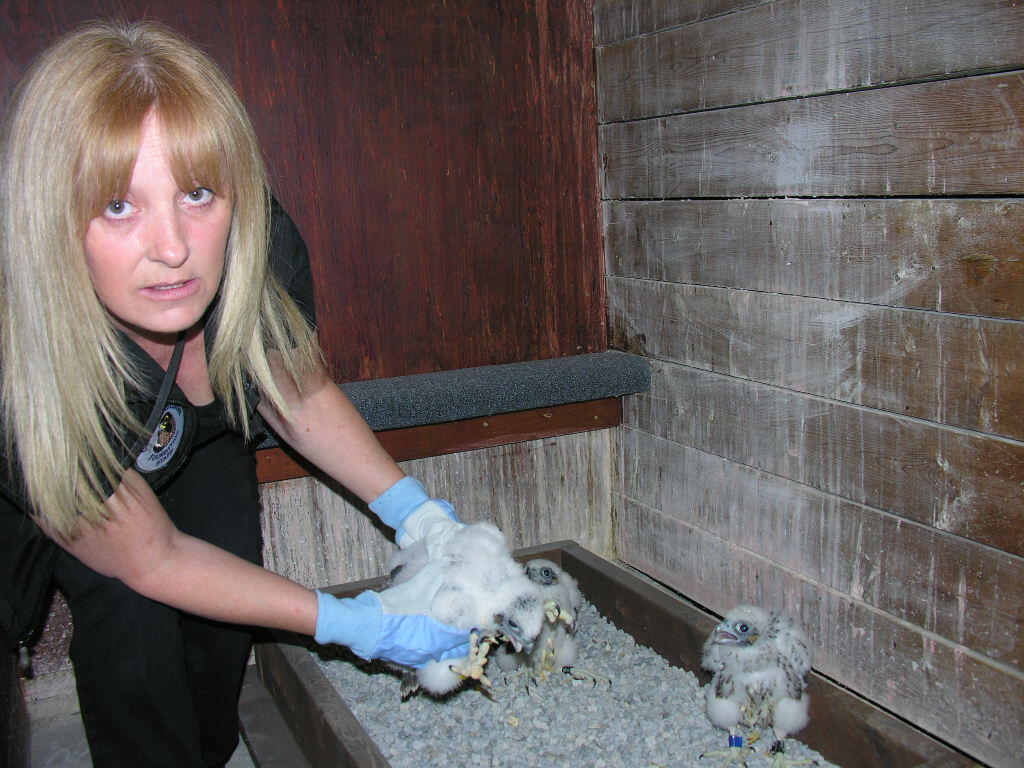
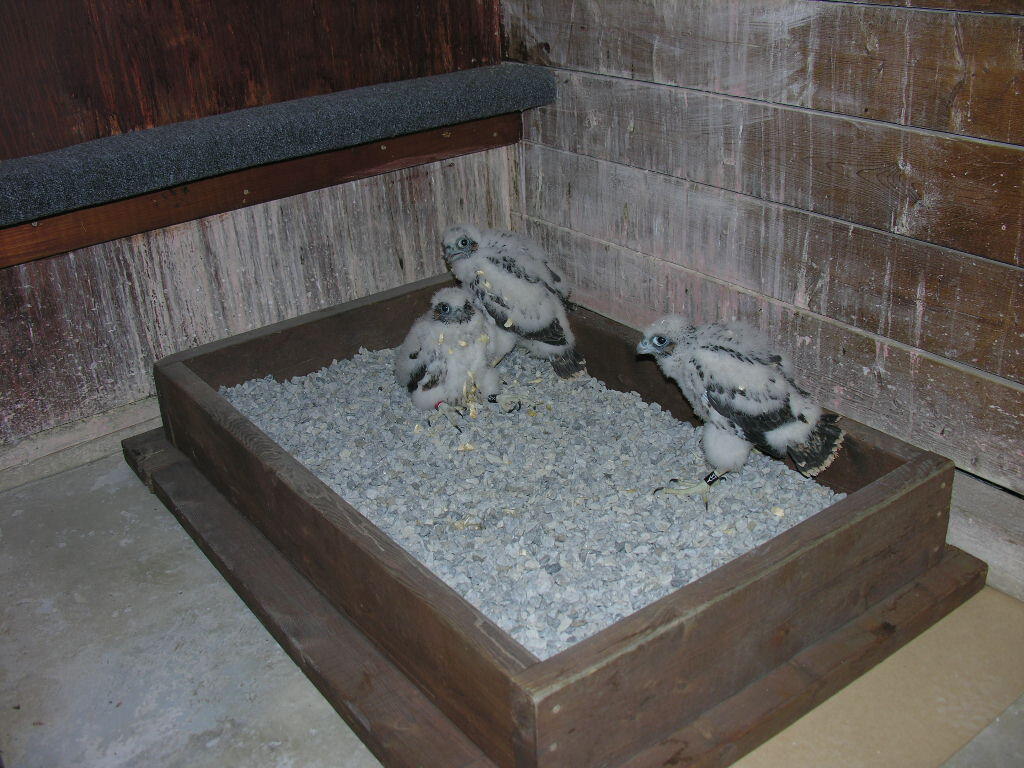
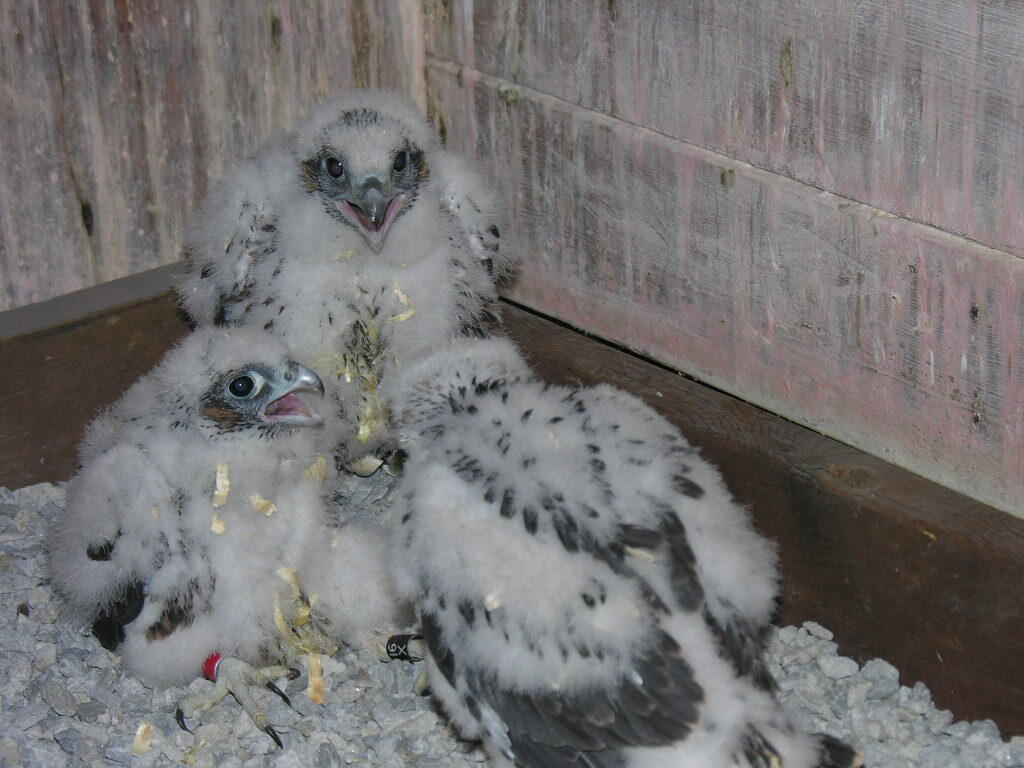
What started out to be a great banding day with sunny skies and mild temperatures, the day finished with some tragic news with a few twists. With the support of management team at Mississauga Executive Centre and Oxford Properties, the good folks at Skyreach Window washing and the Ontario Ministry of Natural Resources, everything was ready to go for the banding of the three MEC peregrine hatchlings. With the ground floor of MEC # 1 lobby full of excited onlookers, the three young peregrine hatchlings were delivered to the banding table without a hitch for what has become an annual banding event. As the chicks were removed from the carrier to be weighed and banded, it was quite obvious that something was not quite right. While healthy in their appearance to the untrained eye, the disposition, behavior and low weights of the hatchlings were telling quite another story. After the banding was successfully completed, the final tale of the take came to light. This why the observations and nest cameras are so important for the management of the urban nest sites. During the physical extraction of the hatchlings from the nest box, it was clear that while two adult peregrines were on hand roosting on the roof edges of MEC #3 across the courtyard, neither of the adult peregrines were the slightest bit interested in defending or objecting to the window washers swing stage and the humans presence at the nest box. (This despite the fact that both adult peregrines were VERY AGGRESSIVELY defending and objecting to the window washing activities last week when they were on the roof top of the nest building while making ready and setting up the window washing swing stage to prepare it for today’s banding event).
Recognizing that this very different and unusual behavior on behalf of the two adult peregrines that were clearly in view, roosting on the roof top edges of MEC building # 3, further warranted a more detailed investigation during the extraction of the hatchlings from the nest box.
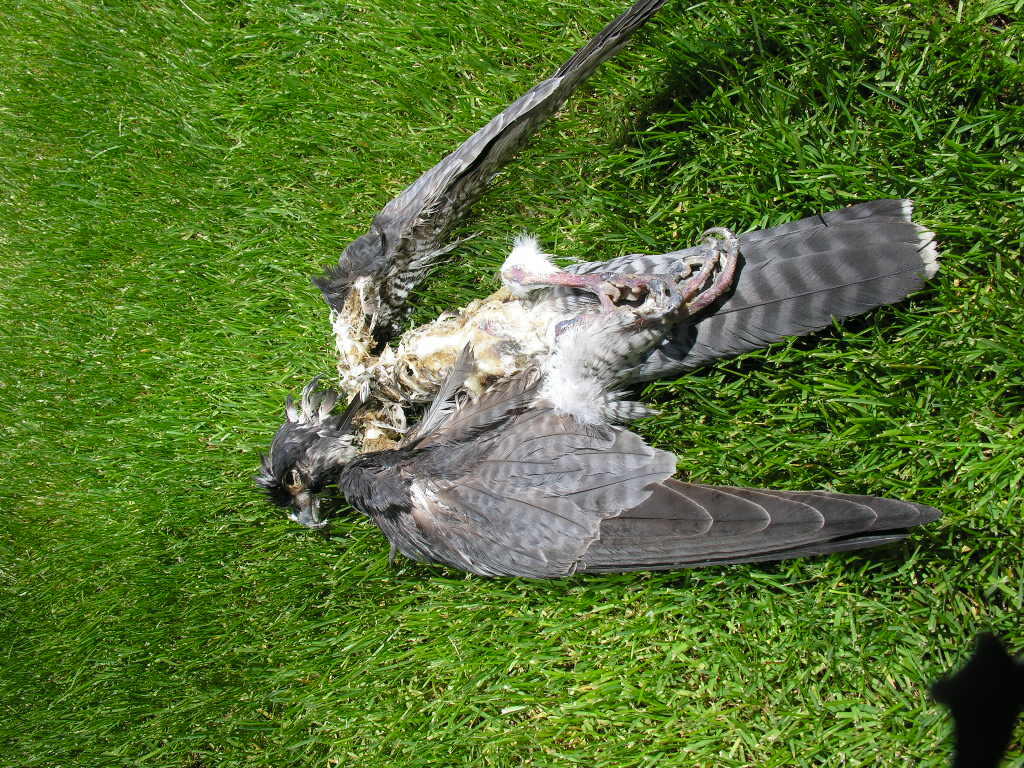
A detailed look in and around the nest ledge resulted in finding the lifeless dead body of the original resident adult female on the nest ledge several feet away from the nest box!
It became quite apparent that a original resident adult female (the hatchlings paternal mother) ws dead and had likely had been killed in a territorial battle with another adult female peregrine. It was also quite evident that a new adult female was the female currently in view on the building rooftop at MEC #3, and had absolutely no interest in the extraction team at the nest ledge, nor interested in protecting the three hatchlings in the nest box. The resident adult male (confirmed by his leg bands) was also not interested in the slightest in defending the hatchlings during their extraction from the nest box.
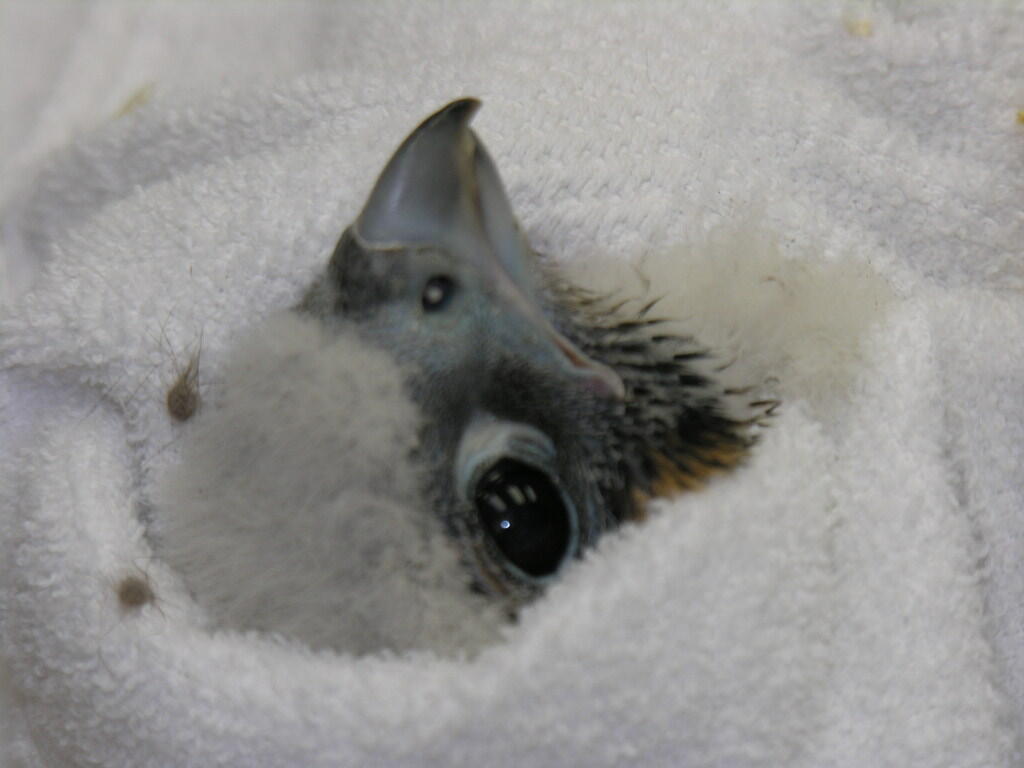
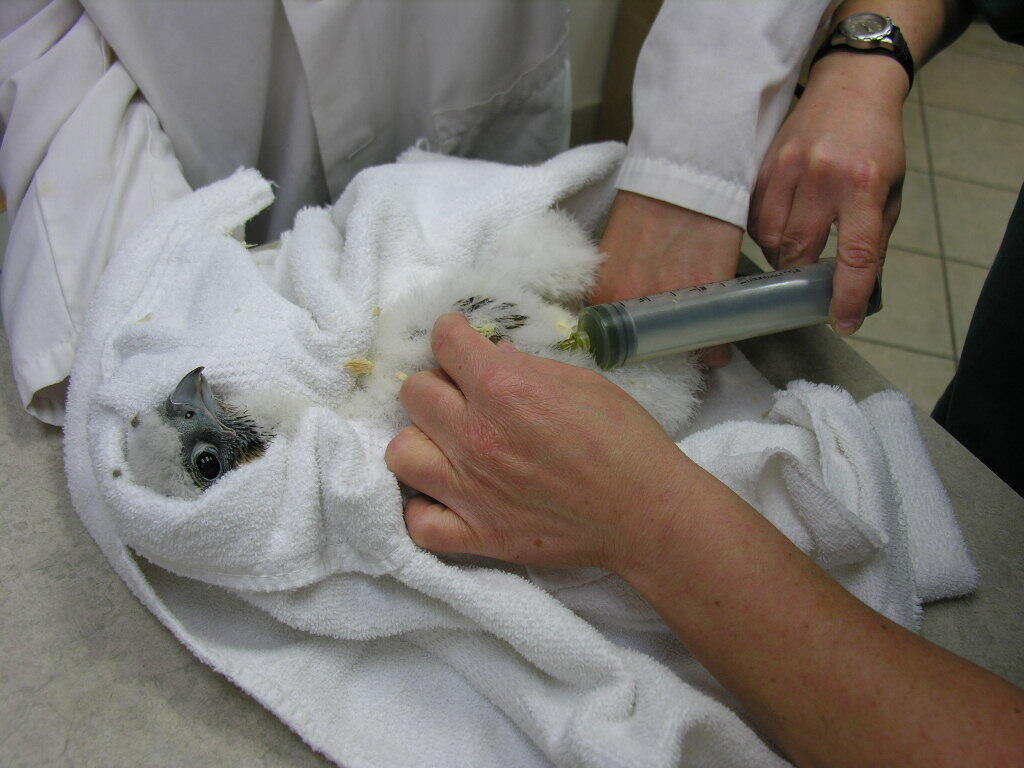
The odd behavior and underweight hatchlings provided yet another part of the puzzle. Two of the three hatchlings were underweight for their age and sex, and appeared listless and undernourished. The much smaller and younger male hatchling also appeared to be suffering from dehydration.
All of the hatchlings were disturbingly very quiet and lethargic at the banding table. Quick review of the recorded archived camera footage revealed additional pieces of the puzzle. The last observed feeding by any adult female was on May 27th. Subsequent feedings were being done by an adult male only.
A more detailed review of the observation records and the recorded camera footage also revealed that the food packages that the adult male was bringing in to the nest box were very small, and had become fewer and further between.
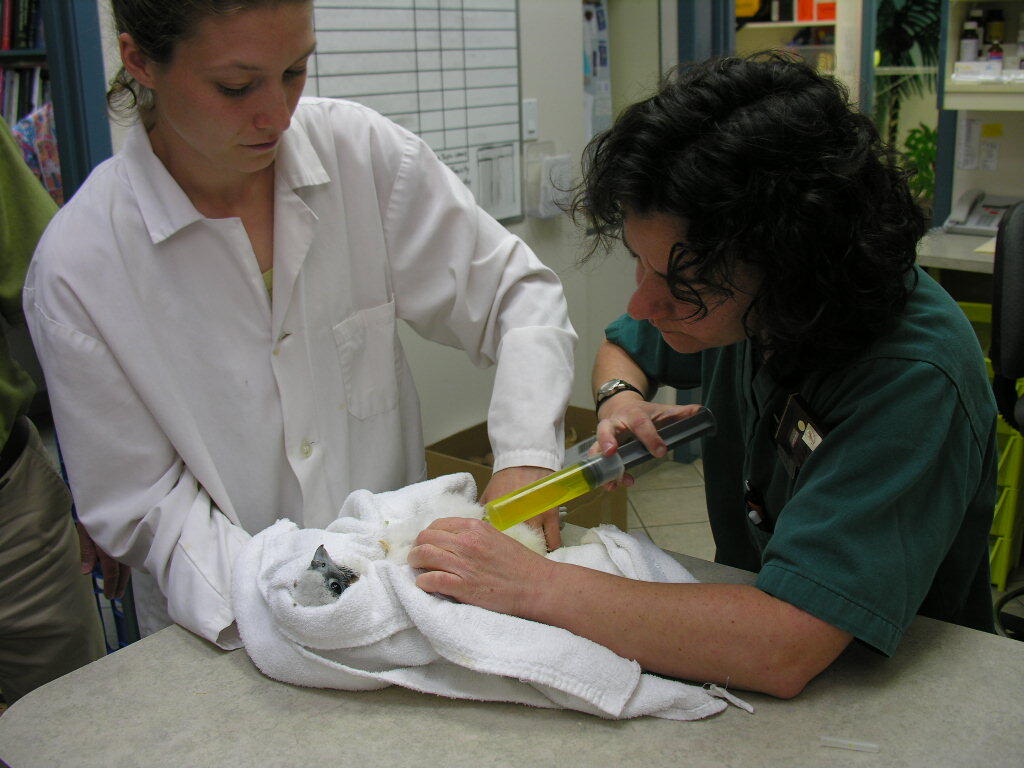
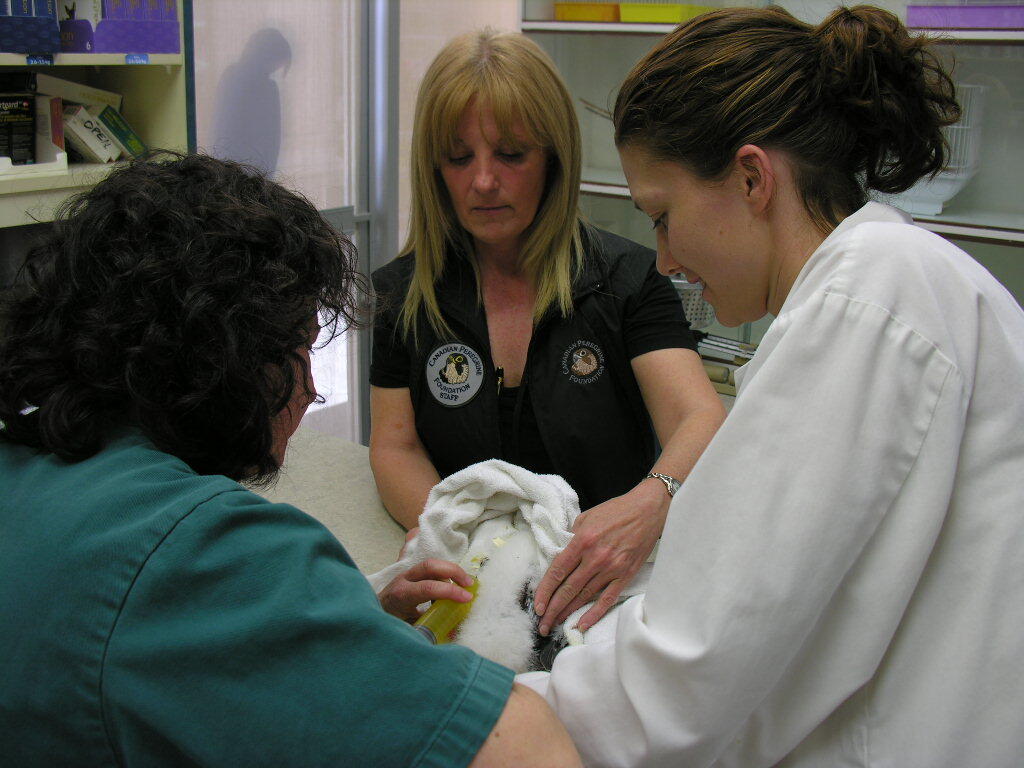
Given these combined observations, the decision was made by the Ontario Ministry of Natural Resources, not to put the hatchlings back into the nest box, and seek emergency medical attention for the hatchlings from an avian vet. All three hatchlings were immediately transported by team members of the CPF to a nearby avian veterinary hospital where they were treated for severe dehydration and malnutrition. The three young hatchlings were then taken to the CPF raptor centre were they will be provided with around the clock critical care until they have regained their health, and can be returned to the wild.
Given the fact that the hatchlings mother has been killed, and with the current new adult female at the MEC nest site has no interest in providing care or protection for the chicks; this combined with the fact that the adult male has not been able to provide the chicks with enough food to keep them healthy, it is unlikely that the hatchlings will be returned to the MEC nest site.
There remains a further risk that if the hatchlings were returned to the MEC nest box, and did manage to survive, that the new adult female would likely kill the chicks or drive the young birds out of the territory at fledging time. Remembering that this is now “her territory” and not her own offspring. This action will likely cause the immediate death of the hatchlings and/or lead to them eventually starving to death while on their own at this very young age,, and / or finally falling victim to other avian predators.
Territorial Red-tailed hawks or Great Honed owls (among many other avian predators) would find these defenseless, inexperienced and naive juveniles a very easy prey should they wander into these occupied territoies. We know after more than 14 years of close monitoring of the urban nest sites, that the fledgling juveniles are solely dependent on their parents for both their food and protection, sometimes as long as 60 days after they take their first flights.
Clearly documented over the years as seen via the many CPF nest web cameras, we continue to see the fledglings return to the nest boxes and nest ledges each night for protection and food from their parents until they are self sufficient and hunting successfully on their own .
During the time after fledging, the juveniles still have much to learn from their parents, while building muscle mass and gaining confidence long before they are proficient in their flight let alone being able to hunt down and successfully catch their own food.
A number of different options are being discussed to ensure that these birds remain wild and free. There are no plans being considered to have these birds remain in captivity any longer than necessary.
One of the options being considered is to place the hatchlings into another active nest site that is currently occupied by two resident adult peregrines that are still in nesting mode as we say. This type of fostering has been very successfully throughout Canada and the United States where this method was used as part of the recovery strategy for the species in both countries . It was not too long ago that the CPF was involved in several fostering here in Ontario several years back at the Hamilton and Ottawa nest sites where we were successful in fostering young peregrine hatchlings into these active nest sites. (see archival references and history of these fosters on the CPF website in 1999 and 2000 with two successful years of fostering at the Ottawa nest site, and another at the Hamilton nest site).
The procedure adding additional hatchlings to a nest where there are already hatchlings of similar age is a tried, tested and proven method of fostering . The new hatchlings will receive the benefit and care from both of the resident adults. While this is only one of several plans being considered, the first step is ensure that the hatchlings are able to make a full recovery and regain their health.
Stay tuned……..more to come!
Posted on June 7, 2009 5:28 am