!!! 2 eggs so far
March 12, 2017 - Etobicoke - William Osler
Marion Nash Reports:
2 eggs were seen in nest Monday believed to have been laid this past weekend.
Posted on March 31, 2017 12:21 pm
Observation for Etobicoke - William Osler

2 eggs were seen in nest Monday believed to have been laid this past weekend.
After what I had seen last night, when I started the watch this morning there was no concern on my part for the safety of our young fledglings. Even though yesterday was their first day of flying, they showed skill in manoeuvring as well as an ability to make good choices when things didn’t work out as they had planned. The continuation of the watch at this point is to ensure good landings, safe flights and that the family dynamic is a positive one. With Casper playing very little to no role at this stage of the chicks development there is a small amount of concern regarding Chessie’s ability to keep up. And so the watch continues.
I arrived at the William Osler nest site just after dawn and found that Ramses had already taken his first flight. He had landed smartly in the hydro tower but was in a precarious position as he was on a diagonal beam. Casper flew into the nest tray and woke Chessie up as the sun was beginning to rise. She immediately went on a hunt and came back with a fresh kill that she stashed on the north side. Moments after she returned Sahara wound up and took her first flight. She flew out and over the parking lot and tried to circle back to the nest ledge but the winds were not helping her this morning. She banked once again and turned towards the hydro tower, flew up and landed neatly in the tower not very far from where her brother sat. Neither chick was rewarded with food after their flights. Ramses was the first to fly next and made his way back towards the nest building. He headed straight towards the east side, banked around to the south and landed on the retaining wall of the roof without any problems. He jumped down onto the roof and that is where he spent the next few hours napping out of my sight.
I opened the watch today and all was quiet on the ledge at first. The kids were just waking up and getting animated and Chessie was in the tower watching. Casper was on the southern H keeping vigil there. All seemed to be nice and calm when Ramses had other plans. At around 9am he took to the air running. Seriously folks, he was running down the ledge, got airborne and forgot to stop his feet from running! He flew out over the south employee parking lot maintaining his height and headed back for home. He was one floor short of the nest ledge and so he swung out around the east parking lot. This time he was starting to drop height as he was tuckering out pretty quick. He tried for the nest ledge on the east side but was only half way up. He flumped into the wall and fluttered down to the ground. I was so not ready for a rescue but I ran over to where he stood. Chessie was stooping me (not terribly close but enough to say get lost) and in one grab I had him in my hands. I cradled him in my hand and tucked him against me with his tail sort of under my arm and marched him into security to get the rescue carrier. Uh oh. Security was on patrol. Ok. I’m sure I have something in my car. I found a bankers box full of stuff that I needed to take out and Ramses watched as each item came out in turn. The box now empty I just needed to find the lid. Oh no. No lid. Ok. I have a thick towel. I draped that overtop and headed back into security where I met up with one of the guards. We were able to transfer him over into the rescue carrier and all was well. Ramses was so furious at me for our little walkabout all gathered and tucked that when he went into the carrier he wanted back out to get a piece of me! He was in fine shape and has his mother’s attitude.
Back outside Chessie was somewhat upset. She kept stooping and hovering over the last place she saw him and finally landed on the light post closest to his last location. She stayed there for almost 15 minutes and then finally returned to the tower. She kept checking the area for him for the next hour and then took some rest. Sahara on the other hand was bee bopping all over the ledge. She was testing her wings and building up strength. Bruce took over for me in the afternoon and until close saw much the same as I did. Sahara remained on the ledge but she was ready. Really ready. I came back at dusk and took Ramses back up to the roof for a release and he was quite ticked off. He looked great and so out the door we went. It took me about 5 minutes or so to find him a good spot out of the howling winds and then it was time. A flick open of the door and a hiss from little man and it was done. I will be back at dawn as Bruce has warned me that Sahara is beyond ready for first flights and Ramses is anxiously awaiting the daylight to return home. Some photos I took of Chessie today are attached.
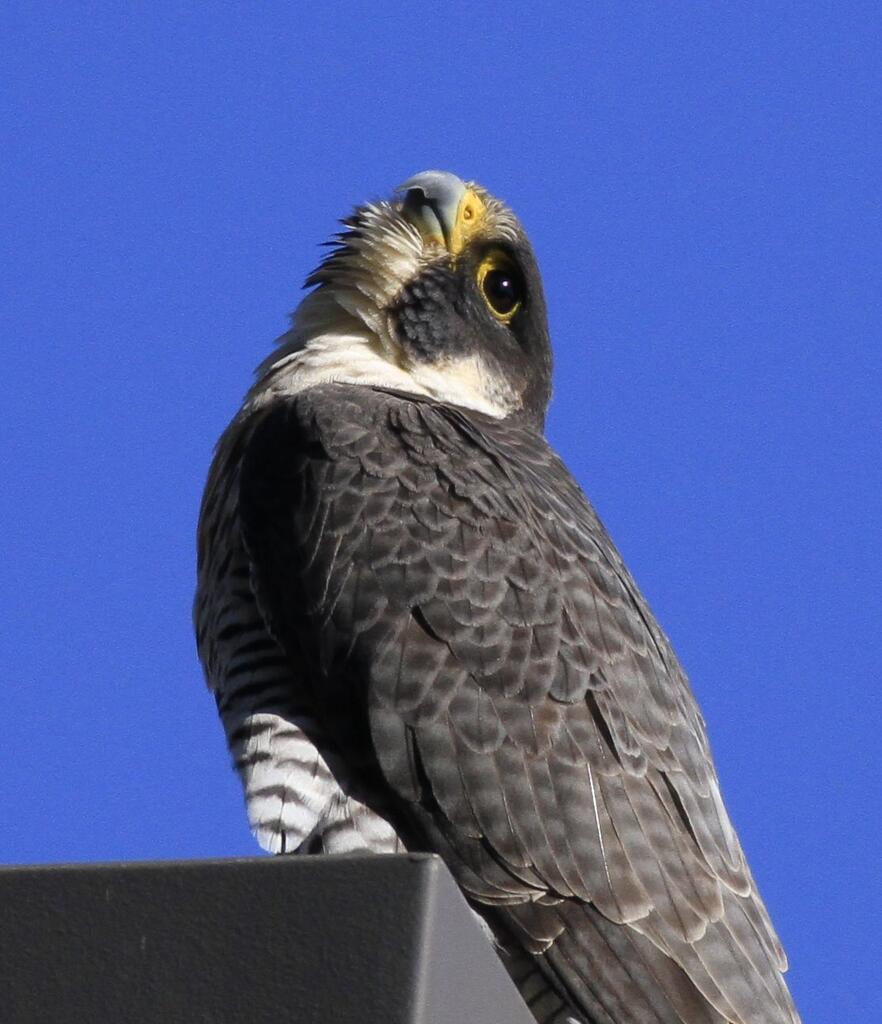
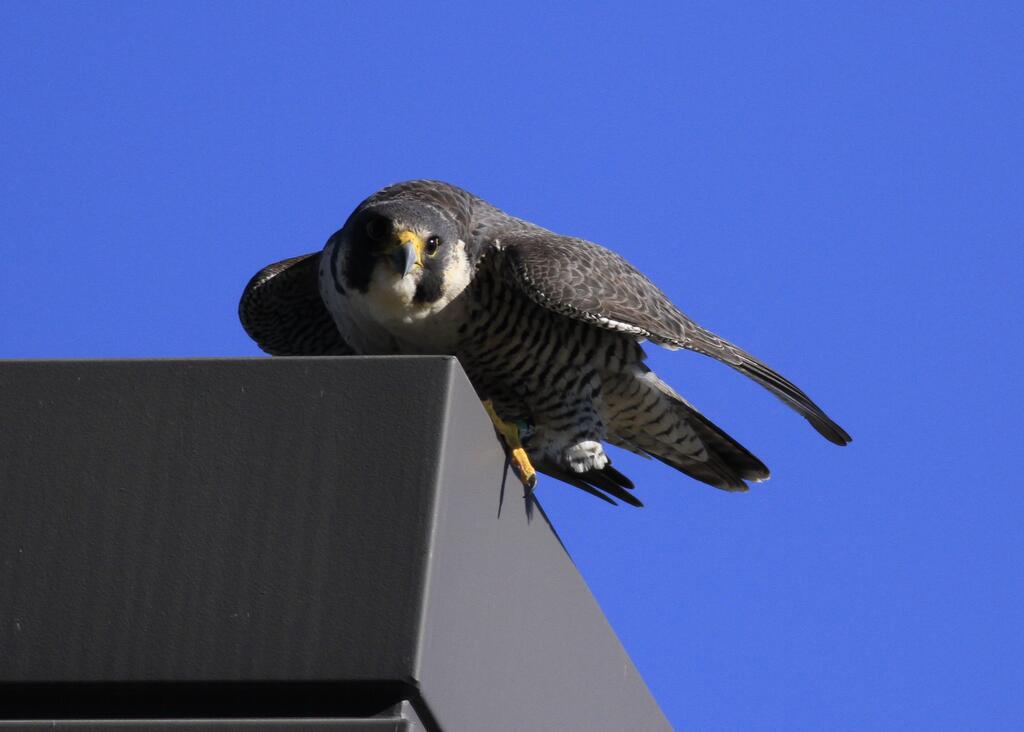
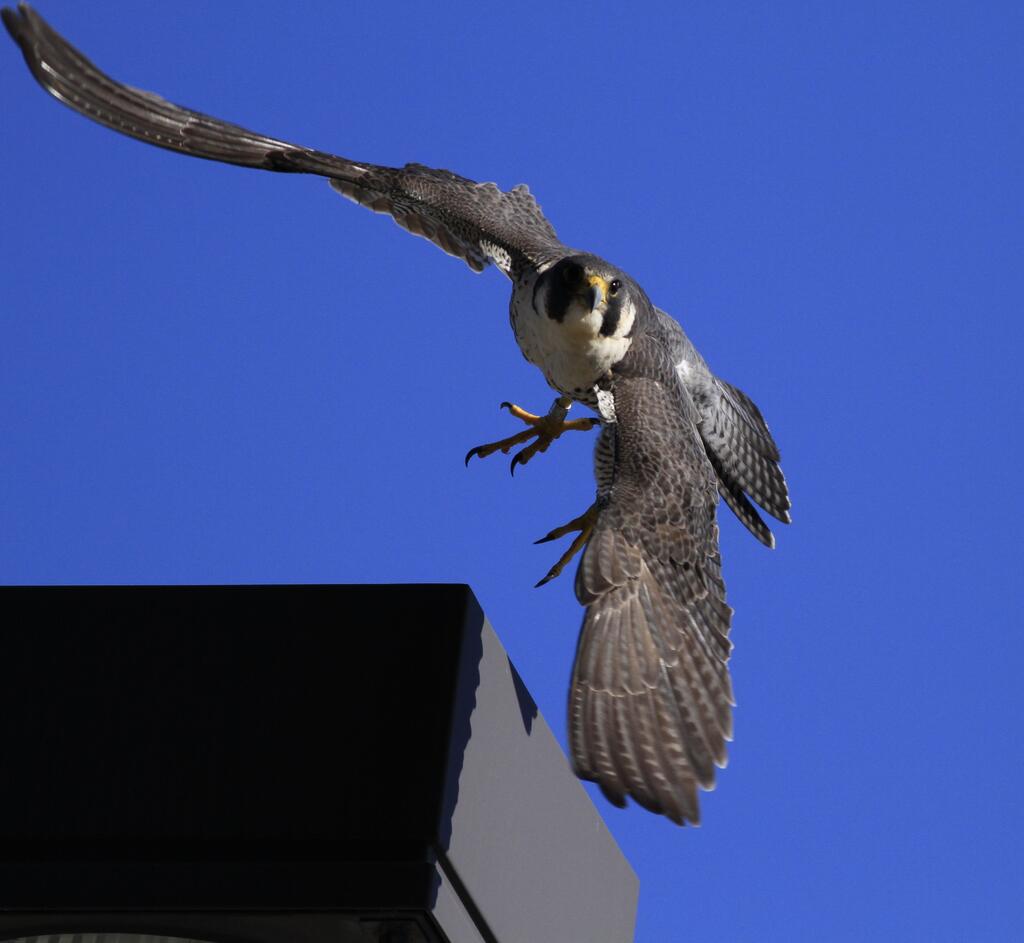
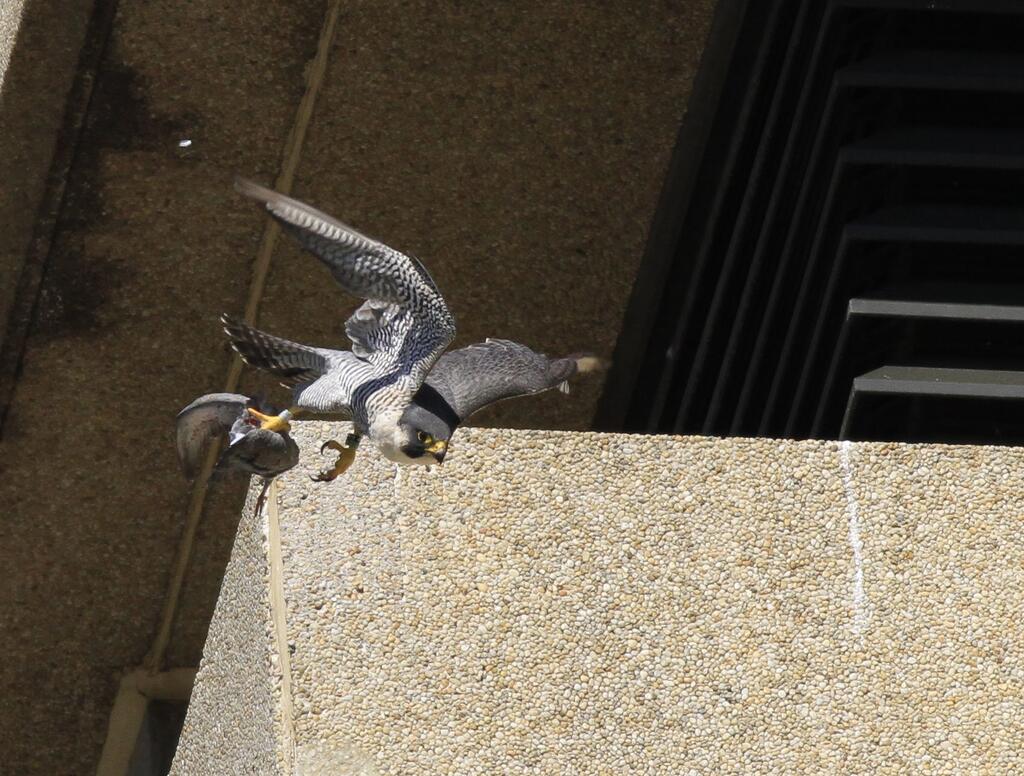
Thank you to the great folks at William Osler who each year hold a naming contest for their feathered family. The names selected are always unique and creative and this year is no exception. Our female with red tape is named Sahara and the wee male with blue tape is Ramses. Excellent choices for these two amazing young birds!
Thanks again to William Osler for putting two delightful names to their wee faces.
The time has come to switch gears again to our final west end watch at William Osler and we began our full time monitoring this Saturday. Both of the juveniles are looking quite ready with very little down remaining. The female is more advanced than her brother yet both are energetically bouncing around the nest ledge building up their courage and flight muscles. Chessie was very on edge today and I thought it might be the pending flights of her young but this was something more. When I got a look at the resident male through the scope, which is confirmed again to be Casper, I can now understand. He has clearly been fighting as there is a line of feathers on the back left side of his head that are missing so that the down is now exposed. He is flying well and attentive but this evidence of a territorial battle may now explain the loss of two chicks just prior to banding. With Hurricane no longer here and this site being so desirable, the fights have continued well into nesting and chick rearing. The remaining two chicks are looking amazing and Chessie is taking a strong lead in their care. We look forward to first flights any day now.
May 26th - 2016
Banding day
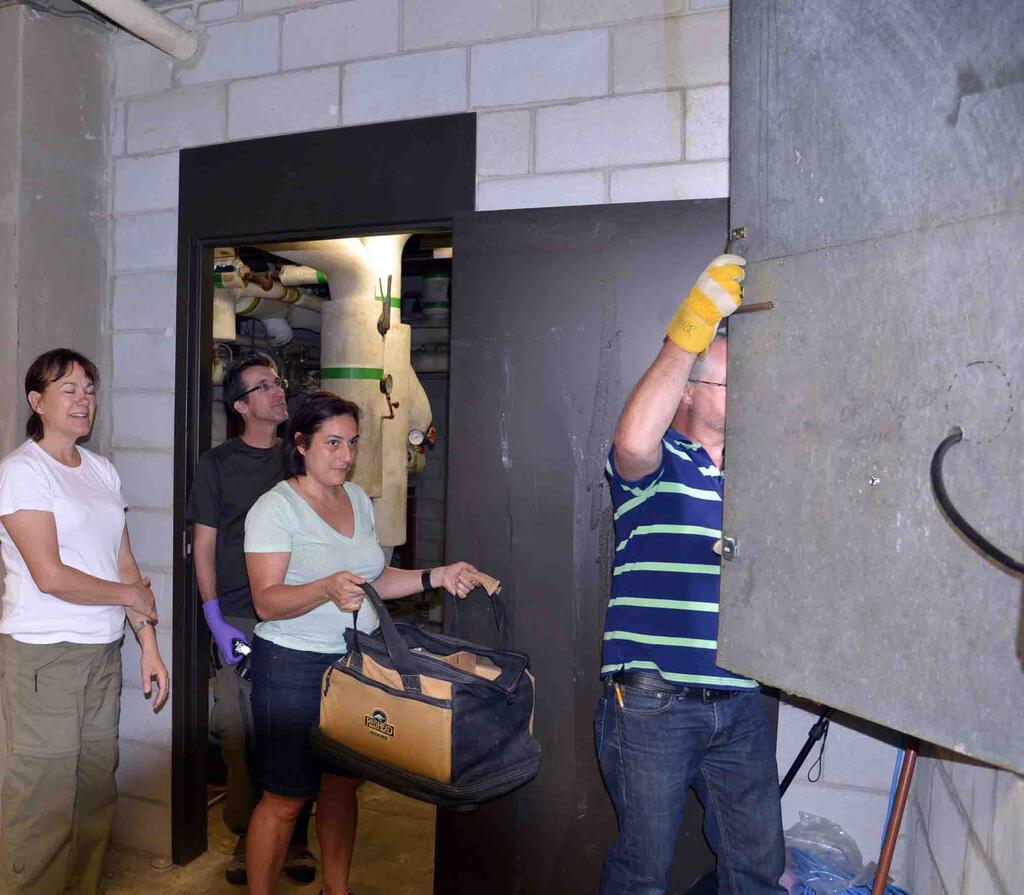
Two bandings again today, back to back,, William Osler this morning at 10am and Duncan Mills this afternoon at 3pm! 
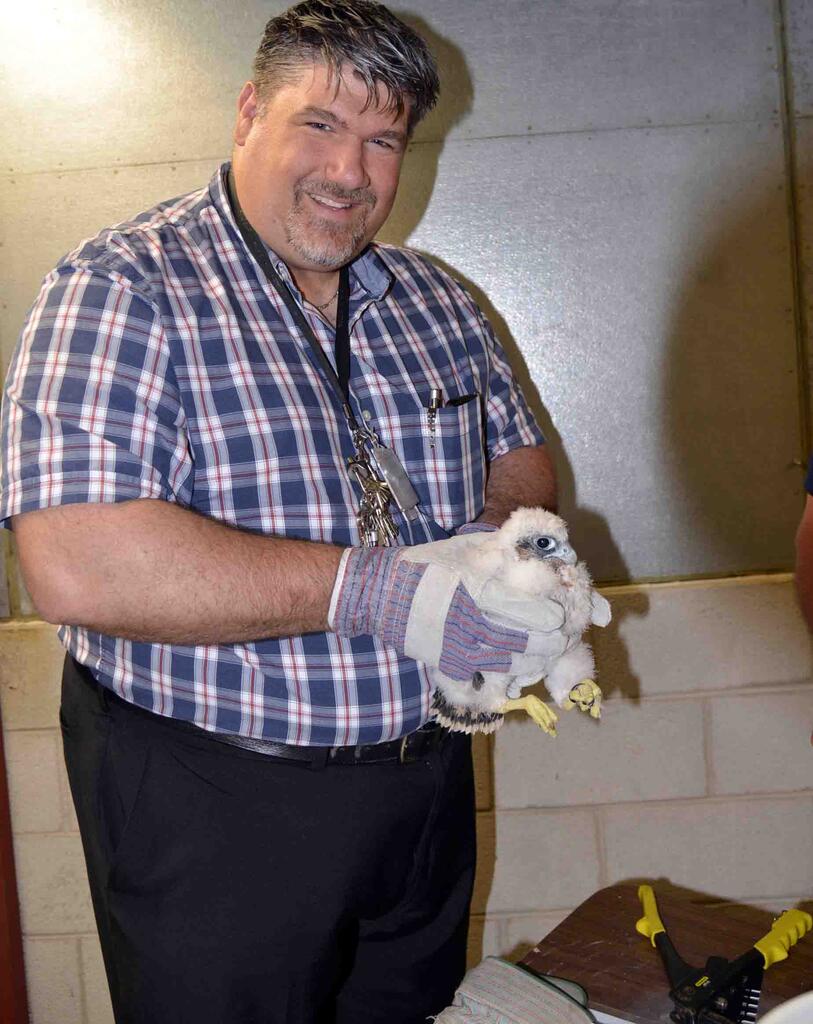
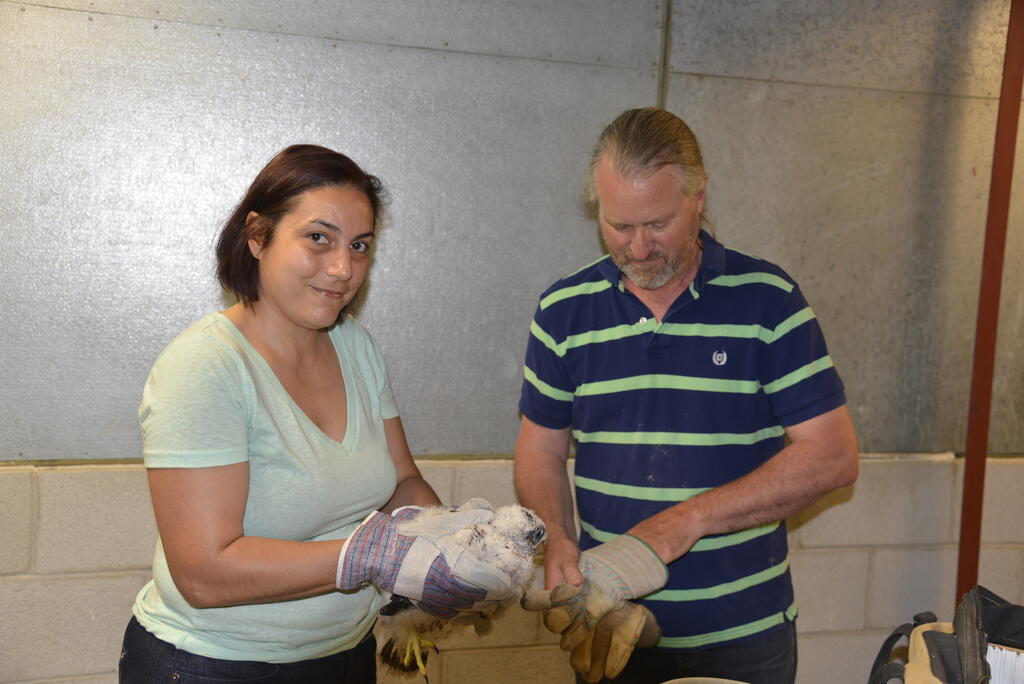
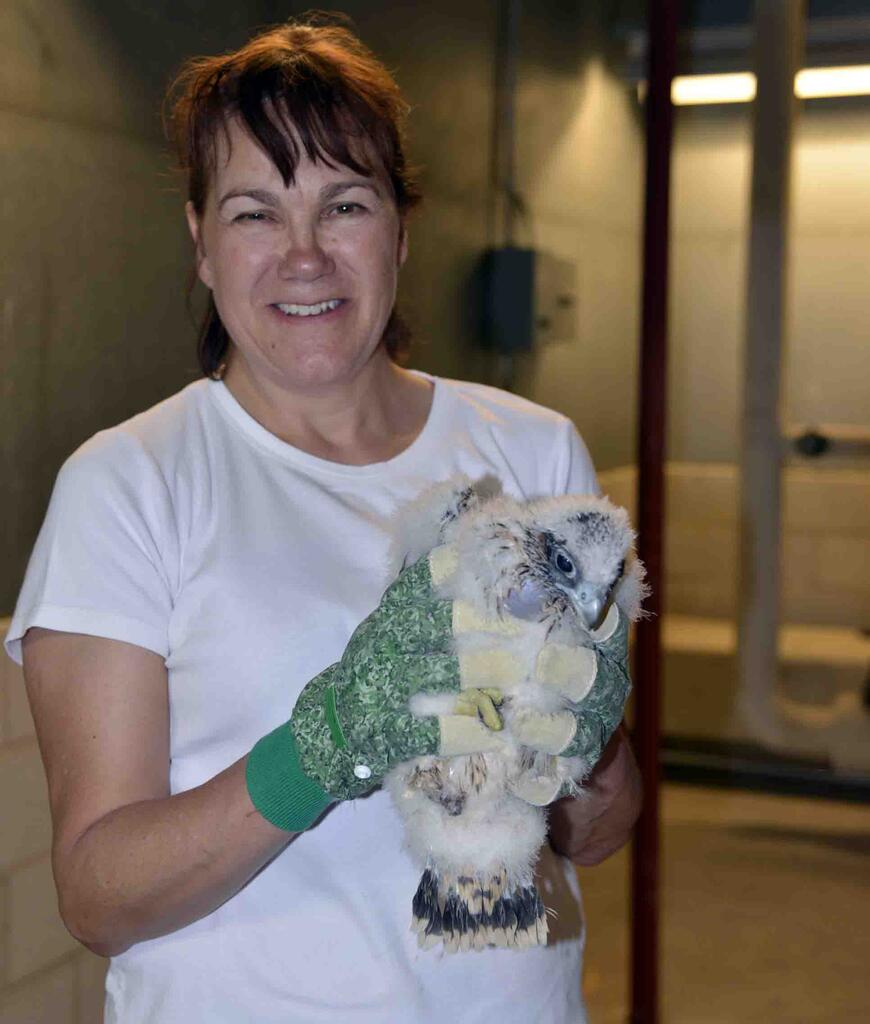
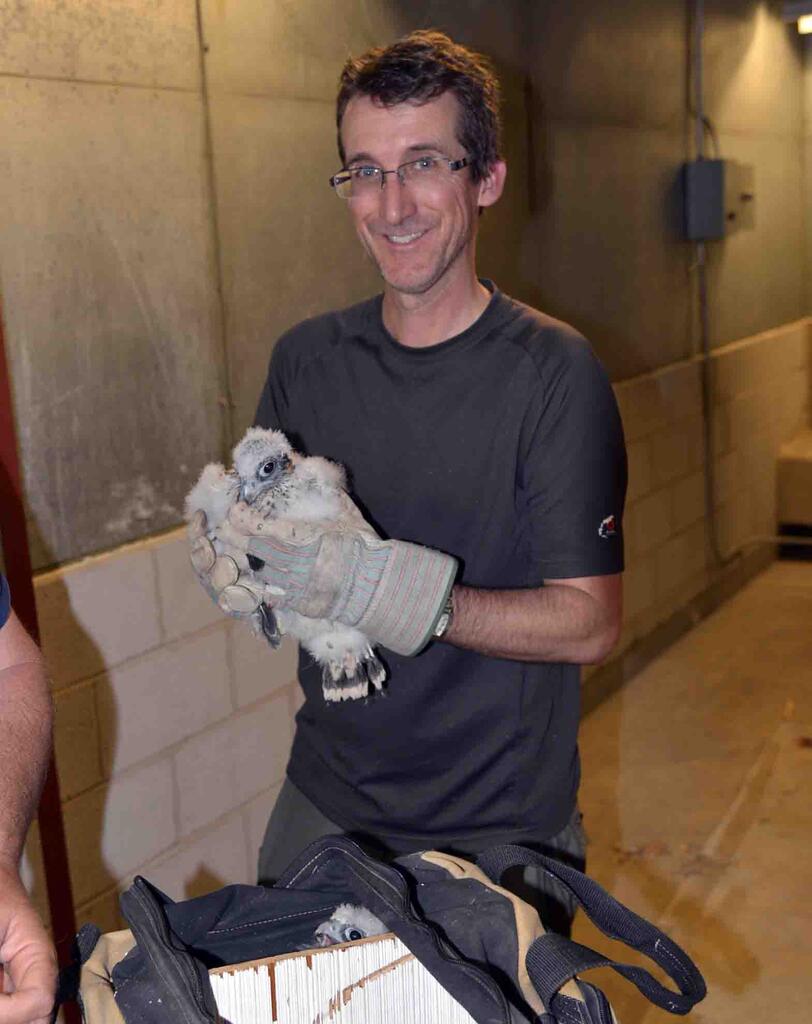
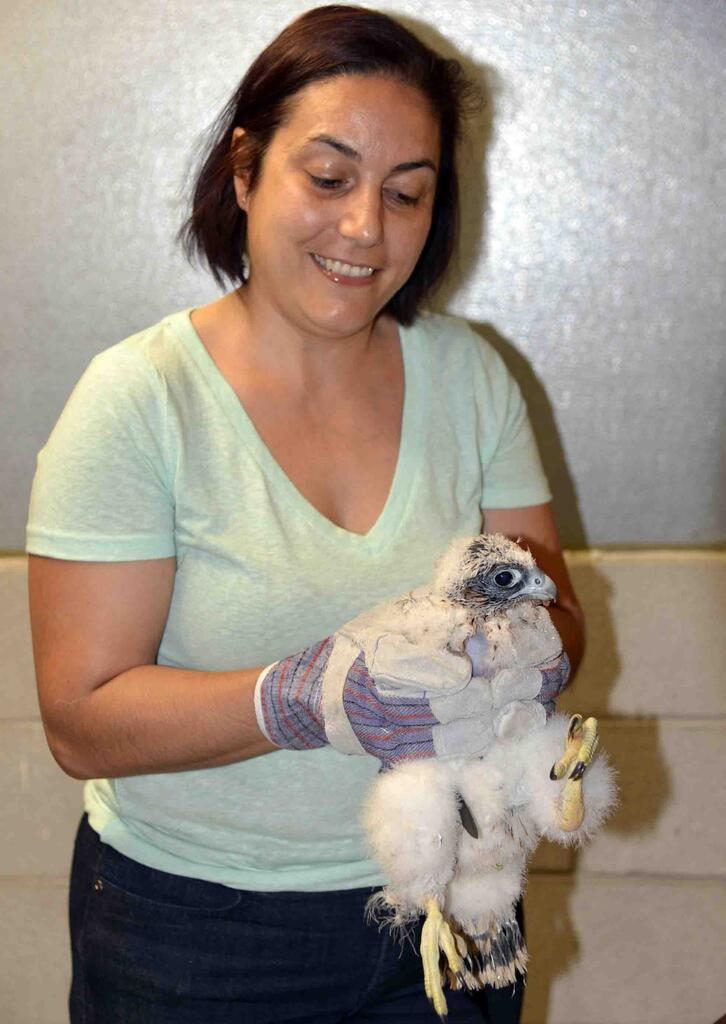
Despite the not so good news this morning at the William Osler nest site, we still have two very healthy hatchlings that were very feisty and in fine form!
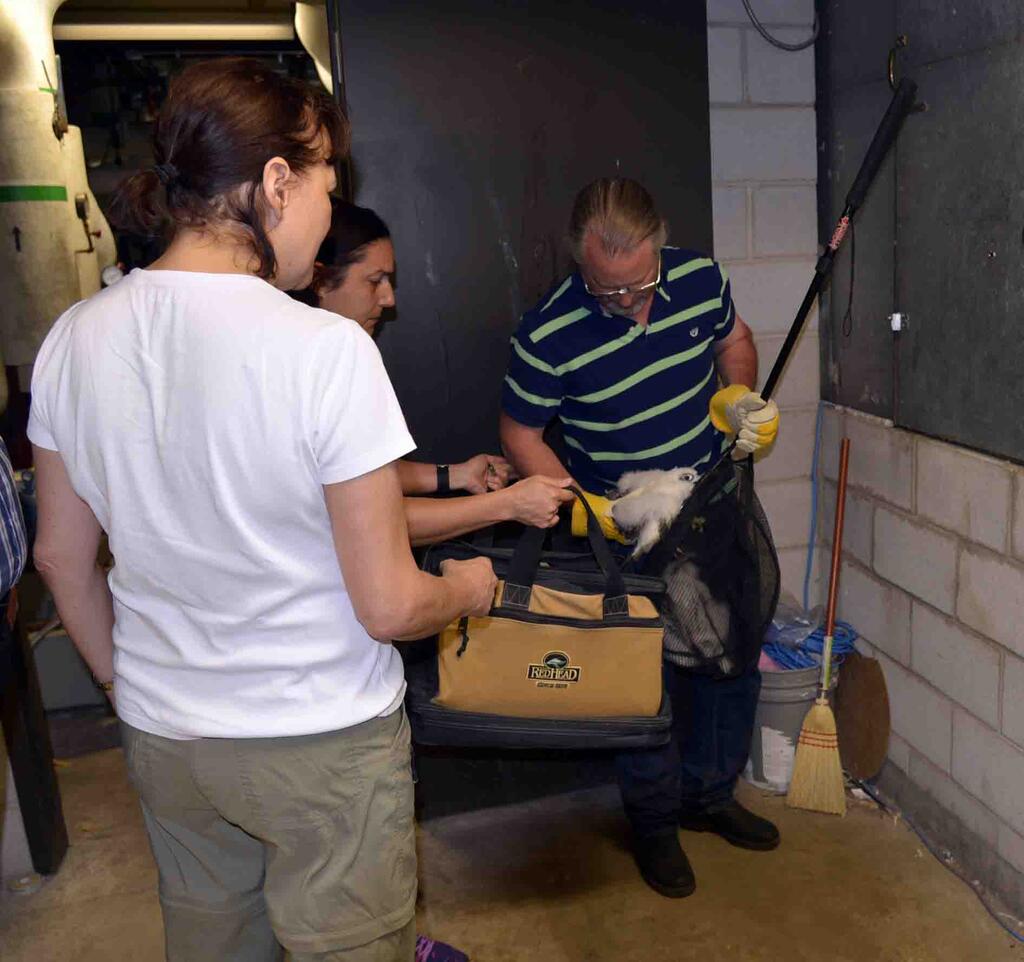
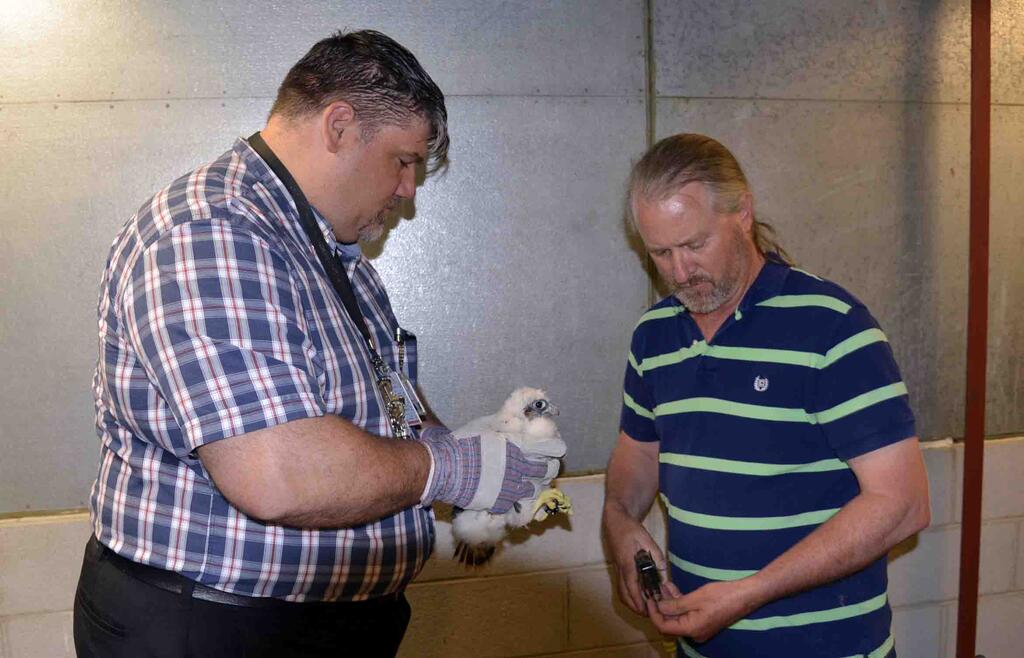
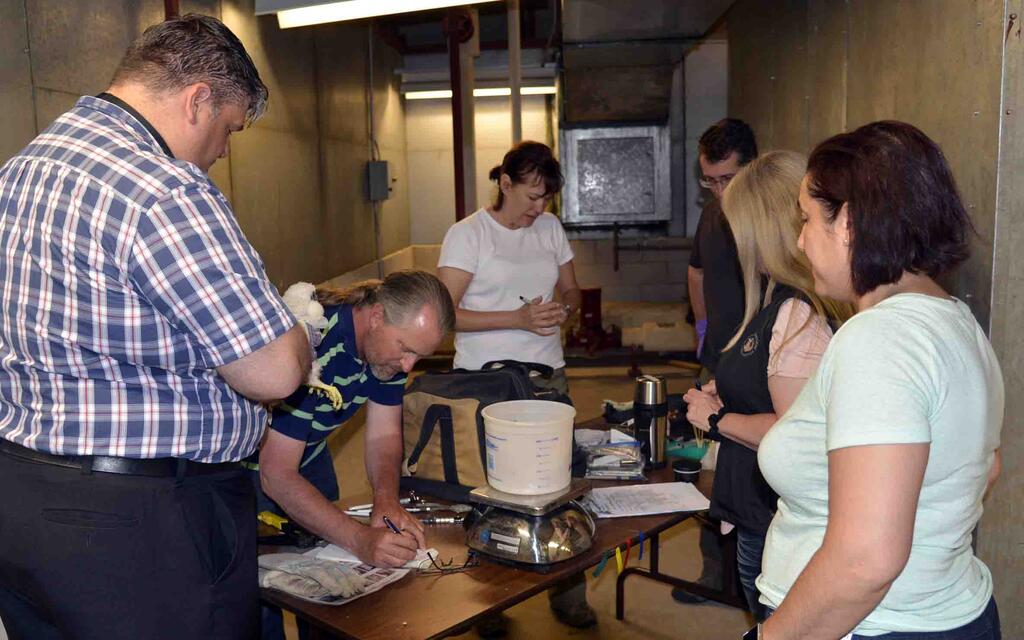
A big thank you to Todd and his security team, and to the William Osler Hospital for all of their support, we were successful in banding two very healthy peregrine hatchlings that were very feisty and in fine form!!
It might appear with all of the recent activity in the form of competition from other peregrines trying to take over the William Osler nest site, (and there has been some very aggressive squabbling among the peregrines), two of the hatchlings have succumb to the fighting among the adult peregrines and have been killed. Sadly, we had to pull two dead hatchlings out of the nest tray. The two dead hatchlings were every bit as large as the two surviving siblings, and it appears that their demise has been a very recent happening indeed!
The security staff that have been monitoring the CPF nest camera on our in-house live monitor said that all four hatchlings were all quite alive and well 2 days earlier (as of last Tuesday May 24th), so this has been a very recent event!
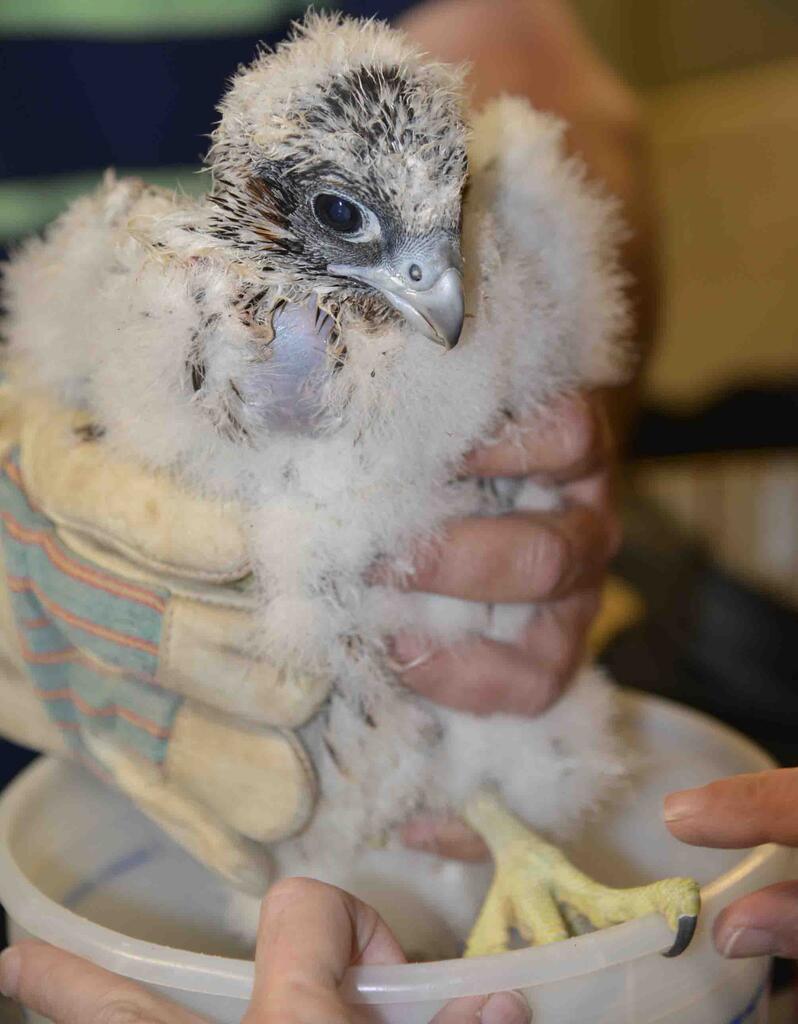
The two surviving hatchlings were very closely examined for any signs of illness and other injuries and were deemed by all to be quite fine!
We were fortunate to have both Mark Heaton from the OMNRF and Kim Fernie from the Environment Canada and the Canadian Wildlife service with us today to get a second and third opinion on the two surviving hatchlings. The deceased bodies were removed from the nest tray and handed off to the Mark and Kim. Given the high heat and humidity, the deceased hatchlings were not in the greatest shape.
Peregrines do not cannibalize themselves nor do they typically feed their dead to their other hatchlings as some other birds of prey do (as with Bald eagles in particular),, and unfortunately the two deceased hatchlings were way too large and too heavy for the resident adult female to remove them from the nest,,,, which would be quite typical as we have documented via the live cameras over the past 20 years.
With well over 600 peregrine hatchlings having gone through our hands in the past 20 years from nest sites all over Ontario, (excluding that of the 100 plus hacked out and fostered peregrines that we parented, raised and released back to the wild through our hack release and satellite tracking programs), I can assure all that the two surviving hatchlings are very healthy indeed!!!
That being said,, we can not although do much about the territorial squabbling between the resident adults and the other peregrine intruders that have obviously caused the problems in the first place,, as they themselves must work out these problems on their own. We can only do so much. We will although be monitoring the nest site as closely as possible.
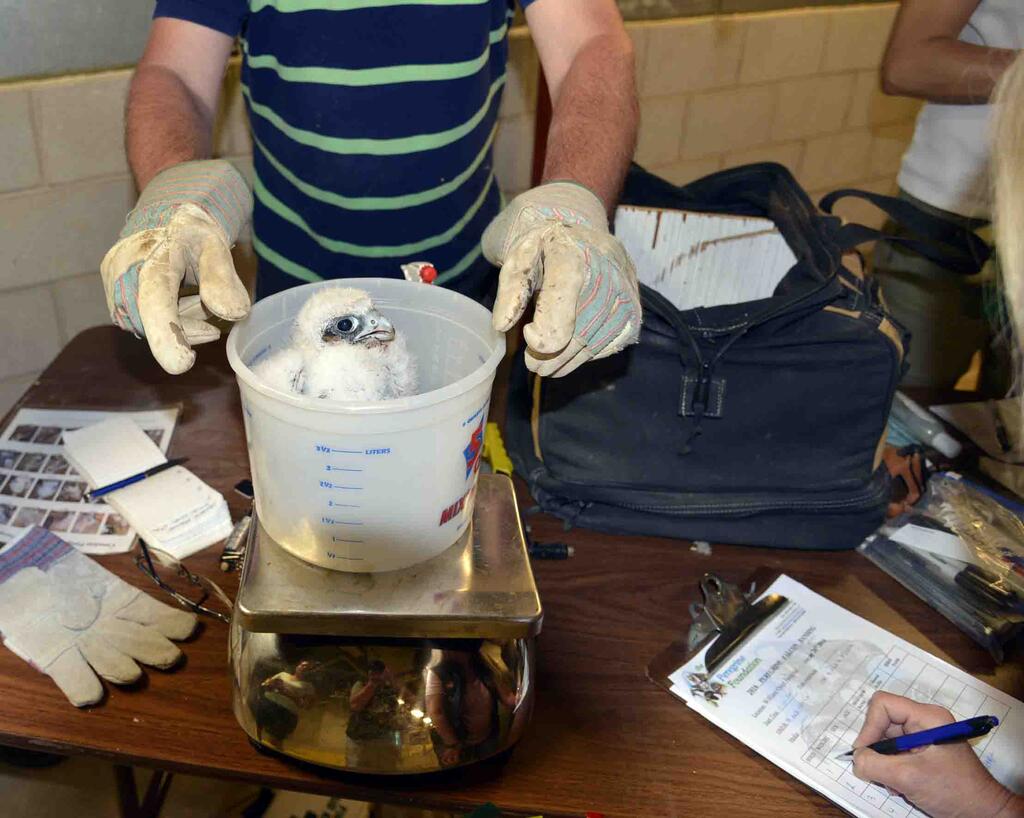
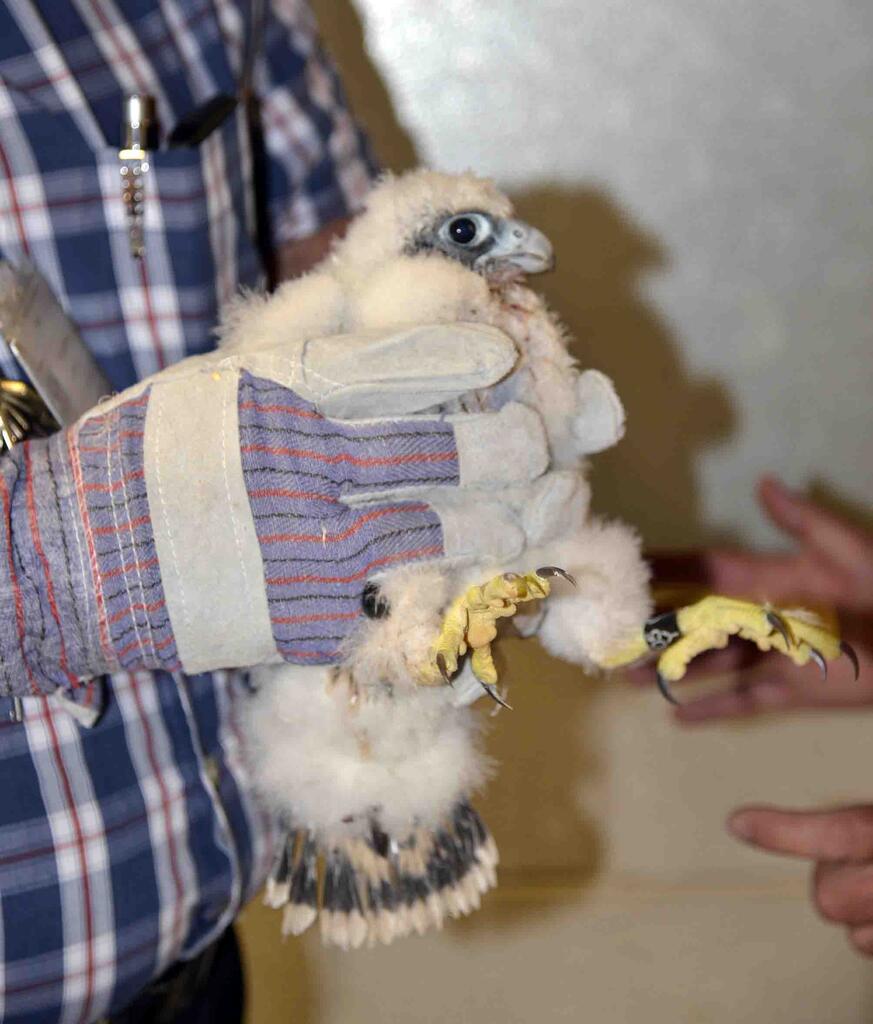
The two surviving hatchlings at we banded,, one male and one female were in fine form,,
- a male, named Ramses weighing in at 690 grams, 23 days old, Black banded 05 over Y with Blue tape. (This is an older band, and the reason why it is out of sequence and different from all of the other bands being used this season).
- a huge female, named Sahara weighing in 985 grams, Black banded S over 53 with Red tape
We are waiting for the William Osler staff to provide us with names for the two hatchlings, and will post them as soon as we have the names.
The two hatchlings were successfully banded and returned back to the nest ledge with the resident adult female “in waiting” on the nest tray!!!
Please bear with us with regards to photos, as we have MANY photos to go through from the two bandings today. We are out on the road and in the field again all day today and not able to get much office and computer / internet time. Its that time of year again!!!!
Stay tuned……..
May 2016
We are in desperate need of your assistance!
We are looking for someone that has in-depth hands-on experience with WordPress.
There are several major changes needed to both update some portions of the CPF web site, in addition to some design changes and in need of an experienced WordPress person that has some spare time to donate to the CPF.
This individual should also have in-depth hands-on experience with the technical side of web site management.
Please if you can help, and some spare time, we would love to talk to you!
You can contact us at the Canadian Peregrine Foundation via our telephone number at: 416-937-7226 or by e-mail to marion@peregrine-foundation.ca
May 3rd - 2016
Just getting caught up on all of the recent news and hatches as its flowing in faster than we can keep up!
It was reported as of May 3rd, that there was three of the four eggs hatched, with the forth egg now looking like its not going to hatch. That being the case, we believe based on the review of all of the observation reports, that the first hatched around April 30th.
Congratulations are in order!!!
:-)
I have been out at the William Osler site several times over the past week attempting to identify the resident adults that are currently incubating 4 eggs in the nest tray. This has not been an easy task as there have been too many birds to try and identify! My first check in was late in the afternoon on Friday April 8th. I pulled into the parking lot and found one peregrine on the eastern H, one peregrine on the ledge, one peregrine in the air. I didn’t hesitate. I jumped out and grabbed my camera. I photographed anything the moved in the hopes that I could later come to understand what I was seeing and who these peregrines were. The interactions continued for almost 40 minutes with birds in and out and all over the place. The male finally zipped back into the tray and resumed incubation while another bird landed on the nest ledge to the north of the tray. I could clearly see the bright blue tape on his USFW. Wait… …what? Male in tray and male on ledge? Just then the second male (blue tape) made an approach to the nest tray that got him almost in behind the sign when WHAM, out comes the resident male and the two take off to the north. Then the resident female returned to the tray to cover the eggs. Blue tape boy is bold as brass and wants this nest all to himself. I was sure he wasn’t going to give up easily after challenging the incubating male like that.
When I got the photos home for a look I was running through my head the events that I witnessed. The first time I saw the three birds together there wasn’t a whole lot of aggressive attacking, instead it was the resident female that simply escorted the bird out. The photos were able to answer why an attack was not more intense; this was a juvenile from last year. The bird is banded and may have red tape but not clear shot could be had. This young female was directed out of the area by the resident female before I could get anything definitive. I was able to photograph the resident females bands and it is Chessie, black 49 over green AD, hatched in 2011 at the Central Terminal nest site in New York.
The resident male remained more elusive and I wasn’t able to get a band read on that Friday. Bruce went out on the Saturday April 9th in an attempt to get the ID of the male and witnessed a similar scenario to what I had seen. The only exception was that the juvenile female did not come around. The male with blue tape on his USFW band was back and this time continuing with his bold behavior by landing on the southern H sign and eating the resident adults stash of food. The fact that he got away with this act made me believe that our Hurricane, resident male for the past decade, has not returned and/or successfully taken back his nest site. This intrusion would never have been allowed to occur under his watch and yet here was this intruding male eating a meal that he swiped off of the resident pair. Where was the resident male? Why was he allowing this?
The following day, Sunday April 10th, both Bruce and I attended the site in the hopes of an ID on the male. Things were much more quiet this time and with little action, it made the task difficult. We had a changeover that allowed us to get a clear view of the males bands and he is Casper, solid black 35 over Y, hatched in 2009 at a private residential site in Etobicoke.
Casper has been the resident male at the Viscount Road territory with his mate Claire from Michigan for the past 4 years producing young at a nest location we have struggled to discover. Each season they begin nesting late and so we are busy with other sites by the time they are well hidden and incubating. They are late nesting each year because Claire, like Hurricane, migrates for the winter and when she returns she finds her mate has slipped off to another location; William Osler.
So here’s how it works. Claire leaves on migration from Viscount leaving Casper alone to deal with the winter influx of Red taileds and Snowy owls to the area on his own. Hurricane migrates shortly after Claire has left, around late November, and that leaves Chessie on her own at William Osler. Casper comes up from Viscount to Osler for the winter and hangs out with Chessie until Hurricane returns and kicks him out around the end of March. Casper then goes back to Viscount, re-establishes his territory and waits for Claire who shows up around the first to second week of April. It took us awhile to sort THAT out. Phew.
The big change this year is that by April 10th Hurricane has still not been located and identified at the William Osler site leaving Casper in charge. We have watched Casper leave the site and head southwest towards his old territory and a visit to the Viscount area revealed two adults courting around the bridge abutments of the 409 overpass. So. Is Casper trying to run two sites? That would explain how little mister blue tape was able to get away with eating all the William Osler stashes for free.
While I did get a shot of the band off of the blue taped bird it is not a clear and complete read of the alpha numerics and so he remains a mystery at this time. What I can tell you is that he is a solid black Ontario banded bird and the partial read has narrowed the possibilities. I will hopefully have an ID on him soon for you.
I will be out for more observations this week.