affordwatches

!!! The cold weather has taken it’s toll

April 24, 2012 - Port Colborne - ADM Mill

Doug Garbutt Reports:

As I said in my last post, it has been hard to get a look at what’s underneath the adults here as they are rarely off the eggs. Yesterday I witnessed the female consuming an egg shell. She was over the scrape & I couldn’t see underneath her so I was hoping an egg had hatched & she was eating the shell for calcium as they normally do. Unfortunately, today I got a good look at the scrape when Mom took a short break from incubation & I could clearly see that there was no young one. In fact there are only 2 of the 4 eggs remaining. It is hard to believe that after 4 weeks of hard incubation that they could loose these eggs. I think that perhaps the frigid weather has played a part in the failure. I’m not too optimistic about the chance that the other 2 eggs are viable but we have our fingers crossed. Hopefully the other nest sites don’t have simalar problems this year.

Talk about boring

April 15, 2012 - Port Colborne - ADM Mill

Doug Garbutt Reports:

I wish I could post something interesting but the fact is that Trillium is sitting on the eggs 24/7 & it’s kind of like watching paint dry.

4 Eggs Here

March 29, 2012 - Port Colborne - ADM Mill

Doug Garbutt Reports:

Trillium & Buffalo Bill now have 4 eggs & full incubation is under way. With the cold weather, it is hard to catch a glimpse of the eggs. Hopefully it warms up real quick. Mom & Dad are taking turns but it’s mostly Trillium on the eggs.

2nd Egg Produced

March 22, 2012 - Port Colborne - ADM Mill

Doug Garbutt Reports:

Yesterday I left work at 3:30 pm. There was only 1 egg in the scrape. This morning when the sun came up, there were 2 eggs in the scrape. Full incubation has not yet begun so we are hoping for more.

!!! 1st Egg!!!

March 19, 2012 - Port Colborne - ADM Mill

Doug Garbutt Reports:

Today at approx. 2pm Trillium produced her first egg. With the weather being so warm, she left it unattended & we got a good look at it.

All is well after territorial dispute

February 26, 2012 - Port Colborne - ADM Mill

Doug Garbutt Reports:

Yesterday while I was having lunch at work I looked up at the monitor &  Buffalo Bill our resident male showed off his jewelery close to the camera. After the fight last Friday I wasn’t 100% sure who was the victor but the falcon got up real close to the camera and sure enough it was 68 over r black over green the resident male Buffalo Bill. He looks no worse for the wear as both legs are working  just fine. The pair are exhibiting courtship behaviour.

!!! Battle Royale for Resident Female

February 17, 2012 - Port Colborne - ADM Mill

Doug Garbutt Reports:

Today as I was leaving work at 3:30 pm I glanced at our monitor in the lunch room & noticed there were 3 adult falcons bent down facing each other squawking (1 female, 2 males). This went on for a few minutes until Trillium (our resident female) sort of backed away & the 2 males got aggressive towards each other. I’m not sure which one, but I think the resident male Buffalo Bill 68 over R chased the intruding male from the box. We thought the confrontation was over however the intruder returned. The tiercels then went at each other locking talons & pecking viciously at each other with their beaks. During the conflict, one of the birds got a talon hooked into the band of the other & they could not free themselves. The circumstance accelerated the animosity towards each other and they got even more aggressive. This went on for what seemed to be a very long time (I’m guessing 5 minutes). All the time pecking at each other. At one point, they made their way perilously close to the edge of the nest box with a sheer drop of  at least 150 feet! Thankfully they did not go over the edge. The birds were becoming exhausted & at one point we thought that one was dead or severely injured as it was flat on it’s back with the other pecking at it. The bird somehow got back up and as if a miracle the talon became free and he fled the box. This was a little too much action for me because I thought that perhaps there could be serious injury to Buffalo Bill. I’m pretty sure that he was the victor but I haven’t positively ID’d him since. I think he’s OK though because the following day there were 2 falcons in the nest box for most of the day (but I couldn’t see the band colour). I’m pretty sure it’s Buffalo Bill.

Adults are Active!

February 15, 2012 - Port Colborne - ADM Mill

Doug Garbutt Reports:

Just a note to say that the resident pair of falcons here have not left for the winter (if you want to call it a winter) and are becoming more active. For the most part, they have not spent a whole lot of time in the nest box but the last couple of weeks they have been in it quite alot. They can be seen every day now scraping & exhibiting courtship behaviour. I think the mild weather has got the hormones going.

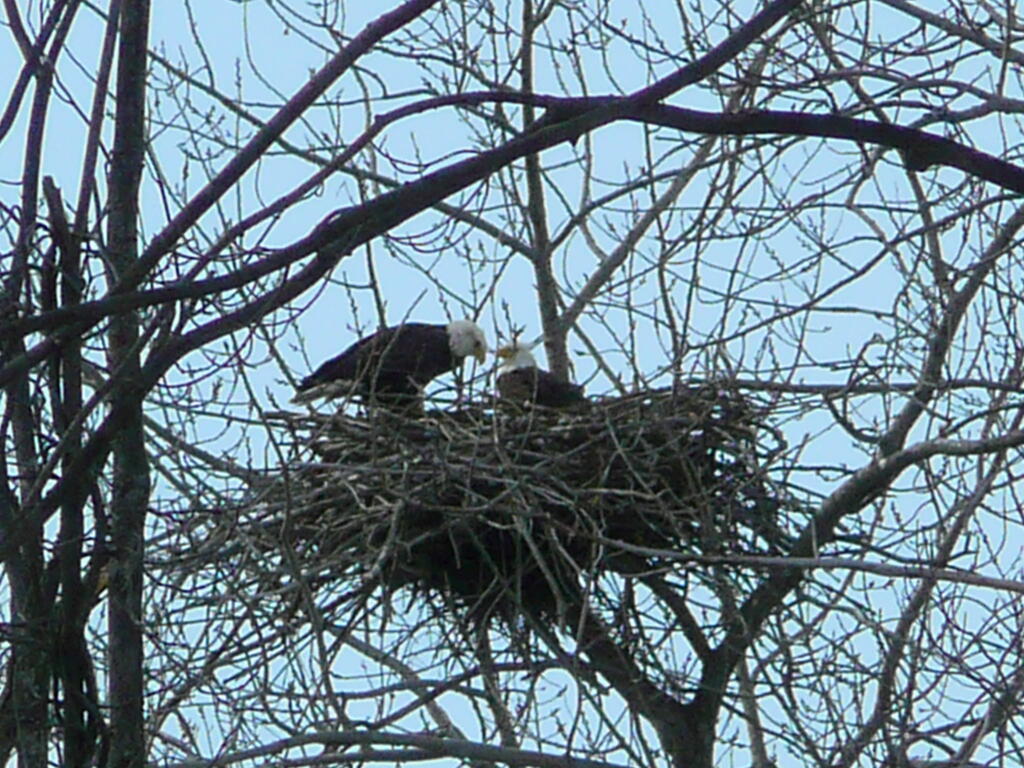
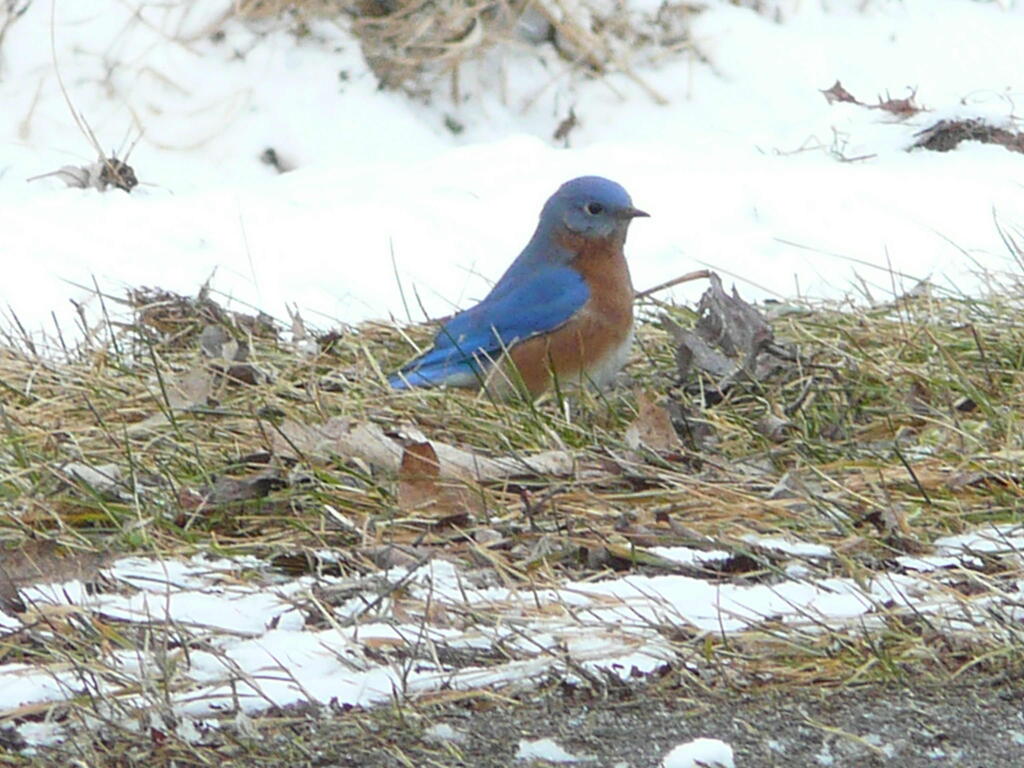
I also recently discovered that there are a pair of Bald Eagles with a nest on the outskirts of town. I went to the said location and sure enough there they were, nest & all. There were also about 10 or 15 bluebirds hanging around the area. I never knew that they hung around during the winter. Unfortunately I don’t have recent pics of the falcons but I do of the Eagles & Bluebird.


Eagles Bluebird

!!! New Pollutants Found In Peregrine Falcon Eggs

November 11, 2011 - Port Colborne - ADM Mill

Frank Butson Reports:

While poking around the internet,I found this article posted at e! Science News. So all will see it,it is being posted on each of our nestsite pages. This is too important to miss.

The original article can be seen here: http://esciencenews.com/articles/2011/04/18/new.pollutants.detected.peregrine.falcon.eggs 

Here is what it says:
New pollutants detected in peregrine falcon eggs
Published: Monday, April 18, 2011 - 09:04 in Earth & Climate

Flame retardants are chemical compounds added to fabrics and plastics to keep them from burning easily, but these can be toxic. Now a team of researchers from Spain and Canada has detected some of these emerging pollutants for the first time in peregrine falcon (Falco peregrinus) eggs in both countries. “The presence of ‘dechlorane plus’ and other related, chlorinated compounds used as flame retardants have been detected for the first time in the European biota (flora and fauna of the region)”, explains Ethel Eljarrat, co-author of the study and scientist at the Institute of Environmental Assessment and Water Studies (IDAEA-CSIC, Spain).

The researchers have found these substances in peregrine falcon (Falco peregrinus) eggs in both Spain and Canada. The flame retardants are often added to textiles, electronic circuits and other products to inhibit or resist the spread of fire, but can be transferred to the environment.

In nature these compounds are “bioaccumulating and bioconcentrating” all along the food chain, as evidenced by the research published in the Environmental Science & Technology journal. The international research team for this study was led by Begoña Jiménez of the Institute of Organic Chemistry (CSIC, Spain), and Environment Canada researchers, Kim Fernie and Mehran Alaee.

Having received the relevant permits, eggs that had failed to hatch from various active falcon nests in Canada and Spain, were collected. The collection involved 13 eggs from Spain (five in Guadalajara – a territory representative of an inland habitat of the Iberian Peninsula - and eight in Bilbao - representing a coastal environment), and 12 eggs from Canada (Great Lakes Region and Eastern provinces).

The levels of some of the measured contaminants have been found to be somewhat higher in Bilbao than in Guadalajara, and the authors believe this may be due partially to the difference in the falcons’ diet: more aquatic in the former and more terrestrial in the latter. In fact, if fish is highly contaminated, peregrines would accumulate more of the harmful substances. While peregrine falcons do not eat fish, they prey upon other birds, some of which may eat fish.

Selecting the peregrine falcon was no accident. This species was endangered in many areas of the northern hemisphere due to the use of organochlorinated pesticides, particularly DDT, though when this was prohibited in the 1970s the populations recovered. Furthermore, falcons are at the top end of the food chain and accumulate substances carried by their prey.

Highest levels in the Canadian samples

The results reveal that the concentrations of ‘dechlorane plus’ and some of the other chlorinated halogens were “significantly higher” in the Canadian falcons’ eggs than in those of Spain. The reason for this could be that the industry that has manufactured these compounds for decades (although they are now also produced in China) is located in New York State close to the area where samples were collected. In addition, the use of these compounds has generally been higher in North America than Europe.

The researcher acknowledges that the effects that these flame retardants may have on the falcons’ eggs or on their development are still unknown, “but their detection is a first step”. These are emerging pollutants, which comprise both those which have appeared more recently and those that have been used for a long time but are just lately the subject of environmental interest.

Other flame retardants, including some brominated flame retardants, have already been confirmed as toxic endocrine disruptors, and their use has been prohibited in some of the commercial mixes in Europe and America. Furthermore, they are candidates for inclusion on a list of Persistent Organic Pollutants to be eliminated, a list compiled by the Stockholm Convention which includes other pollutants such as DDT or dioxins.

This study forms part of the doctoral thesis submitted this month by the researcher Paula Guerra from IDAEA on “The analysis of emerging halogenated flame retardants and their impact on the environment and on humans”. All of the eggs were analyzed by her during her exchange studies at Environment Canada.

A research group at IDAEA led by Damià Barceló has also confirmed the presence of these compounds in sediment and fish in the rivers of the Ebro basin (Spain). Source:FECYT-Spanish Foundation for Science and Technology

Empty Nest Syndrome

July 30, 2011 - Port Colborne - ADM Mill

Doug Garbutt Reports:

July 23rd was the last confirmed sighting of a juvie here. The parents are still seen every day. In fact the female we call Trillium is in the box for at least 4 hours every day. I think she finds it cooler in this heat wave that we have been experiencing. We hope that both young ones have learned to hunt & fend for themselves & perhaps one day we will hear from a falcon watcher somewhere that they have a family of their own .