affordwatches

Adult Present at the Holcim Site

January 10, 2012 - Mississauga - Holcim

Tracy Simpson Reports:

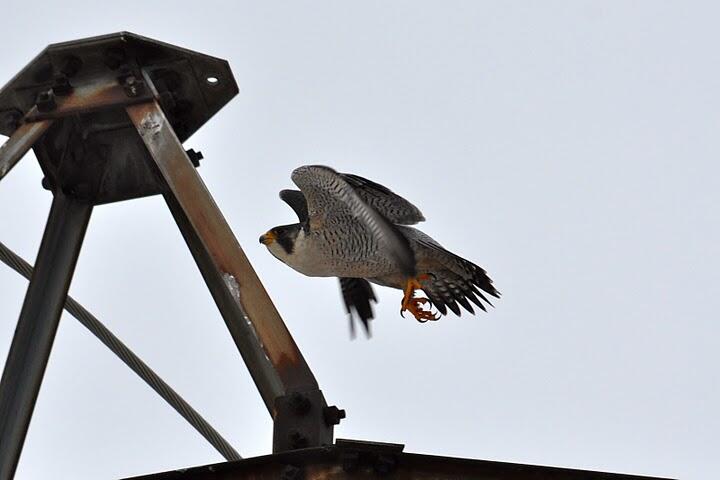
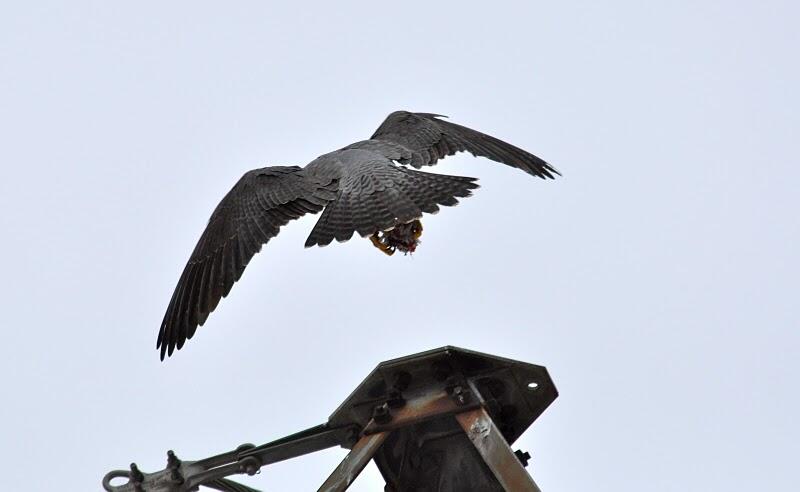
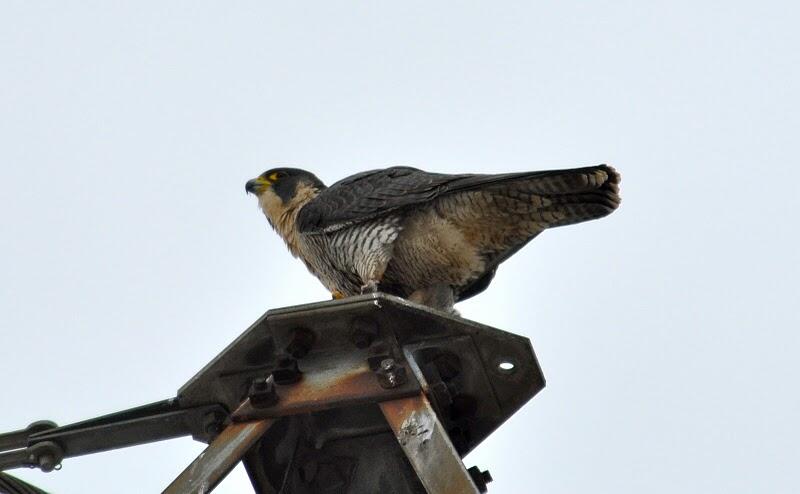
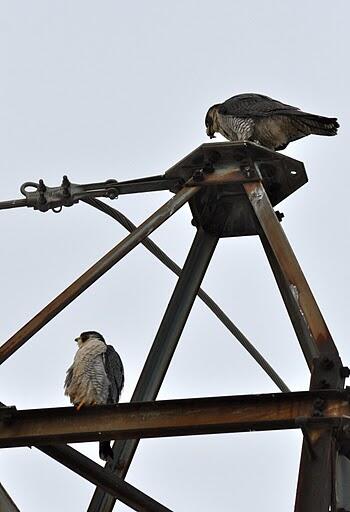
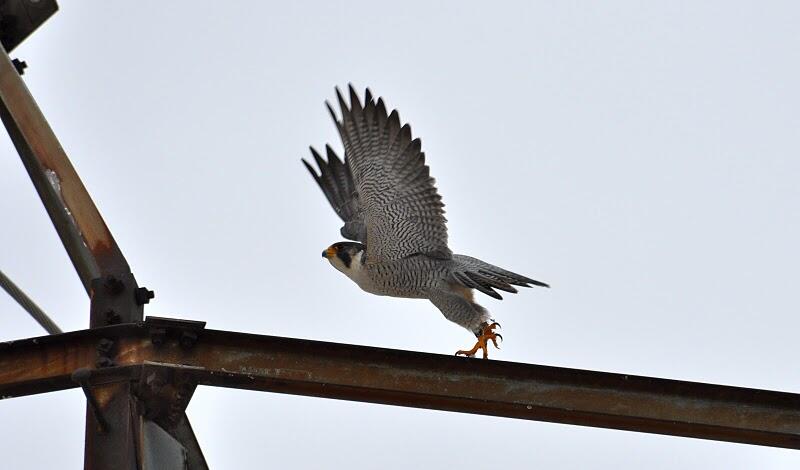
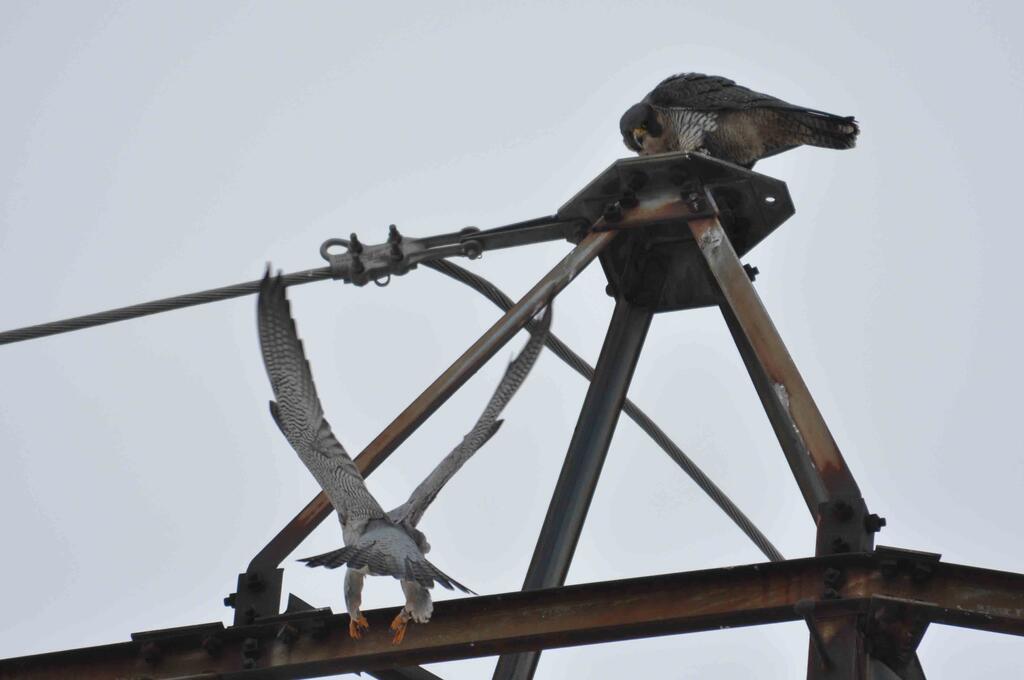
Frank and I went down to the Holcim plant to check in on the resident adults and see whether we could locate either of them. After a few passes along the Lakeshore, we were able to spot an adult roosting on one of the structures on the Holcim plant itself. It was wonderful to see the adult holding the territory and we look forward to another successful nesting season this year!


!!! New Pollutants Found In Peregrine Falcon Eggs

November 11, 2011 - Mississauga - Holcim

Frank Butson Reports:

While poking around the internet,I found this article posted at e! Science News. So all will see it,it is being posted on each of our nestsite pages. This is too important to miss.

The original article can be seen here: http://esciencenews.com/articles/2011/04/18/new.pollutants.detected.peregrine.falcon.eggs 

Here is what it says:
New pollutants detected in peregrine falcon eggs
Published: Monday, April 18, 2011 - 09:04 in Earth & Climate

Flame retardants are chemical compounds added to fabrics and plastics to keep them from burning easily, but these can be toxic. Now a team of researchers from Spain and Canada has detected some of these emerging pollutants for the first time in peregrine falcon (Falco peregrinus) eggs in both countries. “The presence of ‘dechlorane plus’ and other related, chlorinated compounds used as flame retardants have been detected for the first time in the European biota (flora and fauna of the region)”, explains Ethel Eljarrat, co-author of the study and scientist at the Institute of Environmental Assessment and Water Studies (IDAEA-CSIC, Spain).

The researchers have found these substances in peregrine falcon (Falco peregrinus) eggs in both Spain and Canada. The flame retardants are often added to textiles, electronic circuits and other products to inhibit or resist the spread of fire, but can be transferred to the environment.

In nature these compounds are “bioaccumulating and bioconcentrating” all along the food chain, as evidenced by the research published in the Environmental Science & Technology journal. The international research team for this study was led by Begoña Jiménez of the Institute of Organic Chemistry (CSIC, Spain), and Environment Canada researchers, Kim Fernie and Mehran Alaee.

Having received the relevant permits, eggs that had failed to hatch from various active falcon nests in Canada and Spain, were collected. The collection involved 13 eggs from Spain (five in Guadalajara – a territory representative of an inland habitat of the Iberian Peninsula - and eight in Bilbao - representing a coastal environment), and 12 eggs from Canada (Great Lakes Region and Eastern provinces).

The levels of some of the measured contaminants have been found to be somewhat higher in Bilbao than in Guadalajara, and the authors believe this may be due partially to the difference in the falcons’ diet: more aquatic in the former and more terrestrial in the latter. In fact, if fish is highly contaminated, peregrines would accumulate more of the harmful substances. While peregrine falcons do not eat fish, they prey upon other birds, some of which may eat fish.

Selecting the peregrine falcon was no accident. This species was endangered in many areas of the northern hemisphere due to the use of organochlorinated pesticides, particularly DDT, though when this was prohibited in the 1970s the populations recovered. Furthermore, falcons are at the top end of the food chain and accumulate substances carried by their prey.

Highest levels in the Canadian samples

The results reveal that the concentrations of ‘dechlorane plus’ and some of the other chlorinated halogens were “significantly higher” in the Canadian falcons’ eggs than in those of Spain. The reason for this could be that the industry that has manufactured these compounds for decades (although they are now also produced in China) is located in New York State close to the area where samples were collected. In addition, the use of these compounds has generally been higher in North America than Europe.

The researcher acknowledges that the effects that these flame retardants may have on the falcons’ eggs or on their development are still unknown, “but their detection is a first step”. These are emerging pollutants, which comprise both those which have appeared more recently and those that have been used for a long time but are just lately the subject of environmental interest.

Other flame retardants, including some brominated flame retardants, have already been confirmed as toxic endocrine disruptors, and their use has been prohibited in some of the commercial mixes in Europe and America. Furthermore, they are candidates for inclusion on a list of Persistent Organic Pollutants to be eliminated, a list compiled by the Stockholm Convention which includes other pollutants such as DDT or dioxins.

This study forms part of the doctoral thesis submitted this month by the researcher Paula Guerra from IDAEA on “The analysis of emerging halogenated flame retardants and their impact on the environment and on humans”. All of the eggs were analyzed by her during her exchange studies at Environment Canada.

A research group at IDAEA led by Damià Barceló has also confirmed the presence of these compounds in sediment and fish in the rivers of the Ebro basin (Spain). Source:FECYT-Spanish Foundation for Science and Technology

!!! Sadly, not much to report.

July 16, 2011 - Mississauga - Holcim

Bruce Massey Reports:

Saturday July 16th - 2011

Holcim

Arrived @ 0500 Hrs. Found 1 Adult (M) on South End of Smaller Silos on East Side of Holcim property. The Bird eventually flew North & then West into the Centre of the Plant. I started walking West on Lakeshore and as I was even with the Front Gate I saw a bird fly out over the Middle of the Plant and land on the West Side of the Tall Silos. It was hard to tell with my 10X Bins whether it was an adult or juvie.

Bruce M

!!! Surprise, Surprise, Surprise - 4 Hatchlings!

May 27, 2011 - Mississauga - Holcim

CPF Postmaster Reports:

We have only just yesterday received news from Holcim that there has been a photo confirmation of a hatch. .
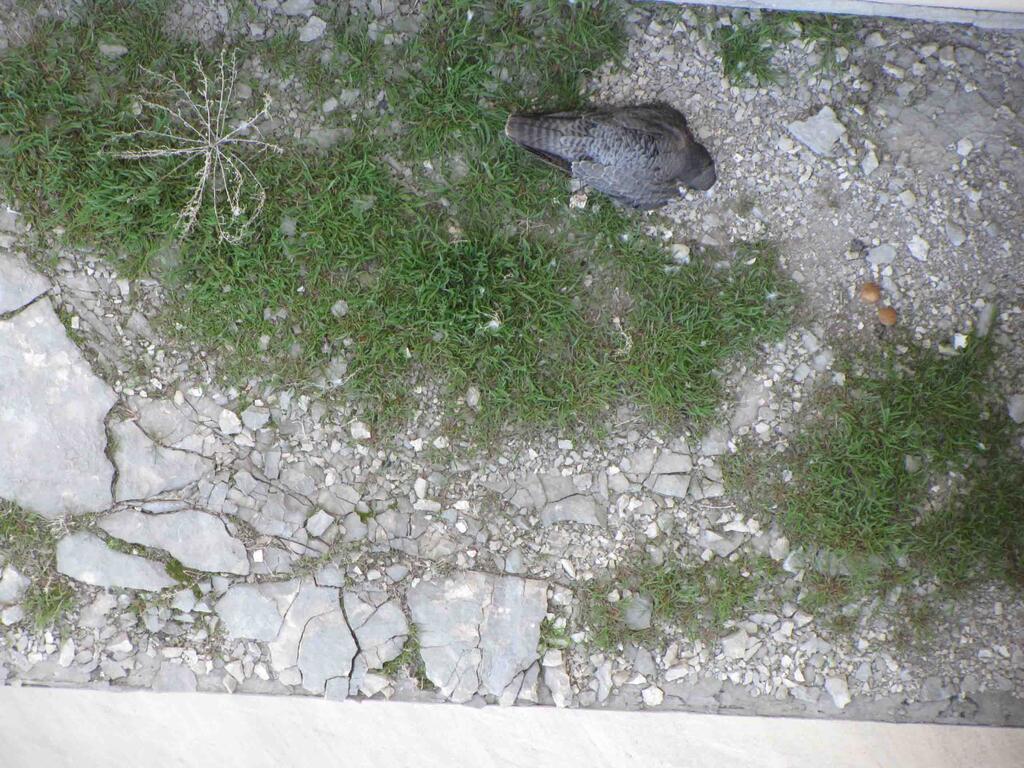
The second last photo that we received shows the resident adult female in a “brooding posture” as opposed to an incubation posture, as she is covering something under her, with a hunched back and cupped wings. This combined with her lack of interest in the two eggs to the right of her suggests that she is already brooding a hatchling (if not two hatchlings). Subtle differences in the body posturing of the adult female as she was photographed and the event captured in the first photo tell a story of a hatch.

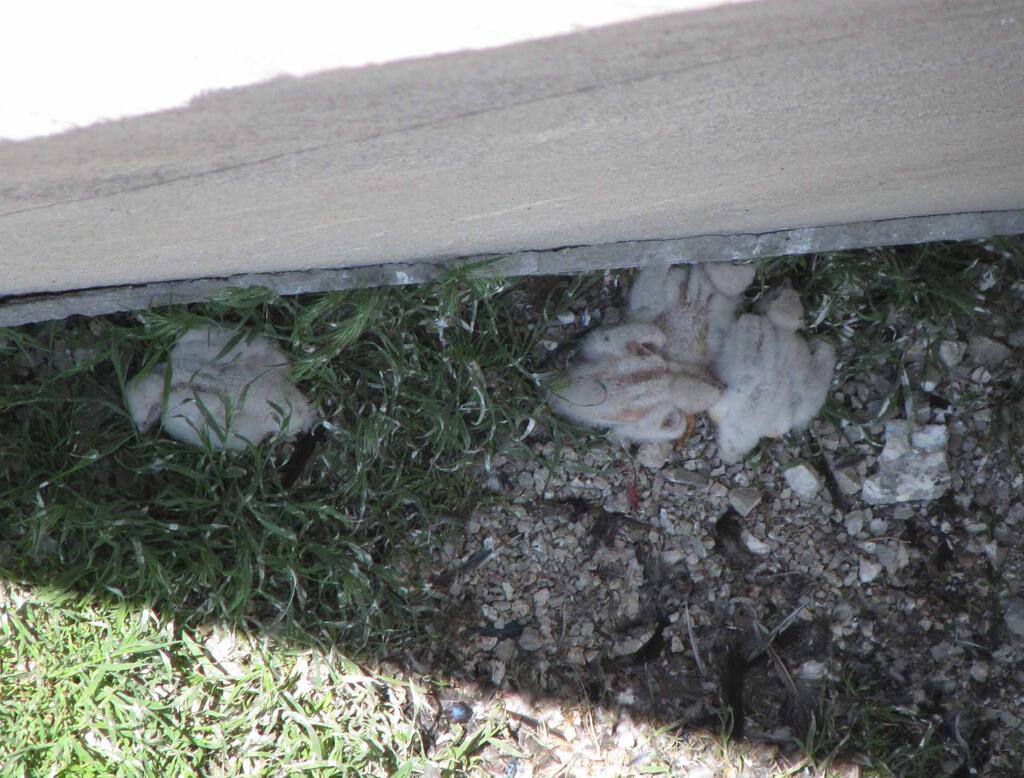
This most recent photo tells the complete story indeed as there are clearly four chicks. Given what we know in that the eggs hatch approx. every other day, the presence of 4 hatchlings, in addition to the first photo of the resident adult female believed to be actually brooding something, and now seeing a photo taken on May 24th of all of the hatchlings, the oldest two chicks are at least 15 days to 17 days old as of yesterday - (May 26th).

Sadly, this news may have come too us far too late in the game to be able to schedule a banding with all of the other bandings already scheduled. Remembering that this site also needs the support of a rock climber and support personal outside of the nest site hosts that also have to be booked and scheduled to pull off a banding. This is one of the reasons that we need updated accurate logistics on territorial activity, egg production, the start of full time incubation and a hatch date as it happens so we can log these events in anticipation of expected hatch dates for banding schedules.

Sadly, it will be left up to the Ministry of Natural Resources scrambling to band the fledglings if and when they come to ground. We can only hope that someone from the MNR will be around when the fledge happens.


!!! News of a hatch!! Four hatchlings now observed!

May 24, 2011 - Mississauga - Holcim

CPF Postmaster Reports:

We have only just yesterday received news from Holcim that there has been a photo confirmation of a hatch. .
The second last photo that we received shows the resident adult female in a “brooding posture” as opposed to an incubation posture, as she is covering something under her, with a hunched back and cupped wings. This combined with her lack of interest in the two eggs to the right of her suggests that she is already brooding a hatchling (if not two hatchlings). Subtle differences in the body posturing of the adult female as she was photographed and the event captured in the first photo tell a story of a hatch.

This most recent photo tells the complete story indeed as there are clearly four chicks. Given what we know in that the eggs hatch approx. every other day, the presence of 4 hatchlings, in addition to the first photo of the resident adult female believed to be actually brooding something, and now seeing a photo of all of the hatchlings, the oldest two chicks are at least 15 days to 17 days old as of yesterday.

Sadly, this news may have come too us very late in the game to schedule a banding with all of the other bandings going on, and the other logistics needed to be coordinated, in addition to support of the Rock climbers that is needed to pull off a banding at this site. We will have to dig further into all of the schedules and other logistics to see if this site can be banded.


May 24th May 11th

!!! Maybe not a complete bust!!

May 11, 2011 - Mississauga - Holcim

Mark Nash Reports:

Update this afternoon with thanks to Armando who was able to capture a great photo at 2pm this afternoon of the nest ledge. Despite our earlier pessimum of the situation, the photo gives some renewed hope. While it is difficult to get a real handle on the situation with just a single photo and without additional observations, it would appear that the resident adult female is either back on her game trying to incubate one of the missing eggs, or that she might even be brooding a recent hatchling? Again, while its difficult to really tell what is going on given that the photo was taken overhead, it appears that her cupped wings and arched back might suggest that she is actually brooding a young hatchling??

In any case, her renewed interest in tending to an egg is a testament to her resolve and determination. We can only hope that there is a mate still in the picture.
Stay tuned……..


!!! Looks like a bust, at least for the first clutch of eggs!

May 11, 2011 - Mississauga - Holcim

Mark Nash Reports:

We have received some sad news this morning from Armando at Holcim in that it would appear that the first attempt by the resident birds has failed to hatch the clutch of eggs. Observations this morning reported that although there was only one adult seen on the nest ledge, and she/he was standing on the nest ledge but not involved in any incubation activities. The three eggs were scattered around outside of the nest bowl and a second adult was not seen. This observation, (in part) is consistent with Bruce Massey s report of Monday where he reported not seeing any changing of the guards happening throughout his observations.
Stay tuned, as we hope that more information will follow……..

Site Check In at Holcim

May 09, 2011 - Mississauga - Holcim

Tracy Simpson Reports:

Bruce Massey was on-site today at Holcim in Mississauga and from his period of observation, he could not detect any adults birds.  There certainly was activity at this site over the past few weeks of a territorial pair but Bruce was unable to locate a ledge of interest.  Has this pair settled in somewhere?  Check back soon as we will be keeping a close eye on this site for any signs of nesting activity!!

A Pair at Holcim but Nesting Unconfirmed

April 30, 2011 - Mississauga - Holcim

Tracy Simpson Reports:

Bruce Massey was on-site at Holcim today with the hopes of catching some action from the peregrines in the area.  While they certainly are present and accounted for, Bruce was unable to secure band numbers on either birds or locate a ledge of interest.  We will continue to monitor the site and report on any nesting activity should this pair decide to set up house.

!!! Holcim Peregrines are very active indeed!

February 22, 2011 - Mississauga - Holcim

CPF Postmaster Reports:

Given the observations of Kris and his friends, it appears that one of the resident peregrines has a solid Black band, telling us that at least one of the resident adults is a Canadian produced peregrine.
Hello CPF,
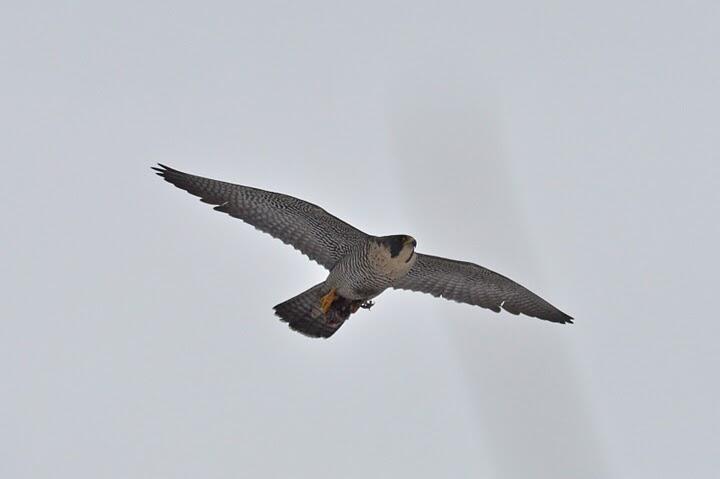
The Credit Valley Conservation staff and volunteers were conducting a winter raptor survey on January 27, 2011. As part of the survey a day is spent in an urban setting monitoring urban raptors. At approximately 12:42 pm a single peregrine falcon at St. Lawrence cement was spotted on a lamp post along Avonhead Road. Soon there after the second peregrine appeared and landed on a steel structure just behind the peregrine perched on the light post. This second bird has been noted with a distinctive dark breast/belly patch. This patch has been seen on a bird at this location two weeks prior. The first bird perched on the light post left for several minutes and returned with a European Starling in its clutch. The second peregrine with the dark breast then took flight as the first peregrine neared and mid air received the starling then proceeded to its previous perch to dine on the prey. The birds were watched for several minutes; the first bird took flight several times and landed near its dark breasted feeding companion. Note: in one of the photos, if magnified the solid black band on its left leg has a visible capital letter “D” or 0.
Kris