affordwatches

Mom IS Cirrus and Dad IS Mackenzie

March 19, 2012 - Burlington - Lift Bridge

Sue McCreadie Reports:

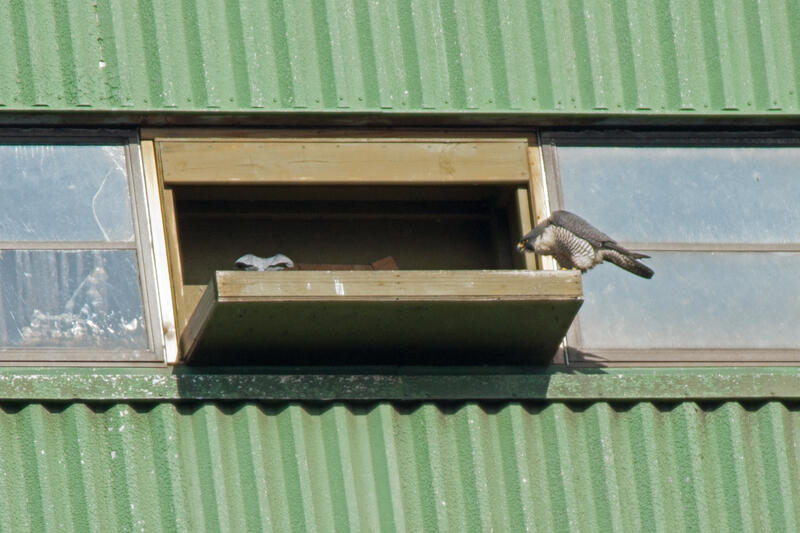
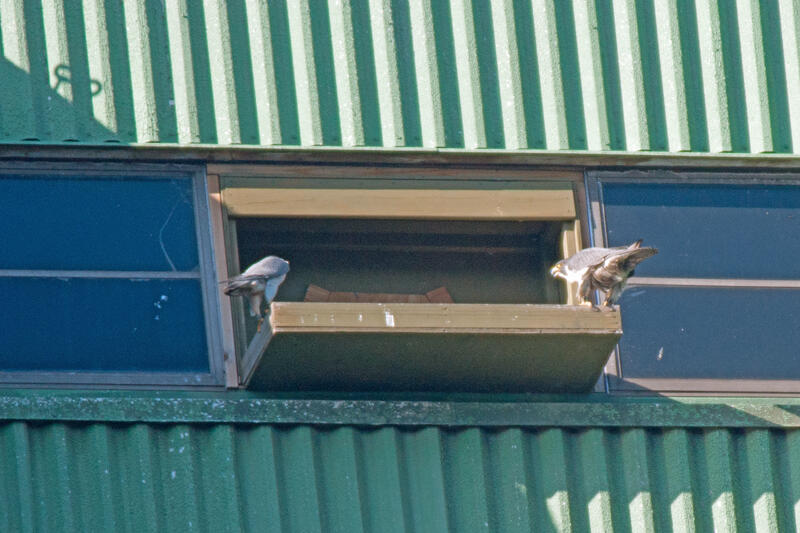
Over the weekend, Bill and I spent quite a bit of time trying to read the leg bands on both birds.  Through the scope we were able to see the 29/Y Black band of Mackenzie and today we were able read the Black K/Green 83 of Cirrus.  This pair is very busy working in the nest box.  Cirrus disappears inside and shortly after she leaves Mackenzie disappears inside.  I assume he is rearranging what Cirrus has done.  It appears to be an ongoing battle and I’m not sure who is winning.  They are also spending a lot of time in the playpen of the Skyway Bridge Abutment.  As both birds are very visible, and very noisy, I think we can safely assume that there are no eggs yet.


Lots of Activity

March 16, 2012 - Burlington - Lift Bridge

Sue McCreadie Reports:

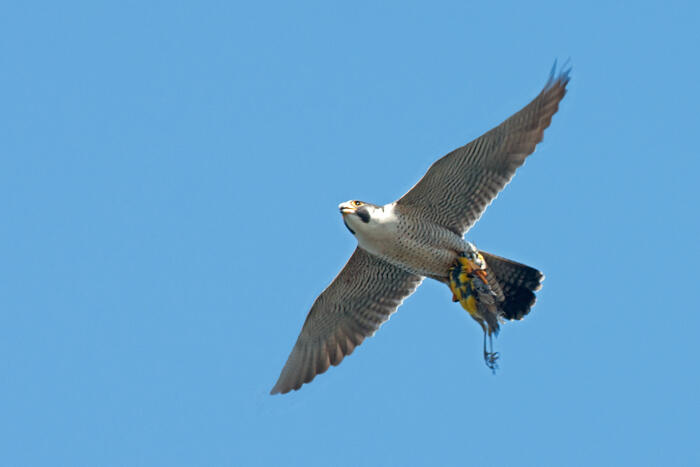
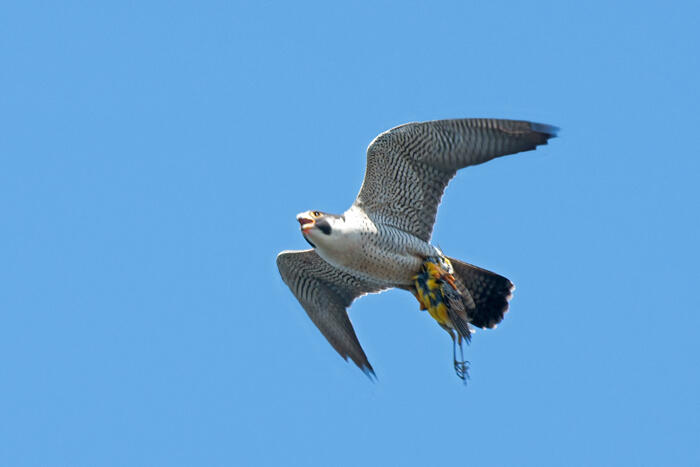
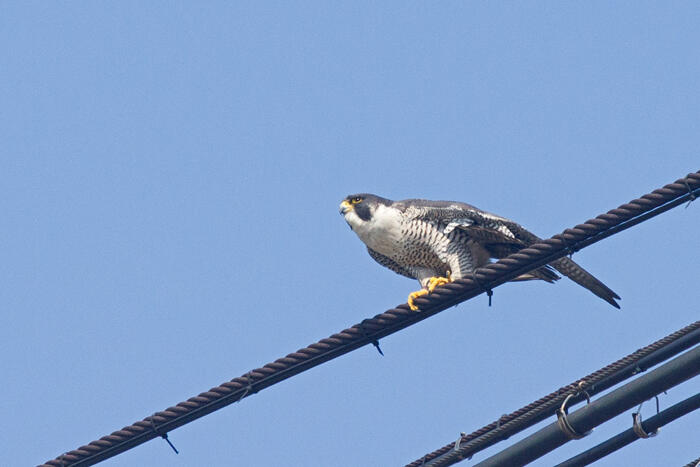
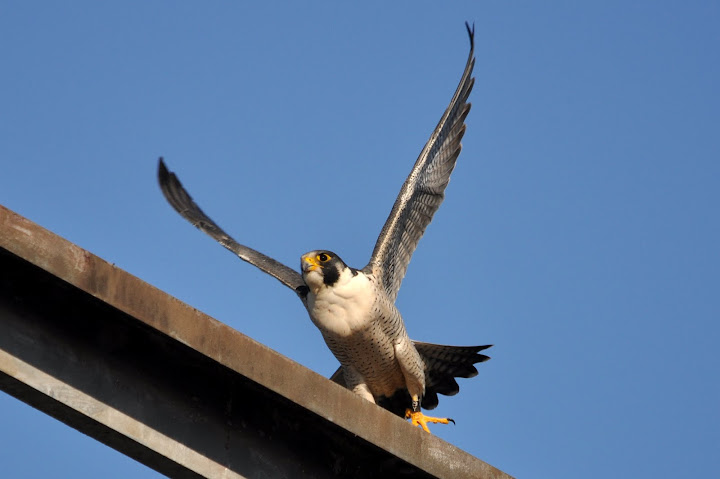
Bill and I have spent a fair bit of time at the Lift Bridge over the last few days.  Mom and Dad have been very active.  Below are a couple of photos from March 14th and 16th.


Dad With a Meadowlark Dad With a Meadowlark Mom Awaiting Dad's Advances

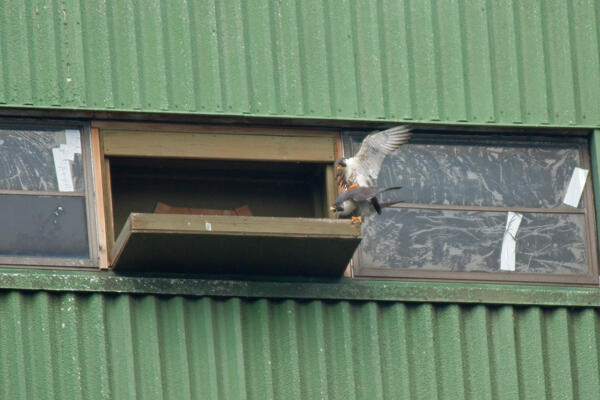
Dad Vs the Red-Winged Blackbird

March 11, 2012 - Burlington - Lift Bridge

Sue McCreadie Reports:

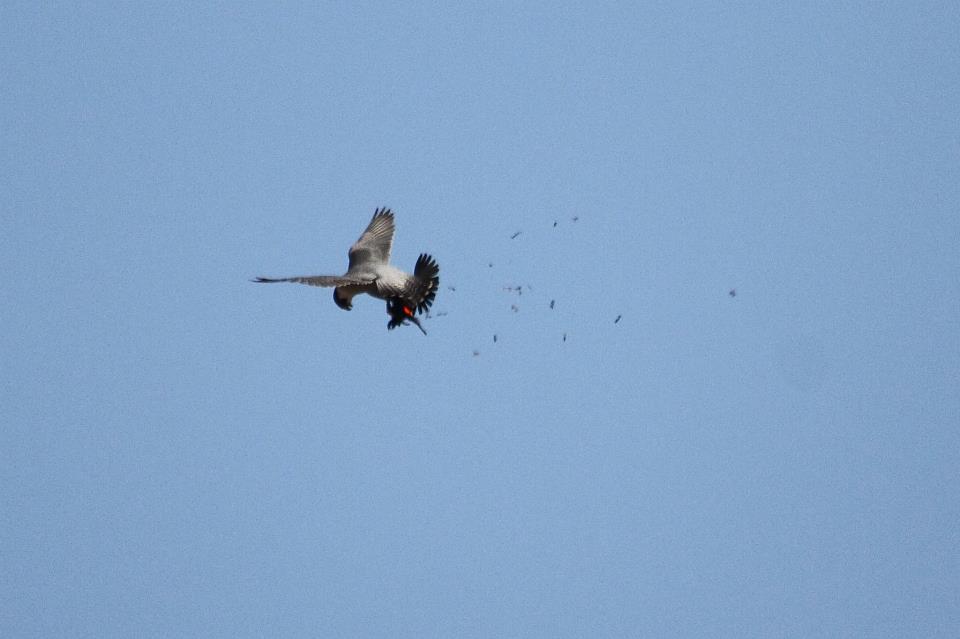
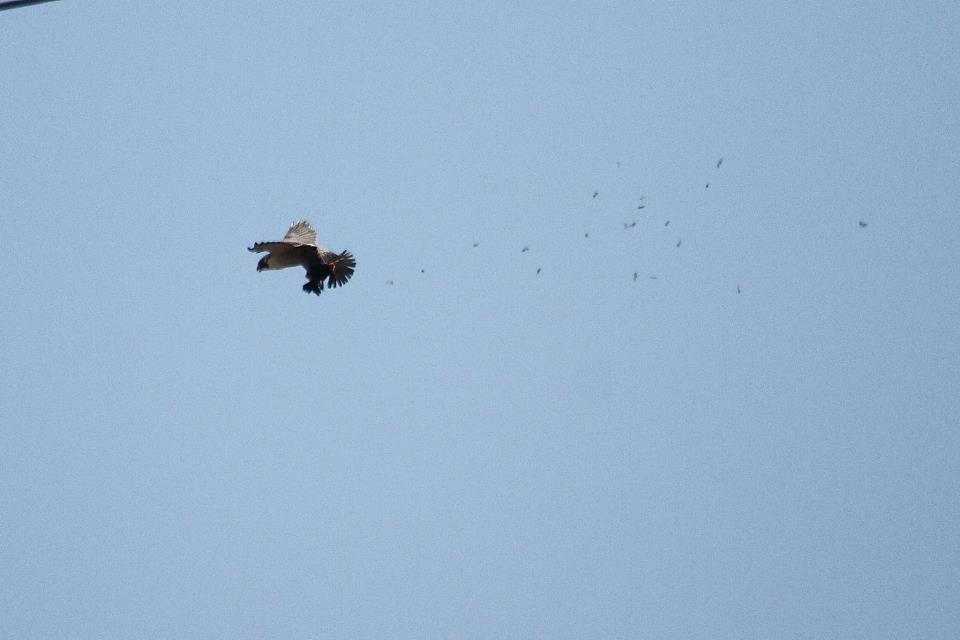
The attached photos were taken on Sunday afternoon by Nils Foss.  This is the poor little guy that got away.


Dad Vs Red-winged Blackbird 1 Dad Vs Red-winged Blackbird 2

Sunday At the Lift Bridge

March 11, 2012 - Burlington - Lift Bridge

Sue McCreadie Reports:

On Sunday, Bill and I were treated to an amazing display.  Shall we say that Love is definitely in the air.  We watched the birds for several hours.  There was flight after flight of Red-winged Blackbirds making there way North across the canal.  Dad was hunting from the top the Hamilton Hydro and made many stoops after the poor Blackbirds.  While we were there, he was successful once, but as he attempted to make it back to one of the picnic tables, he lost it.  The Blackbird flew away but I’m sure he was going to need some time to recuperate.   As it is so beautiful today, we will be heading back down this afternoon.  We have been unable to read any bands as yet but know that the male had a black band and the female is Black/Green.  We are assuming that it is still Cirrus and Mackenzie.


Looks Like Spring Preparations are Underway….

February 09, 2012 - Burlington - Lift Bridge

Sue McCreadie Reports:

February 8th and 9th brought lots of Spring housekeeping, chirping back and forth and many visits in and out of the nest box.


A Beautiful Day at the Lift Bridge

January 22, 2012 - Burlington - Lift Bridge

Sue McCreadie Reports:

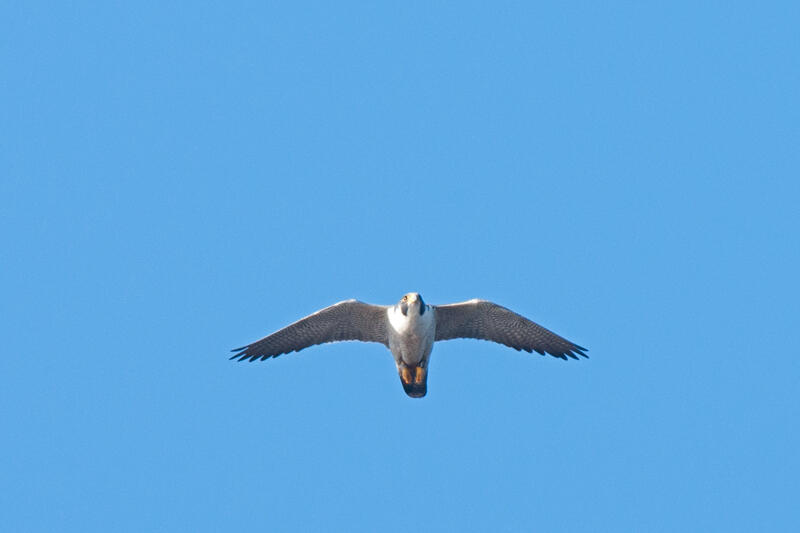
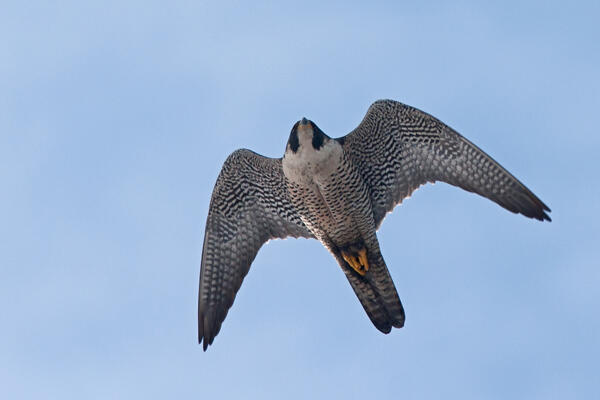
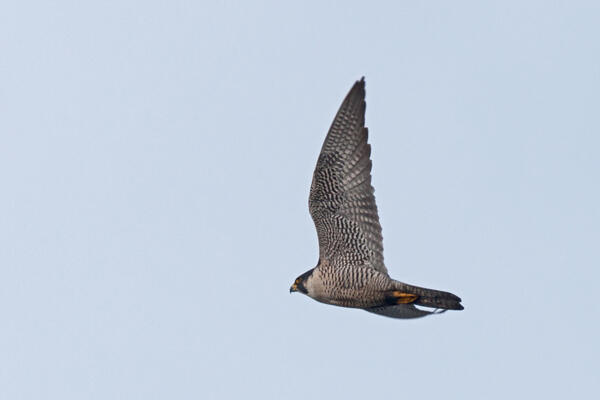
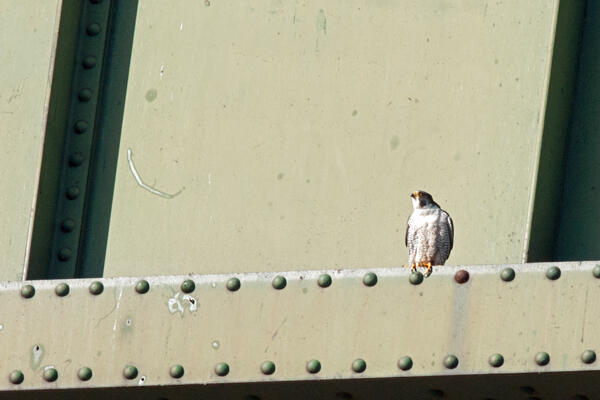
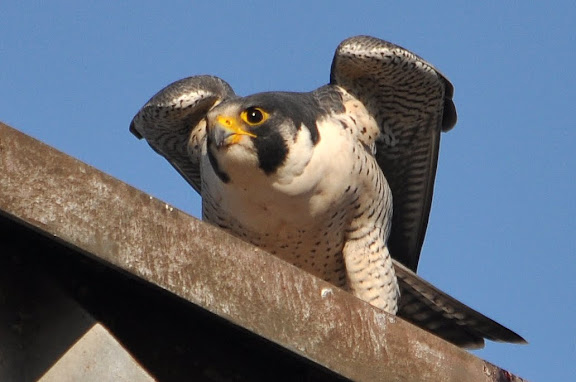
Bill and I spent some time at the Lift Bridge this afternoon.  Mom and Dad were making leisurely attempts at pigeon hunting.  How magnificent to see them in flight.   Mom was hunting from the cables close to the Hamilton Tower and Dad was sitting on the face of the Hamilton Tower.  We were told that just prior to our arrival a Red-Tailed Hawk had flown into the territory and had been hustled out of there in quick order by both Cirrus and McKenzie.   Unfortunately, we missed the whole thing.  When we left around 1:30 pm, Cirrus had moved to the Hamilton Hydro Tower and McKenzie was still tucked in on the face of the Hamilton Tower.


Magnificent Flying Machine 1 Magnificent Flying Machine 2

Happy 2012 Falcon Watchers

January 08, 2012 - Burlington - Lift Bridge

Sue McCreadie Reports:

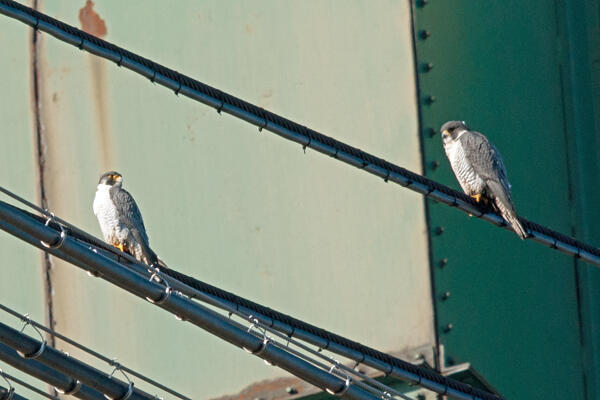
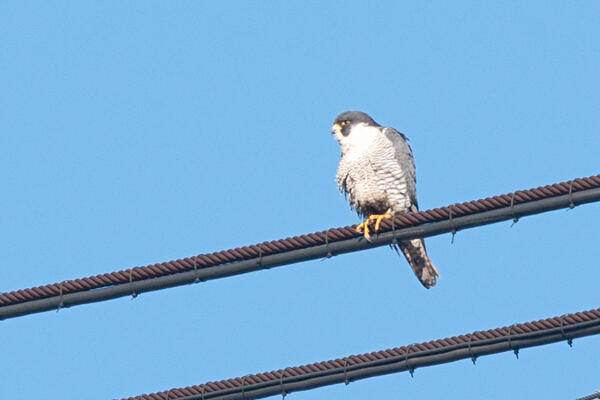
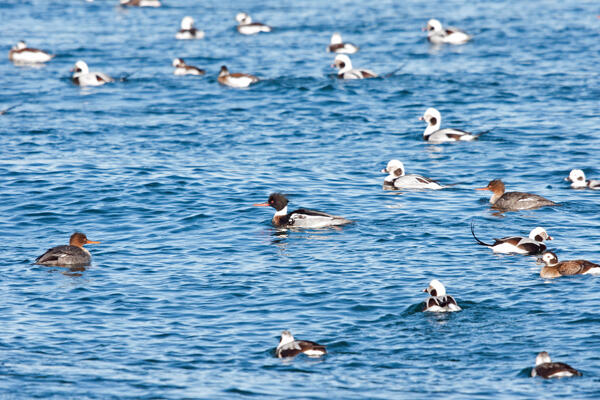
Bill and I spent a couple of hours at the Lift Bridge this afternoon.  It was +2 degrees Celsius in the sun.  When we arrived around 12:30pm, both Cirrus and McKenzie were sitting in the sun on the cables close to the nest box.  We took a walk out the pier to look at the hundreds on Long Tail Ducks who are wintering in and around the canal.  When we turned to walk back, I noticed that both bird were gone.  I stopped and asked a young man if he had seen where the Peregrines had gone.  He said they high tailed out of there towards Burlington.  We watched for a while and out of nowhere Cirrus appeared and landed again on the wire.  A few minutes later McKenzie arrived, landing on the old nest ledge and was chirping to beat the band.  I guess he was wanting Cirrus to serve him lunch.  Cirrus made one feeble attempt at hunting while we watched but then she settled down again on the wire in the sun.


Cirrus and McKenzie Cirrus 1 Cirrus 2 McKenzie The Canal with Hundreds of Water Fowl

Cirrus Wont Share

December 29, 2011 - Burlington - Lift Bridge

Frank Butson Reports:

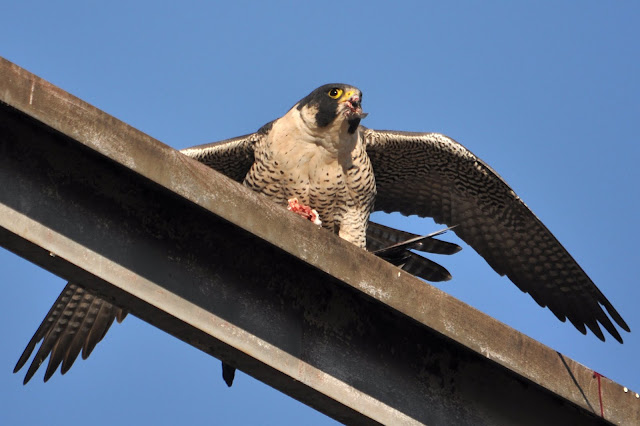
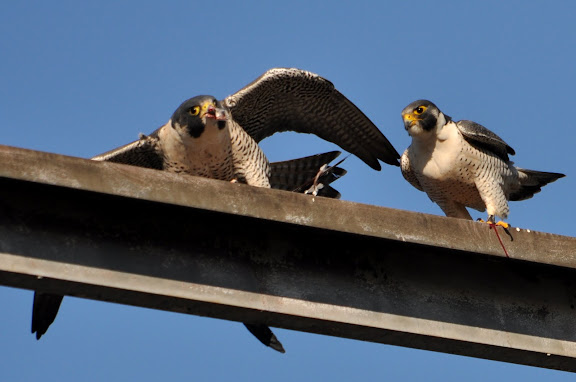
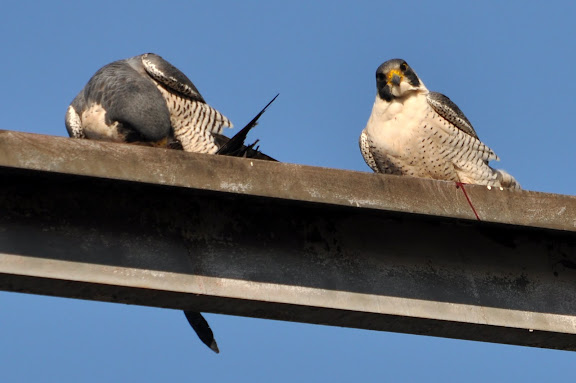
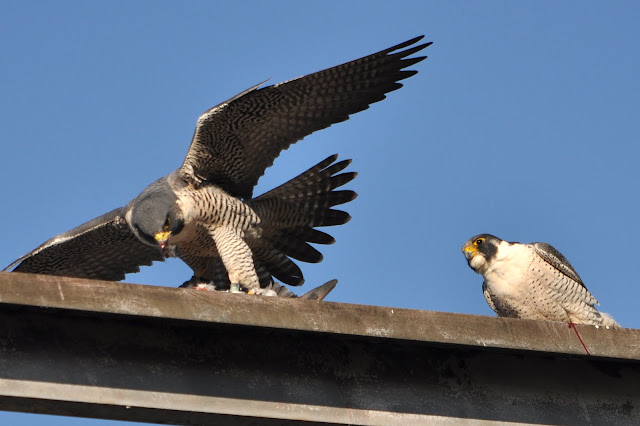
Vince Filteau and Sue Adorjan’s  great photos of Cirrus and Mackenzie. These were taken earlier in December. The first 2 photos are from Vince. Sue has graciously provided the rest. Thanks again for sending your sighting and wonderful photos to us and allowing them to be used!

Cirrus

Mackenzie

Mac Eyeing Cirrus’ Kill

Cirrus Doesnt Want To Share

A Perplexed Mac

Can Make Our Cirrus’ Black/Green Band

Cirrus and MacKenzie On Site

December 11, 2011 - Burlington - Lift Bridge

Frank Butson Reports:

Thanks to Sue Adorjan for her photo of MacKenzie. Back on Dec 11,2011 Sue was able to get several shots of Mac. With Sue’s photo we could make out his band number and colours.  Cirrus was seen eating a pigeon. A few more photos will be added soon from this excellent sighting.

It is important whenever possible to confirm the identification of resident pairs. This helps us to identify  if or when a change has taken place and keep our records as current and accurate as possible. Thanks to reports and photos like Sue’s and CPF volunteers for all their help in this.

!!! New Pollutants Found In Peregrine Falcon Eggs

November 11, 2011 - Burlington - Lift Bridge

Frank Butson Reports:

While poking around the internet,I found this article posted at e! Science News. So all will see it,it is being posted on each of our nestsite pages. This is too important to miss.

The original article can be seen here: http://esciencenews.com/articles/2011/04/18/new.pollutants.detected.peregrine.falcon.eggs 

Here is what it says:
New pollutants detected in peregrine falcon eggs
Published: Monday, April 18, 2011 - 09:04 in Earth & Climate

Flame retardants are chemical compounds added to fabrics and plastics to keep them from burning easily, but these can be toxic. Now a team of researchers from Spain and Canada has detected some of these emerging pollutants for the first time in peregrine falcon (Falco peregrinus) eggs in both countries. “The presence of ‘dechlorane plus’ and other related, chlorinated compounds used as flame retardants have been detected for the first time in the European biota (flora and fauna of the region)”, explains Ethel Eljarrat, co-author of the study and scientist at the Institute of Environmental Assessment and Water Studies (IDAEA-CSIC, Spain).

The researchers have found these substances in peregrine falcon (Falco peregrinus) eggs in both Spain and Canada. The flame retardants are often added to textiles, electronic circuits and other products to inhibit or resist the spread of fire, but can be transferred to the environment.

In nature these compounds are “bioaccumulating and bioconcentrating” all along the food chain, as evidenced by the research published in the Environmental Science & Technology journal. The international research team for this study was led by Begoña Jiménez of the Institute of Organic Chemistry (CSIC, Spain), and Environment Canada researchers, Kim Fernie and Mehran Alaee.

Having received the relevant permits, eggs that had failed to hatch from various active falcon nests in Canada and Spain, were collected. The collection involved 13 eggs from Spain (five in Guadalajara – a territory representative of an inland habitat of the Iberian Peninsula - and eight in Bilbao - representing a coastal environment), and 12 eggs from Canada (Great Lakes Region and Eastern provinces).

The levels of some of the measured contaminants have been found to be somewhat higher in Bilbao than in Guadalajara, and the authors believe this may be due partially to the difference in the falcons’ diet: more aquatic in the former and more terrestrial in the latter. In fact, if fish is highly contaminated, peregrines would accumulate more of the harmful substances. While peregrine falcons do not eat fish, they prey upon other birds, some of which may eat fish.

Selecting the peregrine falcon was no accident. This species was endangered in many areas of the northern hemisphere due to the use of organochlorinated pesticides, particularly DDT, though when this was prohibited in the 1970s the populations recovered. Furthermore, falcons are at the top end of the food chain and accumulate substances carried by their prey.

Highest levels in the Canadian samples

The results reveal that the concentrations of ‘dechlorane plus’ and some of the other chlorinated halogens were “significantly higher” in the Canadian falcons’ eggs than in those of Spain. The reason for this could be that the industry that has manufactured these compounds for decades (although they are now also produced in China) is located in New York State close to the area where samples were collected. In addition, the use of these compounds has generally been higher in North America than Europe.

The researcher acknowledges that the effects that these flame retardants may have on the falcons’ eggs or on their development are still unknown, “but their detection is a first step”. These are emerging pollutants, which comprise both those which have appeared more recently and those that have been used for a long time but are just lately the subject of environmental interest.

Other flame retardants, including some brominated flame retardants, have already been confirmed as toxic endocrine disruptors, and their use has been prohibited in some of the commercial mixes in Europe and America. Furthermore, they are candidates for inclusion on a list of Persistent Organic Pollutants to be eliminated, a list compiled by the Stockholm Convention which includes other pollutants such as DDT or dioxins.

This study forms part of the doctoral thesis submitted this month by the researcher Paula Guerra from IDAEA on “The analysis of emerging halogenated flame retardants and their impact on the environment and on humans”. All of the eggs were analyzed by her during her exchange studies at Environment Canada.

A research group at IDAEA led by Damià Barceló has also confirmed the presence of these compounds in sediment and fish in the rivers of the Ebro basin (Spain). Source:FECYT-Spanish Foundation for Science and Technology